
Table of Contents
- What Commercial Cleaning for Manufacturing Facilities Involves
- OSHA Industrial Cleaning Standards and Regulatory Compliance
- Manufacturing Facility Cleaning Checklist: Essential Tasks
- Industrial Floor Cleaning Best Practices
- Degreasing and Equipment Sanitation Strategies
- In-House vs. Professional Outsourced Cleaning: Cost-Benefit Analysis
- Customized Cleaning Plans for Mixed-Use Facilities
- Green Cleaning Solutions for Heavy Industry
- Frequently Asked Questions
Last Updated: September 30, 2026
What Commercial Cleaning for Manufacturing Facilities Involves
Commercial cleaning for manufacturing facilities encompasses far more than sweeping floors and emptying trash cans. It’s a specialized discipline that combines operational safety, regulatory compliance, and facility preservation into a comprehensive maintenance strategy. At Guso Janitorial Services, we understand that manufacturing environments present unique challenges: heavy machinery, chemical residues, high-traffic zones, and strict health standards all demand a tailored approach.
Manufacturing facilities typically require degreasing of equipment, floor maintenance in high-wear areas, sanitation of work surfaces, and waste management protocols. The scope depends heavily on your specific operation. A food processing plant needs different protocols than a metal fabrication shop. A pharmaceutical manufacturer faces entirely different regulatory pressures than an automotive assembly line.
The core responsibility of commercial cleaning manufacturing is ensuring your facility stays safe, compliant, and operationally efficient. This means addressing both visible dirt and invisible hazards: dust accumulation that affects machinery performance, chemical buildup that creates safety risks, and floor conditions that impact worker safety and productivity.
OSHA Industrial Cleaning Standards and Regulatory Compliance
OSHA (Occupational Safety and Health Administration) sets the baseline for workplace cleanliness and safety standards across all manufacturing environments. These aren’t suggestions, they’re legal requirements with real penalties for non-compliance.
The standards focus on maintaining a clean workplace free from hazards that could cause injury or illness. This includes proper disposal of hazardous materials, dust control in areas where combustible dust could create fire risks, and sanitation standards that prevent cross-contamination. For manufacturing specifically, OSHA emphasizes machine guarding areas must remain clear and accessible, floors must be kept clean and dry to prevent slips and falls, and chemical storage areas require specific containment and labeling protocols.
Many facility managers underestimate how detailed these requirements are. OSHA doesn’t just want things to look clean, it requires documented procedures, regular inspections, and proof that cleaning protocols are being followed.
Request cleaning service providers to supply written reports after each visit. This documentation becomes critical evidence during regulatory inspections and demonstrates your commitment to compliance.
Beyond OSHA, your facility may fall under EPA (Environmental Protection Agency) guidelines if you handle hazardous materials, state-specific regulations depending on your manufacturing sector, and industry-specific standards. A pharmaceutical manufacturer, for instance, must comply with FDA sanitation guidelines (the FDA). Food manufacturers answer to USDA standards. Understanding which regulations apply to YOUR operation is the first step toward compliance.
Manufacturing Facility Cleaning Checklist: Essential Tasks
A proper cleaning program breaks down into daily, weekly, and monthly tasks. This structure ensures nothing gets neglected while avoiding unnecessary duplication that wastes resources.
Daily Cleaning Requirements
Daily cleaning tasks focus on maintaining operational safety and preventing hazard accumulation. These are the non-negotiables that happen every single shift.
- Sweep and clear all floor areas of debris, dust, and spills
- Empty all trash and waste containers
- Wipe down work surfaces and machinery exteriors
- Clean restrooms and break areas
- Remove any chemical spills immediately with appropriate containment
- Clear walkways and emergency exits of obstructions
- Spot-clean high-traffic areas that accumulate dirt
The purpose of daily cleaning is prevention. A spill cleaned immediately doesn’t become a slip hazard. Dust removed daily doesn’t accumulate into a fire risk. Trash disposed of promptly doesn’t attract pests or create sanitation issues. Daily tasks are typically quick but frequent, they’re about maintaining baseline safety rather than deep restoration.
Weekly and Monthly Deep Cleaning
Weekly tasks go deeper than daily maintenance. These address areas that can’t be fully cleaned during normal operations.
- Degrease machinery and equipment surfaces
- Deep clean floor areas with appropriate cleaning solutions
- Sanitize high-touch surfaces (door handles, light switches, equipment controls)
- Clean windows and skylights
- Dust elevated surfaces and equipment tops
- Scrub grout lines and floor seams
- Clean ventilation grille covers and air intake areas
Monthly cleaning tackles projects that require more time and resources. These typically happen during scheduled downtime or after-hours operations.
- Strip and rewax flooring (if applicable to your facility type)
- Deep degreasing of major equipment
- Clean inside storage areas and shelving
- Sanitize locker rooms and changing areas thoroughly
- Power wash exterior areas if applicable
- Clean and disinfect HVAC intake areas
- Detailed cleaning of hard-to-reach spaces above machinery
A structured schedule prevents the common mistake of letting cleaning slide until a crisis forces emergency deep cleaning, which is more expensive and disruptive.
Industrial Floor Cleaning Best Practices
Your facility’s floors take the heaviest punishment in any manufacturing environment. They’re exposed to oils, chemicals, heavy foot traffic, equipment movement, and constant wear. Industrial floor cleaning best practices differ significantly from standard commercial cleaning.
The first principle is understanding your floor material. Sealed concrete requires different treatment than epoxy-coated floors, which differ from specialized anti-static flooring used in electronics manufacturing. Using the wrong cleaning method can damage the protective coating, accelerate wear, and create safety hazards. Always confirm your floor type before selecting cleaning protocols.
High-pressure washing works well for removing heavy buildup but can damage certain coatings if pressure is too high. Chemical degreasing products must be compatible with your floor coating and must be rinsed thoroughly, residual chemicals create slipping hazards and can damage equipment.
Dust control is critical in manufacturing floors. Sweeping alone redistributes dust into the air. Many facilities benefit from dust suppression systems or damp-sweeping protocols that capture dust rather than spreading it. For high-traffic areas, automated floor scrubbers reduce both labor and dust generation compared to manual methods.
The condition of your facility floors directly impacts worker safety, equipment longevity, and operational efficiency. Regular, proper maintenance costs far less than repairing damage from neglect.
Degreasing and Equipment Sanitation Strategies
Degreasing is where manufacturing cleaning diverges most from standard janitorial work. Industrial equipment accumulates grease and oil buildup that creates multiple problems: it attracts dust and contaminants, reduces equipment efficiency, creates fire hazards in some cases, and makes equipment harder to inspect and maintain.
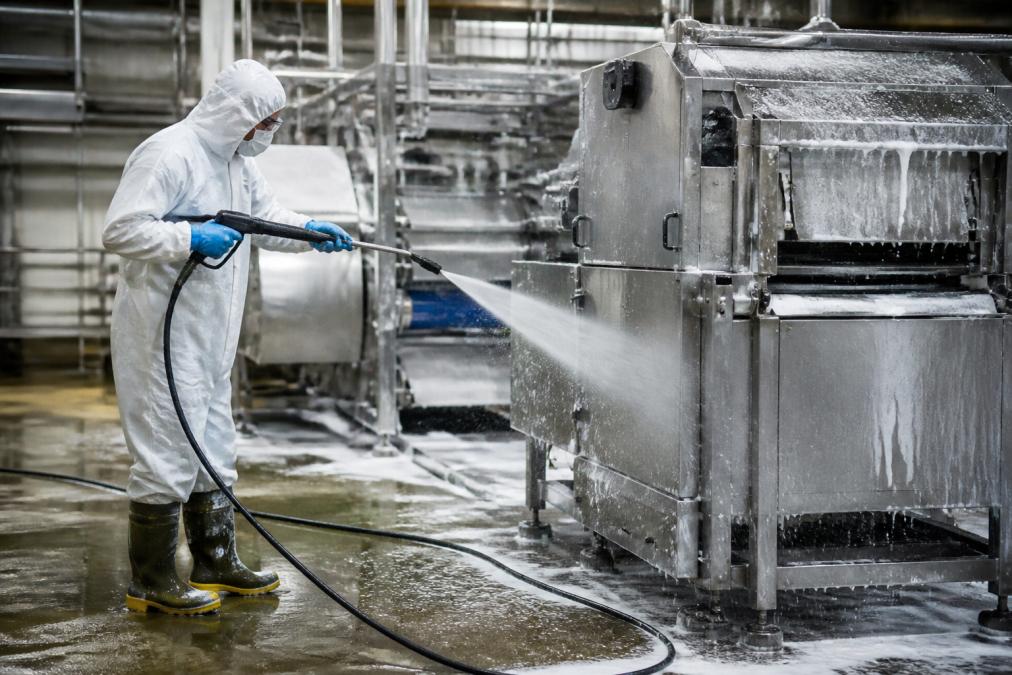
Effective degreasing requires three components: the right chemical, proper application method, and adequate dwell time.
The chemicals themselves matter significantly. Alkaline degreasers work well for heavy buildup but can be harsh on certain materials. Citrus-based degreasers are gentler and more environmentally friendly but less aggressive on severe buildup. Enzymatic degreasers work slowly but break down organic oils effectively. The best choice depends on your specific equipment, the type of grease you’re dealing with, and your facility’s environmental commitments.
Safety is paramount during degreasing work. Proper ventilation prevents fume accumulation. Personal protective equipment, gloves, eye protection, respiratory protection if needed, protects workers from chemical exposure. Equipment must be properly shut down and locked out before degreasing begins. A professional service like Guso Janitorial Services handles these safety protocols as standard procedure, protecting both your workers and your facility.
After degreasing, thorough rinsing is essential. Residual degreaser creates slipping hazards and can damage equipment seals or electrical components. Many facilities overlook this step, which defeats the purpose of the degreasing work.
In-House vs. Professional Outsourced Cleaning: Cost-Benefit Analysis
This decision fundamentally shapes your facility’s cleanliness and your operational costs. Many facility managers assume in-house cleaning is cheaper, but the full cost picture often tells a different story.
In-house cleaning requires hiring and training dedicated staff, managing payroll and benefits, purchasing equipment and supplies, managing inventory, and handling compliance documentation.
| Comparison Factor | In-House Cleaning | Professional Service |
|---|---|---|
| Staffing Responsibility | Your facility manages | Service provider manages |
| Training & Compliance | Your responsibility | Provider’s responsibility |
| Equipment & Supplies | You purchase and maintain | Included in service fee |
| Quality Consistency | Depends on staff | Standardized protocols |
| Flexibility for Changes | Limited | High |
| 24/7 Availability | Difficult to arrange | Standard offering |
Customized Cleaning Plans for Mixed-Use Facilities
Many manufacturing operations aren’t pure manufacturing. You might have office spaces, retail showrooms, warehouse areas, and production floors all under one roof. Each zone requires different cleaning approaches, frequencies, and standards.
Generic cleaning contracts often fail in mixed-use facilities because they apply the same protocol everywhere. This creates either wasted spending or compliance gaps. Demand a customized plan that specifies cleaning methods and frequencies for each distinct area.
Green Cleaning Solutions for Heavy Industry
The perception that industrial cleaning requires harsh chemicals is outdated. Modern green cleaning solutions deliver effective results while reducing environmental impact and improving worker safety.
Frequently Asked Questions
What are the OSHA requirements for cleanliness in manufacturing facilities?
OSHA standards require manufacturing facilities to maintain clean and sanitary work environments to prevent accidents and illness. Key requirements include regular removal of dust and debris, proper waste management, floor maintenance to prevent slips and falls, and sanitation of equipment and surfaces. Facilities must also develop a written housekeeping program that outlines cleaning schedules, procedures, and responsibility assignments. Specific standards vary by industry type and hazardous materials present, so consult OSHA guidelines or a professional cleaning service to ensure your facility meets all applicable regulations.
How often should industrial manufacturing floors be deep cleaned?
Most manufacturing facilities benefit from deep floor cleaning at least quarterly, though frequency depends on floor type, traffic volume, and production processes. High-traffic areas and those exposed to oils, chemicals, or dust may require monthly deep cleaning. Daily sweeping and spot cleaning should occur throughout the week to maintain safety and prevent buildup. A customized cleaning plan from a professional service can assess your specific floor conditions and production schedule to determine the optimal frequency for your operation.
What is the difference between janitorial services and industrial cleaning?
Janitorial services focus on general office and facility upkeep, including restroom cleaning, trash removal, and light dusting. Industrial cleaning addresses the specialized needs of manufacturing and heavy-use environments, including degreasing, high-pressure washing, hazardous material handling, and equipment sanitation. Industrial cleaning requires specialized equipment, training, and compliance knowledge specific to manufacturing operations. Many facilities benefit from combining both services: janitorial for office areas and industrial cleaning for production floors and equipment.
How do you develop a cleaning protocol for a manufacturing plant?
Start with a site assessment of your facility layout, equipment types, production processes, and safety hazards. Identify high-risk areas requiring frequent cleaning and establish daily, weekly, and monthly cleaning schedules. Document specific cleaning methods for different surfaces and equipment to prevent damage. Include OSHA compliance checkpoints, waste disposal procedures, and staff responsibilities. Assign accountability through a manufacturing facility cleaning checklist and schedule regular audits to ensure consistency. Professional cleaning services can help develop and implement a customized protocol tailored to your operation’s unique needs.