
Quick Summary
Prevent office kitchen cross-contamination by keeping raw meat on the bottom shelf in sealed containers, using color-coded cutting boards, and washing hands with soap for at least 20 seconds. Sanitize high-touch points like fridge handles and microwave buttons daily, and assign each cleaning task to a named person.
- Store raw meat on the bottom shelf in sealed containers so juices cannot drip onto other food.
- Wash hands with soap and water for at least 20 seconds before handling food.
- Use one color of cutting board for raw meat, another for produce, and a third for bread and cheese.
- Keep sanitizer on the surface for the full contact time listed on the label.
- Assign daily, weekly, and monthly cleaning tasks to named people on a posted schedule.
Table of Contents
- What Cross-Contamination Looks Like in a Shared Office Kitchen
- Step 1: Set Up Handwashing and Sanitizing Stations
- Step 2: Separate Raw and Ready-to-Eat Foods in the Shared Refrigerator
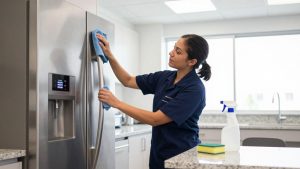
- Step 3: Clean and Sanitize Surfaces, Appliances and Touchpoints
- Step 4: Control Allergen Cross-Contact in Shared Spaces
- Step 5: Build a Cleaning Schedule and Assign Clear Responsibility
- Printable Office Kitchen Cleaning Checklist and Next Steps for Guso Clients
- Frequently Asked Questions
What Cross-Contamination Looks Like in a Shared Office Kitchen
Office kitchen cross-contamination happens when germs move from one food, surface, or object to another. In a shared office kitchen, it usually starts with something small, like a knife used on raw chicken and then on a salad. Office kitchens are especially prone to this because many people use the same sink, fridge, microwave, and counter every day.
Here is what it often looks like in practice:
- Raw meat or poultry stored above ready-to-eat lunches in the shared refrigerator
- The same sponge wiping up a spill on the counter and then a cutting board
- Coffee pot handles, microwave buttons, and fridge doors touched by dirty hands all day
- Leftovers from a shared potluck left on the counter for hours
- Someone with a nut allergy eating from a container that held peanut snacks earlier
Foodborne illness is the main risk here. Bacteria such as Salmonella and Listeria can spread quickly from raw foods to cooked or ready-to-eat items. Most people won’t get sick from one small slip, but repeated habits add up over time. CDC guidance on preventing foodborne illness
A common mistake is assuming that a quick rinse is enough. Cross-contamination is easy to miss because the food looks clean. The fix is a set of simple routines that everyone follows, not a one-time cleanup.
Step 1: Set Up Handwashing and Sanitizing Stations
Handwashing is the first line of defense against office kitchen cross-contamination, but the station itself has to be designed for many users, not one household. Hands touch the fridge handle, the coffee maker, the microwave buttons, and the faucet, so they move germs around the kitchen constantly.
Place a handwashing sink in or near the kitchen if you can. If you can’t, make sure a sink with soap, running water, and paper towels is within a few steps of the prep counter. Hot water helps, but soap does most of the work. Post a short reminder near the sink:
- Wash hands with soap and water for at least 20 seconds
- Wash hands before handling food and after touching raw meat
- Wash hands after using the restroom and after taking out trash
- Wipe the counter before and after food prep
A common pattern in shared kitchens is a single communal sponge or dish towel that gets used on the counter, then on a cutting board, then on a spill near the sink. That one item can move germs across every surface in the room.
Set up a sanitizing station too. Sanitizer only works when it’s used correctly, so check the label for the right dilution and contact time, which is how long the surface must stay wet to kill germs (the EPA).
Follow the sanitizer label exactly, and store sanitizer away from food and out of reach of anyone who might mistake it for a beverage.
Verification matters as much as application. A simple pattern is to have the person who closes the kitchen initial a short log after the last sanitizing round, noting the time and the surfaces treated. That gives the office manager a way to confirm the routine happened without hovering over every task.
Watch out: A spray bottle with no label can be mistaken for water or a cleaning product that isn’t a sanitizer. Label every bottle clearly with its contents and the date it was mixed.
Step 2: Separate Raw and Ready-to-Eat Foods in the Shared Refrigerator
The shared fridge is one of the highest-risk spots in any office. Raw meat juices can drip onto other food and carry bacteria with them.
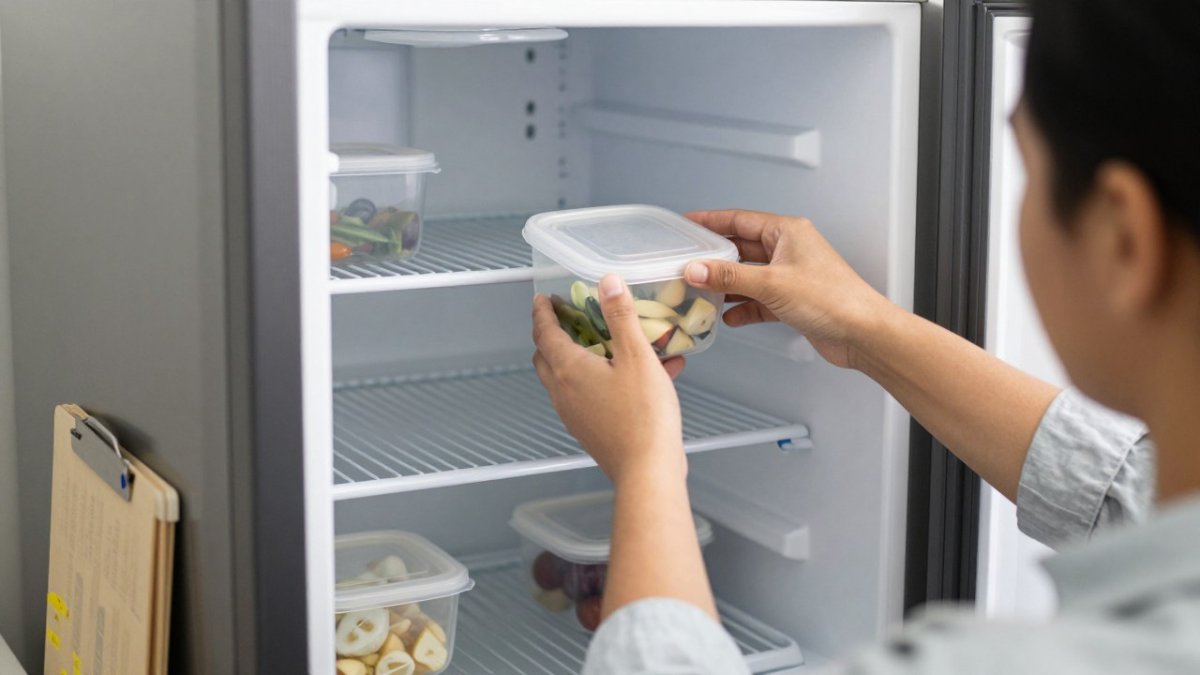
Use a simple storage rule. Store raw meat, poultry, and seafood on the bottom shelf, in sealed containers, so juices can’t drip down onto anything below. Put ready-to-eat foods such as salads, sandwiches, fruit, and dairy on the upper shelves.
Ask everyone to label their food with a name and date. This makes it easy to spot old items and tell who owns what. Set a clear policy for clearing out food, such as every Friday afternoon.
Here is a basic storage order from top to bottom:
- Ready-to-eat foods (top shelf)
- Leftovers and cooked foods
- Raw seafood
- Raw whole cuts of meat
- Raw ground meat and poultry (bottom shelf)
Color-coded cutting boards follow the same logic. Use one color for raw meat, another for vegetables and fruit, and a third for bread and cheese. This habit keeps raw juices off ready-to-eat food at the prep counter.
Step 3: Clean and Sanitize Surfaces, Appliances and Touchpoints
Clean surfaces first, then sanitize them. Cleaning removes dirt and food. Sanitizing reduces germs to safer levels. Doing only one of these leaves gaps.
Focus on the places people touch most often:
- Fridge handles and door seals
- Microwave buttons and handles
- Coffee machine, water dispenser, and faucet handles
- Counters, tables, and sink edges
- Cabinet pulls and drawer handles
- Trash can lids
Use the right tool for each job. Use one cloth for surfaces and a separate cloth for cleaning up spills near food. Throw away disposable cloths after use. Wash reusable cloths in hot water and let them dry fully before reuse.
Keep a short daily checklist near the sink so the work doesn’t depend on memory. To decide how often each task should happen, compare a daily versus weekly office cleaning schedule for a small business. Cleaning appliances like the microwave interior and the fridge shelves once a week is also a good habit.
Step 4: Control Allergen Cross-Contact in Shared Spaces
Allergen cross-contact is a separate risk from germs, and it’s easy to overlook in a shared kitchen. A small amount of peanut, milk, egg, or wheat residue can be enough to cause a reaction in someone with an allergy. Because allergen residue can linger on shared surfaces and utensils, shared kitchen hygiene protocols should include clear separation and careful cleaning to reduce the risk of cross-contact.
Start by asking staff to list known allergies in a private, confidential way. Post a simple allergen notice in the kitchen without naming individuals.
Some practical steps help:
- Keep allergen-containing snacks in sealed containers away from shared snack areas
- Wipe down the counter and table after anyone eats a peanut or nut product
- Use separate utensils and plates for allergy-friendly food
- Label potluck dishes with the main allergens they contain
- Avoid sharing the same toaster or microwave dish for allergen foods
A common mistake is assuming that washing hands is enough. Hands should be washed, but surfaces and shared utensils need cleaning too. Many allergic reactions in shared spaces come from contact with a sticky counter or a shared knife, not from the food itself.
Step 5: Build a Cleaning Schedule and Assign Clear Responsibility
A written schedule keeps the kitchen clean even when people are busy. If you are planning for cold and flu months, see a step-by-step plan for managing office cleaning during flu season. Without one, everyone assumes someone else will do it, and nothing gets done.
Break the work into daily, weekly, and monthly tasks, and assign a named person to each one rather than a role that may be vacant:
| Task | Frequency | Responsible Person |
|---|---|---|
| Wipe counters and sinks | Daily | Rotating staff member (named on the schedule) |
| Sanitize high-touch points | Daily | Office manager or designee |
| Clear out fridge | Weekly | Everyone, with a set day |
| Clean microwave and fridge shelves | Weekly | Assigned staff member |
| Deep clean appliances and cabinets | Monthly | Janitorial service or designated team |
A rotating assignment works only if the rotation is visible. Post the schedule where people can see it, with the current week’s names filled in, and update it when someone is out or the team changes shifts.
Signage should explain the rules and who to contact with questions. Keep it short and specific: where raw meat goes in the fridge, which cloth is for food-contact surfaces, and who to tell if the sanitizer runs out or the fridge needs defrosting. Clear accountability works better than general reminders because it gives people a name to ask and a place to report a problem.
Build a simple reporting path. If someone notices a spill, an expired item, or a broken appliance, there should be one obvious place to report it, such as a shared message channel or a note on the schedule. Review the schedule every few months and adjust it if the kitchen gets busier or the team grows.
If your team is too busy to keep up, a professional janitorial service can handle the deeper cleaning.
Printable Office Kitchen Cleaning Checklist and Next Steps for Guso Clients
Use this checklist to keep your shared kitchen on track. Print it and post it near the sink.
- Hands washed with soap and water before food prep
- Raw meat stored on the bottom shelf in sealed containers
- Ready-to-eat foods stored on upper shelves
- Color-coded cutting boards in use
- Counters, sinks, and handles wiped and sanitized
- Sanitizer used for the full contact time on the label
- Allergen spills cleaned up right away
- Expired food removed from the shared fridge on schedule
- Cleaning cloths washed or replaced
- Weekly and monthly tasks assigned to named people
If you want help putting this system in place, Guso Janitorial Services can set up a cleaning program built around your office’s needs. Visit the Guso Janitorial Services website or request a quote to learn more about current options. Pricing depends on quantity, dates, and delivery. Visit the Guso Janitorial Services website for current prices or a quote.
We are fully licensed, bonded, and insured, and we use clean and green products. Contact Guso Janitorial Services today to schedule a walkthrough and get a plan that fits your office.
Frequently Asked Questions
What are three ways to prevent cross-contamination in an office kitchen?
Three practical measures stop most office kitchen cross-contamination: wash hands with soap and water before preparing food and after handling raw items, use separate or color-coded cutting boards and utensils for raw proteins and ready-to-eat foods, and clean and sanitize shared surfaces, handles and appliances on a set schedule. Pair these with clear labels on shared refrigerator shelves so staff know which items to keep apart. These steps work together, so a gap in one area still leaves the others covered.
What are common examples of cross-contamination in an office kitchen?
Common examples include raw chicken or deli meat stored above ready-to-eat salads in the shared refrigerator, juices from thawing meat dripping onto fruit, a cutting board used for raw meat and then for vegetables without washing, and a sponge or dish towel wiped across the microwave handle, faucet and counter in one pass. Shared allergen foods such as peanut snacks placed next to nut-free items also cause allergen cross-contact. Each of these can be prevented with separation, labeling and sanitizing between uses.
How often should an office kitchen be cleaned to reduce cross-contamination?
High-touch points such as the refrigerator handle, microwave buttons, faucet, sink and coffee station should be wiped daily, with a full clean of the refrigerator, counters and appliances at least weekly. Sanitizer needs contact time to work, so follow the label directions rather than just spraying and wiping. Cleaning cloths should be laundered or replaced regularly, since a dirty cloth can spread germs across every surface it touches.
How can employees prevent allergen cross-contact in a shared kitchen?
Label allergen-containing items clearly, store them in sealed containers on a separate shelf, and never use the same serving utensil for different foods. Keep a dedicated space for nut-free or other allergen-free foods, and wipe down counters and microwaves before and after shared use. Post a simple sign listing these expectations so staff know what is required, and make one person responsible for checking the area at the end of each day.

Leave a Reply