
Last Updated: October 28, 2026
Quick Summary
Managing office cleaning during flu season means focusing on high-touch surfaces, following a written checklist, and disinfecting correctly on a set schedule. Clean first to remove visible dirt, then disinfect and leave the surface wet for the full labeled contact time. Assign each zone an owner and log the work.
- Build a written checklist covering high-touch surfaces, shared equipment, restrooms, break rooms, and hand hygiene stations.
- Assign an owner to each zone, such as the lobby, each floor, restrooms, and conference rooms.
- Clean visible soil first, then disinfect, because dirt and residue can shield germs.
- Leave disinfectant wet for the full contact time listed on the label.
- Clean restrooms and high-traffic areas daily or twice daily, and do deeper cleaning weekly.
Table of Contents
- Why Flu Season Changes Your Office Cleaning Routine
- Step 1: Build an Office Flu Season Cleaning Checklist
- Step 2: Map High-Touch Surfaces and Assign Owners by Area
- Step 3: Apply High-Touch Surface Disinfection in Offices Correctly
- Step 4: Set Office Cleaning Frequency During Flu Season
- Step 5: Follow Office Cleaning Protocols After an Employee Is Sick
- Booking Professional Support for Your Flu Season Plan
- Frequently Asked Questions
Flu season hits offices hard. A sick employee may touch shared surfaces such as a keyboard, a door handle, or a coffee machine. Office cleaning during flu season is less about doing more and more about doing the right things on a predictable schedule. This step-by-step plan can help facility managers build a routine.
The sections below walk through the work in order: what changes in flu season, how to build a checklist, who owns each area, how to disinfect, how often to clean, and what to do when someone gets sick.
Why Flu Season Changes Your Office Cleaning Routine
Flu viruses spread mostly through close contact and by touching surfaces that people have touched before (the CDC). During flu season, the same routine that worked in summer can leave gaps. Traffic goes up, people come in sick, and hand hygiene habits slip.
The biggest change is focus. Routine cleaning keeps a space looking tidy. Flu-season cleaning targets the surfaces most likely to carry germs from person to person.
Step 1: Build an Office Flu Season Cleaning Checklist
A checklist can help turn good intentions into a routine people can follow. Start with a written list that covers shared areas in the building.
Include these core items:
- High-touch surfaces: door handles, push plates, light switches, elevator buttons, security keypads
- Shared equipment: keyboards, phones, copier panels, tablets, and conference room remotes
- Restrooms: faucets, flush handles, soap dispensers, paper towel dispensers, and door handles
- Break rooms: refrigerator handles, microwave buttons, coffee machine handles, and sink fixtures
- Hand hygiene stations: soap, paper towels, tissues, and hand sanitizer refills
A checklist can include a sign-off column with date and initials.
Step 2: Map High-Touch Surfaces and Assign Owners by Area
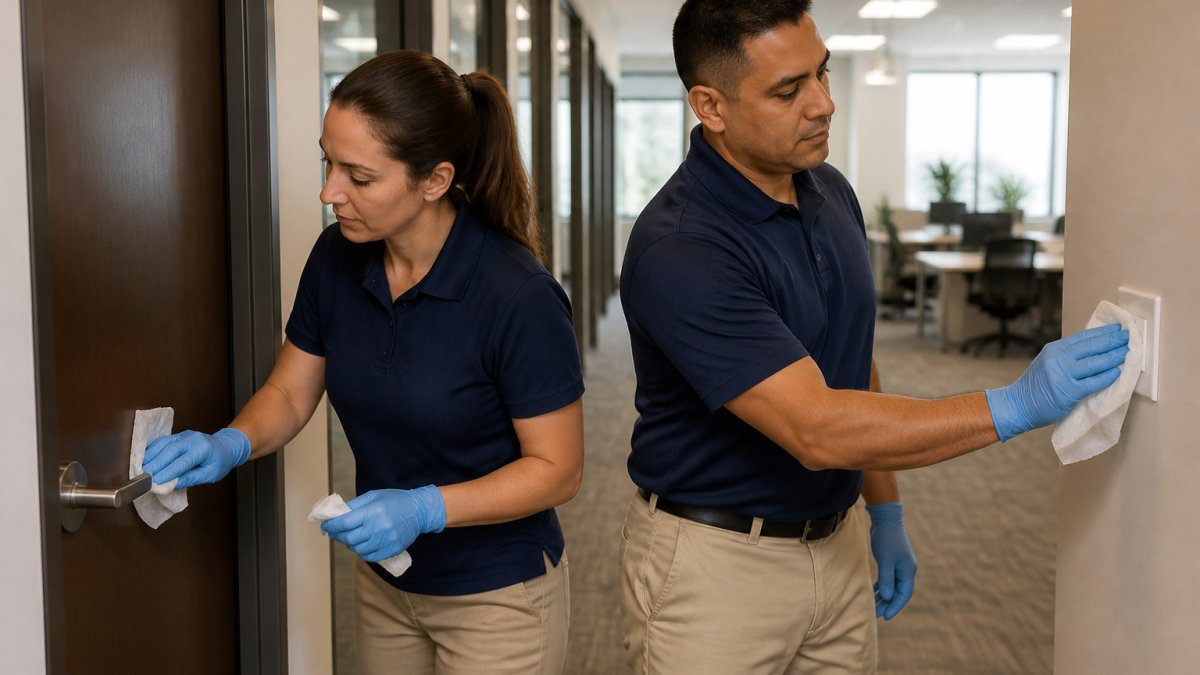
A checklist can identify an owner for each area. Divide the building into zones, such as the front lobby, each floor, the break room, and restrooms.
Here is a simple zone map to adapt:
- Lobby and entrances: door handles, push plates, keypads, visitor sign-in pens
- Each floor: light switches, shared phones, copier panels, kitchen areas
- Restrooms: all fixtures and dispensers, checked at least twice a day in high-traffic offices
- Conference rooms: tables, chair arms, remotes, and whiteboard markers
Step 3: Apply High-Touch Surface Disinfection in Offices Correctly
Cleaning removes dirt, oils, and germs from surfaces. Disinfecting kills germs that remain (the CDC). For flu season you need both, and the order matters: clean first to remove visible soil, then apply a disinfectant and leave it wet on the surface for the full contact time listed on the label. Skipping the clean step is one of the most common reasons disinfection underperforms, because dirt and residue can shield germs and neutralize the active ingredient.
Choose the right product for the surface
Not every disinfectant belongs on every surface. Check the label for the surfaces the product is registered for and for any warnings about plastics, painted metal, or electronics. For keyboards, phones, copier panels, and other electronics, use a product labeled for electronics or apply disinfectant to a disposable wipe rather than spraying directly into seams and ports. For restroom fixtures and door handles, a standard EPA-registered disinfectant cleaner is usually appropriate. Look for the EPA registration number on the label, that number confirms the product has met the agency’s registration requirements for the claims on the label (the EPA).
Respect contact time, and how to actually hit it
For high-traffic areas where you cannot leave a surface wet for minutes, choose a product with a shorter labeled contact time rather than shortening the time on a longer-contact product.
Avoid cross-contamination
Disposable disinfecting wipes and single-use paper towels reduce cross-contamination because you are not dipping a shared cloth back into the same bucket. If you use reusable cloths, change them between zones and launder them after use. Use gloves when handling concentrated products or when cleaning restrooms, and follow label instructions for ventilation.
Common mistakes to avoid
- Diluting a product more than the label allows, which can reduce or eliminate its effectiveness.
- Mixing cleaning chemicals, especially bleach with ammonia or acids, which can create dangerous fumes.
- Wiping too quickly and leaving the surface dry before contact time ends.
- Reusing a cloth across multiple zones without laundering.
- Skipping gloves or ventilation when using strong products.
Verify the work
Add a column to your zone checklist for product name and contact time, and have the owner initial it after each disinfection round. A quick weekly spot check, look for residue, check that spray bottles are labeled, and confirm wipes are stocked, catches drift before it becomes a habit.
The article breaks disinfection down into the steps below, so you can check each one against your routine.
| Surface or step | Method | Key point |
|---|---|---|
| Order of work | Clean first, then disinfect | Dirt and residue can shield germs and weaken the disinfectant |
| Keyboards, phones, copier panels | Product labeled for electronics or a disposable wipe | Avoid spraying directly into seams and ports |
| Restroom fixtures and door handles | Standard EPA-registered disinfectant cleaner | Check the label for the EPA registration number |
| Contact time | Leave surface wet for the full labeled time | Choose a shorter-contact product for busy areas |
| Reusable cloths | Change between zones and launder after use | Disposable wipes reduce cross-contamination |
| Concentrated products | Wear gloves and ventilate as the label directs | Never mix bleach with ammonia or acids |
| Verification | Log product and contact time, initialed by owner | Weekly spot check for residue and stocked wipes |
Step 4: Set Office Cleaning Frequency During Flu Season
How often you clean depends on how many people use the space each day. A small office with 20 employees has different needs than a building with several hundred people and frequent visitors.
As a starting point, many offices use this rhythm during flu season:
- Daily: high-touch surfaces in shared areas, restrooms, and break rooms
- Twice daily: restrooms and any area with heavy visitor traffic
- Weekly: deeper cleaning of desks, shared equipment, and less-used surfaces
- Monthly: review the checklist, restock supplies, and adjust zones as needed
Track the frequency in your logs. If a zone is consistently missed, that is a sign the schedule is too heavy or the owner needs support.
Remember that cleaning frequency is a planning choice, not a promise. Adjust it to your building’s actual use and the advice of your janitorial provider.
Step 5: Follow Office Cleaning Protocols After an Employee Is Sick
When someone in the office gets sick, act quickly and follow a written response plan rather than improvising. The goal is to reduce further spread without creating alarm, and to coordinate cleaning with your human resources policies so decisions about staying home, reporting illness, and returning to work line up with the cleaning response.
Coordinate with HR before you need to
Ask your HR team for the current illness policy: when employees should stay home, how they report an illness, and whether the office has any return-to-work guidance. Cleaning decisions should support that policy, not contradict it. For example, if HR asks employees to stay home until fever-free for 24 hours without medication, the cleaning response should focus on the spaces the employee used rather than on closing entire floors. Keep a copy of the policy with the cleaning checklist so owners can reference it quickly.
A simple response plan
- Identify the spaces used. Note the employee’s desk, phone, keyboard, chair arms, nearby door handles, and any shared rooms they used that day, such as conference rooms, restrooms, and the break room.
- Clean and disinfect those surfaces right away, following the clean-first, contact-time method in Step 3. Do not wait for the next scheduled clean.
- Prioritize shared equipment. Keyboards, mice, phones, copier panels, and conference room remotes are the highest-risk shared items. Use a product labeled for electronics or apply disinfectant to a disposable wipe.
- Restock hand hygiene supplies in nearby restrooms and the break room, and check that tissues and disinfecting wipes are available at shared workstations.
- Log the response with the date, time, areas cleaned, product used, and the initials of the person who did the work.
- Remind staff about hand washing, covering coughs and sneezes, and staying home when sick, without naming the affected employee.
Handle shared spaces thoughtfully
If the employee used a shared conference room or break room, clean and disinfect the high-touch surfaces in that room before the next scheduled use. You do not usually need to close the room for an extended period; the priority is cleaning and disinfecting surfaces, not fumigating the space. Follow the product label for any ventilation guidance, and open windows or adjust HVAC settings if the label calls for it.
Document and review
Keep the response log with your regular cleaning records. At the next weekly review, check whether the response was completed on time, whether supplies were restocked, and whether any zone was missed. If the same gap appears twice, adjust the schedule or assign a backup owner. Over a season, these logs also help you see which areas and which times of year generate the most responses, which can inform staffing and supply ordering.
Booking Professional Support for Your Flu Season Plan
Guso Janitorial Services offers 24/7 janitorial service with tailored cleaning programs, clean and green products, and experience working with large, well-known brand names.
If you want to discuss a cleaning plan for your building, contact Guso Janitorial Services for a quote. Call today to get started.
Frequently Asked Questions
How often should an office be cleaned during flu season?
Cleaning frequency can be tailored to a facility’s needs.
What is the difference between cleaning and disinfecting an office?
Cleaning removes dirt, dust, and germs from surfaces using soap or detergent and water. Disinfecting uses an EPA-registered disinfectant to kill germs that remain. For flu season, clean first, then disinfect high-touch surfaces. Always follow the product label for the contact time, which is the length of time the surface must stay wet for the disinfectant to work. Wiping a surface dry too early reduces effectiveness.
What should offices do after an employee has the flu?
Encourage the sick employee to stay home until fever-free for at least 24 hours without fever-reducing medication, consistent with CDC guidance. Disinfect the sick employee’s workstation, phone, keyboard, and nearby high-touch surfaces using a labeled EPA-registered disinfectant, observing the contact time. Notify staff without naming the employee, and increase disinfection of shared areas for several days. Reinforce hand hygiene and tissue use across the team.
Should offices increase professional cleaning during flu season?
Guso Janitorial Services offers 24/7 janitorial service and tailored cleaning programs. Contact Guso for a quote.

Leave a Reply