
Table of Contents
- Why Customized Janitorial Plans Matter for Manufacturing
- Assess Your Facility: Size, Traffic Patterns, and Production Schedules
- OSHA Standards for Industrial Housekeeping
- Create a Commercial Cleaning Scope of Work Template
- Industrial Facility Cleaning Checklist: Step-by-Step Implementation
- Optimize for Operational Efficiency and Cost Management
- Common Mistakes to Avoid When Building Your Cleaning Plan
- Frequently Asked Questions
Last Updated: September 20, 2026
Why Customized Janitorial Plans Matter for Manufacturing
Manufacturing facilities face cleaning challenges that generic janitorial services simply can’t address, which is why customized janitorial plans for manufacturing are essential. Your equipment is specialized, your safety standards are strict, and your production schedules don’t follow a typical 9-to-5 rhythm. A customized janitorial plan for manufacturing accounts for all of these factors, protecting both your facility and your bottom line.
The real difference between a standard cleaning contract and a customized janitorial plan for manufacturing is precision. Standard plans treat all spaces the same. Customized plans recognize that your degreasing requirements differ from your office areas, that your high-traffic zones need different attention than your equipment zones, and that downtime during production shifts matters financially.
At Guso Janitorial Services, we work with manufacturing operations to build plans that align with production schedules, address equipment-specific requirements, and deliver measurable results.
A customized janitorial plan for manufacturing ties cleaning schedules to production cycles, addresses equipment-specific contamination, and ensures OSHA compliance, three things that generic janitorial services miss entirely.
Assess Your Facility: Size, Traffic Patterns, and Production Schedules
Before any cleaning plan can work, you need a clear picture of your actual facility. This means understanding square footage, identifying which areas generate the most contamination, and mapping your production workflow. A customized janitorial plan for manufacturing starts with this assessment because cleaning frequency and method depend entirely on these factors.
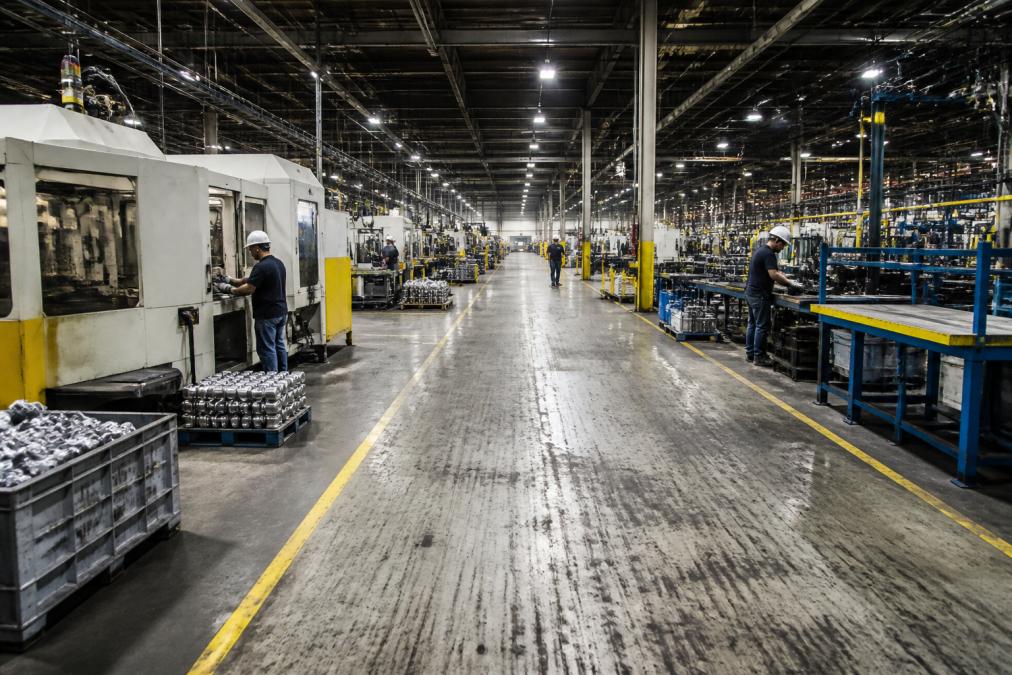
Mapping high-traffic areas and equipment zones
Your facility isn’t uniform. Some areas accumulate debris and contaminants rapidly; others stay relatively clean. High-traffic zones, entry points, between production lines, near quality control stations, need more frequent attention. Equipment zones need specialized cleaning that won’t damage sensitive machinery or leave residue that interferes with precision work.
Start by walking your facility with a floor plan. Mark areas by contamination rate: heavy (where debris accumulates daily), moderate (weekly buildup), and light (minimal contamination). This categorization directly determines your customized janitorial plan for manufacturing. Heavy areas might need daily spot cleaning; moderate areas might need twice-weekly deep cleaning; light areas might only need weekly attention.
Equipment compatibility matters more than most facility managers realize. Degreasing solvents that work on concrete floors can damage painted surfaces or leave films on precision equipment. Your cleaning plan must specify which products go where. This isn’t overcomplicated, it’s the difference between protecting your equipment investment and slowly degrading it.
Aligning cleaning with production shifts
This is where customized janitorial plans for manufacturing diverge most from standard office cleaning. You can’t run a deep floor cleaning while your production line is running. You can’t have cleaning crews moving equipment while operators need access. Downtime costs money, so your cleaning schedule must fit around production, not the other way around.
Map your production schedule: shift times, peak activity periods, maintenance windows, and any scheduled downtime. The best cleaning windows are typically during shift changes, lunch breaks, or planned maintenance stops. Some facilities find that a small crew doing targeted cleaning during production (high-traffic zones, equipment surrounds) works better than one large crew trying to deep clean during a narrow window.
Communication is critical here. Your production team needs to know when cleaning happens. Your cleaning crew needs to know production schedules so they don’t interfere. This coordination prevents the “cleaning crews just showed up and blocked our workflow” problem that creates friction between departments.
Schedule a brief weekly sync between your production manager and cleaning supervisor. Fifteen minutes prevents most coordination issues and catches scheduling conflicts before they disrupt operations.
OSHA Standards for Industrial Housekeeping
Your manufacturing facility is governed by OSHA regulations on housekeeping. These aren’t suggestions, they’re compliance requirements. OSHA’s general duty clause on workplace cleanliness requires employers to maintain safe working conditions, which includes proper housekeeping. Specific OSHA standards address slip-and-fall hazards, chemical storage, and contamination control.
The standard that hits most manufacturing operations is the requirement to keep floors, walkways, and work surfaces clean and orderly. This means debris removal, spill cleanup, and surface maintenance that prevents accidents. Failure to maintain OSHA-compliant housekeeping creates liability: if an employee is injured and your facility’s cleaning records show negligence, you’re exposed.
A customized janitorial plan for manufacturing must explicitly address OSHA compliance. This means documenting cleaning frequencies, specifying the products used, and maintaining records that prove compliance.
Chemical storage areas require special attention. Spills must be cleaned immediately. Floors must be treated to prevent slipping. Incompatible chemicals must be stored separately, and your cleaning plan should account for the cleanup protocols if cross-contamination occurs. Your plan should specify which crew members are trained in hazardous material cleanup and how often that training is refreshed.
Create a Commercial Cleaning Scope of Work Template
A scope of work is your contract with your cleaning vendor. It specifies exactly what gets cleaned, how often, and to what standard. Without a detailed scope of work, you end up with vague agreements that lead to disputes: “We thought you were doing that” or “That’s not our job.”
Your customized janitorial plan for manufacturing needs a scope of work template that breaks your facility into zones and specifies cleaning tasks for each. This isn’t just a checklist, it’s a document that protects both you and your vendor by setting clear expectations.
Defining cleaning frequency and surface compatibility
Frequency varies by zone. Production floor areas might need daily cleaning. Office areas might need 2-3 times weekly. Storage areas might need weekly or monthly attention. Your scope of work should specify frequency for each zone and note any seasonal adjustments (increased cleaning during high-pollen seasons, for example).
Surface compatibility is critical. Concrete floors can handle aggressive scrubbing; painted surfaces can’t. Stainless steel equipment needs specific cleaners; aluminum corrodes with the wrong chemicals. Your scope should list the surfaces in each zone and specify which products are approved for each. This prevents damage and ensures consistent results.
A common mistake is assuming “industrial cleaner” means one thing.
Specifying green cleaning products for industrial equipment
Green cleaning products have improved significantly. They’re no longer synonymous with weak or ineffective. Many modern green formulations deliver the same cleaning power as traditional chemicals without leaving residue or creating air quality issues. For manufacturing, this matters because residue on precision equipment can affect performance.
Using green products without understanding their drying time or residue characteristics can actually create problems. Some green cleaners leave a slight film that affects grip on walkways. Always test green products in a small area before rolling them out facility-wide.
Industrial Facility Cleaning Checklist: Step-by-Step Implementation
Implementing your customized janitorial plan for manufacturing requires a structured approach. This isn’t about perfection on day one, it’s about establishing a system that works and refining it based on results.
Pre-cleaning audit and baseline assessment
Start with a detailed audit of your current facility condition. Document what’s clean, what’s not, and where the problem areas are. This baseline matters because you’ll measure progress against it. Take photos of key areas: production floors, equipment zones, high-traffic walkways, and storage areas.
Execution and quality control
Once your plan is in place, execution is about consistency and monitoring. Your cleaning vendor should provide a checklist for each shift, signed off by the supervisor responsible for that area. This creates accountability and a record of what was done.
Optimize for Operational Efficiency and Cost Management
A customized janitorial plan for manufacturing should reduce costs while improving results. This happens through efficiency, doing the right work at the right frequency in the right way.
Common Mistakes to Avoid When Building Your Cleaning Plan
Most manufacturing facilities make similar mistakes when transitioning to a customized janitorial plan for manufacturing. Knowing these pitfalls helps you avoid them.
| Element | Frequency | Owner | Documentation |
|---|---|---|---|
| High-traffic floor cleaning | Daily | Cleaning crew | Signed checklist |
| Equipment zone degreasing | 2-3x weekly | Cleaning supervisor | Checklist with product used |
| Deep production floor cleaning | Weekly | Cleaning vendor | Detailed report |
| Facility audit | Monthly | Facility manager | Photo documentation |
| Compliance review | Quarterly | Operations manager | OSHA checklist completed |
Frequently Asked Questions
What should be included in a customized janitorial plan for a manufacturing facility?
A customized janitorial plan for manufacturing must address production schedules, high-traffic area frequency, equipment-specific surface compatibility, OSHA compliance requirements, and green cleaning product specifications. It should define cleaning scope by zone (production floor, offices, restrooms), establish frequency based on occupancy and contamination risk, and include quality control checkpoints. The plan must align cleaning shifts with production downtime to minimize workflow disruption and account for specialized equipment that requires non-abrasive or solvent-free cleaning methods.
How does OSHA compliance relate to facility cleaning standards?
OSHA standards for industrial housekeeping require facilities to maintain clean, orderly work areas free of hazards like spilled materials, debris, and cross-contamination. Regulations under 29 CFR 1910.176 mandate proper storage and handling of materials, while general duty clauses require employers to maintain safe environments. A compliant cleaning plan establishes documented procedures, assigns responsibility, specifies cleaning frequency for hazardous areas, and ensures products used won’t create new chemical hazards. Regular janitorial audits verify compliance and reduce liability risk.
How often should high-traffic manufacturing areas be cleaned?
High-traffic areas in manufacturing facilities typically require daily cleaning, with some zones needing multiple cleanings per shift. Production floors with heavy equipment use, assembly lines, and material handling zones should be cleaned during shift breaks or after production ends to prevent contamination and slips. Restrooms and break areas need at least twice-daily cleaning. The exact frequency depends on occupancy levels, type of materials handled, and contamination risk. A janitorial audit identifies which zones qualify as high-traffic and warrant increased frequency.
What are the benefits of outsourcing industrial cleaning services?
Outsourcing industrial cleaning to a professional service eliminates the cost of hiring and training in-house staff, provides access to specialized equipment and green cleaning products, ensures consistent compliance with OSHA standards, and frees your team to focus on production. Professional services offer 24/7 availability for shift scheduling flexibility, provide liability coverage through bonding and insurance, and deliver quality control through documented audits. Experienced providers understand manufacturing-specific challenges like equipment sensitivity and production schedule integration, reducing downtime and improving workplace safety and productivity.