
Table of Contents
- Identify the Mark Before You Touch It
- A Safe, Step-by-Step Process to Remove Scuff Marks
- Commercial Vinyl Floor Cleaning: Tools and Techniques That Work at Scale
- Vinyl Floor Cleaning Products: What to Use and What to Avoid
- How to Remove Scratches from Vinyl Flooring
- Preventing Scuff Marks on Commercial Floors
- When to Call a Professional or Replace a Plank
- Frequently Asked Questions
Last Updated: October 18, 2026
Identify the Mark Before You Touch It
Most damage to commercial vinyl flooring happens in the first ten seconds of cleaning, not during the workday.
A scuff mark is a transfer of material onto the vinyl surface, not damage to the vinyl itself. Rubber shoe soles, cart wheels, and chair glides leave residue that sits on top of the wear layer.
A scratch is different. It cuts into or removes part of the wear layer. You can feel it with a fingernail. Cleaning won’t fix it.
Here’s how the four common marks compare:
| Mark Type | What It Looks Like | Fingernail Test | Fixable by Cleaning |
|---|---|---|---|
| Scuff | Dark smudge, sits on top | Glides over, no catch | Yes |
| Scratch | Thin line, cuts into surface | Catches slightly | No, needs repair |
| Stain | Soaked-in discoloration | Smooth, no catch | Sometimes |
| Material transfer | Paint, adhesive, tape residue | Raised, can be scraped | Usually |
Scuff vs. Scratch vs. Stain vs. Material Transfer
Run one test before you reach for any product. Drag a fingernail lightly across the mark.
If your nail slides across smoothly, it’s a scuff or a stain. Scuffs usually sit near doorways, under desks, and along cart traffic lanes. Stains cluster near coffee stations and break rooms.
Material transfer is the odd one out. Paint drips, label adhesive, and packing tape residue need a different approach than rubber scuffs. Treating adhesive with a tennis ball just smears it.
Photograph the mark before you clean it. If a tenant or client disputes damage later, you have a timestamped record of what the floor looked like before your crew touched it.
A Safe, Step-by-Step Process to Remove Scuff Marks
Work in order, from gentlest to strongest. Most scuffs on commercial vinyl flooring come off at step two or three, and stopping early protects the finish.
Step 1: Test in an Inconspicuous Area
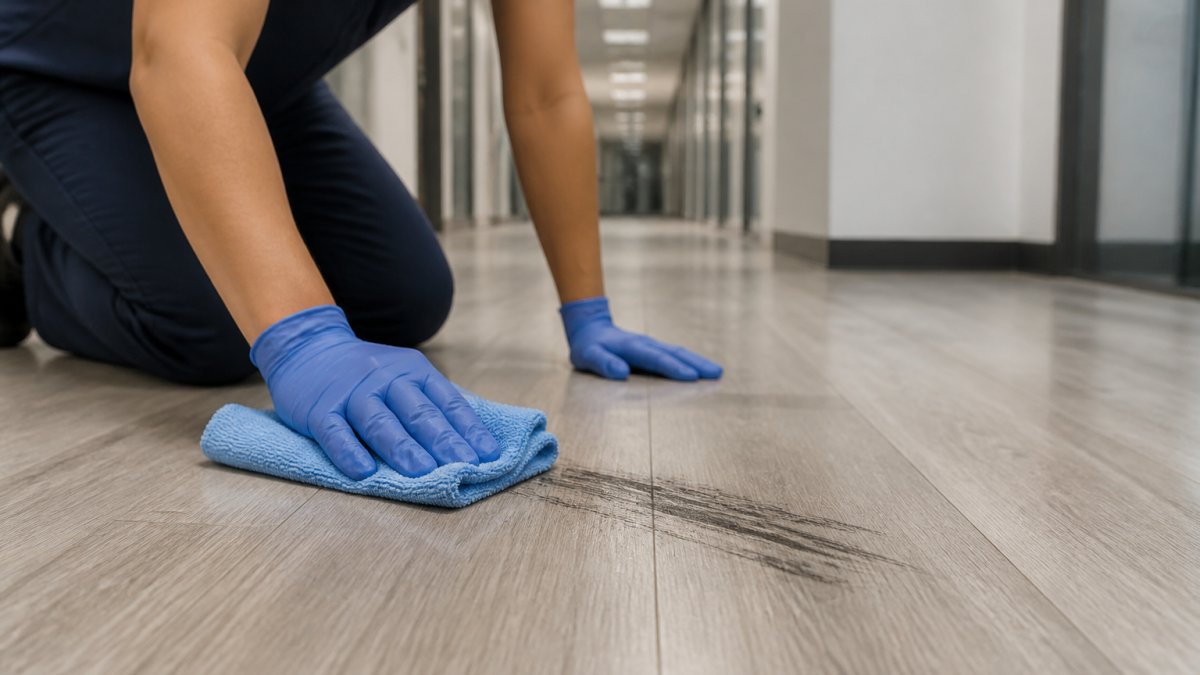
Pick a spot behind a filing cabinet or under a desk return. Apply your chosen method there first. Wait a few minutes and check for dulling, color change, or sticky residue. Vinyl plank flooring varies widely by manufacturer, and a product that’s safe on one wear layer can cloud another.
Step 2: Start Gentle, Then Escalate
Follow this order and stop as soon as the mark lifts:
- Dry rub with a soft cloth. Microfiber cloth, firm pressure, small circles. Lifts light shoe marks.
- Tennis ball. A clean tennis ball rubbed briskly over a scuff removes most rubber transfer. This is the workhorse method for high-traffic areas.
- Mild dish soap and warm water. A few drops in a bucket, applied with a damp cloth. Never flood the floor.
- Diluted white vinegar. One part white vinegar to three parts water. Good for stubborn film and light stains.
- A drop of oil. Olive oil or jojoba oil on a cloth for dried-on residue. Wipe fully dry afterward, because oil left behind attracts dirt.
- Non-scratch pad. Only as a last resort, and only with light pressure.
Never use steel wool, scouring powder, or a green scrubbing pad on commercial vinyl. These cut through the wear layer and leave a dull patch that no cleaner can restore. The cost is a plank replacement, not a cleaning bill.
Commercial Vinyl Floor Cleaning: Tools and Techniques That Work at Scale
Spot treatment handles individual marks. Commercial vinyl floor cleaning is a different job, because a single scuff near a doorway becomes two hundred scuffs across a warehouse floor by Friday.
Build a two-tier routine. Daily spot cleaning catches marks while they’re fresh and easy to lift. Weekly or monthly deep cleaning resets the whole surface.
Tools that hold up at commercial scale:
- Microfiber flat mops with replaceable pads, one per zone
- A dedicated scuff kit on each floor: tennis balls, microfiber cloths, a spray bottle of diluted vinegar
- Auto-scrubbers for large open areas, with pads matched to the finish
- Color-coded cloths so restroom supplies never touch a break room floor
Train the crew to spot-check entryways, elevator lobbies, and cart lanes first. Those three zones generate most of the visible marks in any facility.
The fastest way to cut scuff complaints is to place a scuff kit at every floor’s janitor closet. Crews clean marks when they see them instead of waiting for a scheduled deep clean.
Vinyl Floor Cleaning Products: What to Use and What to Avoid
Product choice decides whether your floor looks new in year five or year two. The Vinyl Institute’s flooring guidance is a useful starting point for understanding how wear layers behave under different cleaners, but the practical rule is simpler: match the cleaner to the finish, not to the stain.
Commercial vinyl is not one surface. A homogeneous sheet floor with a factory urethane coating, a luxury vinyl plank with an aluminum-oxide wear layer, and a vinyl composition tile with a site-applied floor finish all react differently to the same bottle.
Safe options, with the mechanism and the limit:
- Mild dish soap and warm water. A few drops per gallon is enough; the surfactant lifts oily shoe residue without attacking the wear layer. Overdosing leaves a film that attracts dirt, so rinse with a clean damp cloth and dry.
- Diluted white vinegar. One part white vinegar to three parts water is the common spot mix. The mild acid cuts mineral film and light rubber transfer. Do not let it dwell; acid left on a finish can dull it over repeated use.
- pH-neutral floor cleaners made for vinyl. These are the default for routine mopping because they leave no residue and are compatible with most factory finishes. Follow the label dilution rather than guessing.
- Isopropyl alcohol for adhesive residue. Use sparingly on a cloth, not poured on the floor, and wipe dry. Alcohol evaporates fast, which limits dwell time, but repeated use can dry out a finish.
Avoid entirely, and why:
- Abrasive cleaners and scouring powders. They scratch the wear layer and create a dull patch that no cleaner restores.
- Bleach on colored or patterned vinyl. It can fade pigment and leave a permanent light spot.
- Solvent-heavy degreasers not rated for vinyl. Strong solvents can soften the wear layer or lift the finish, and the damage may not show until weeks later.
- Wax-based products on floors with a factory finish. Wax builds up and yellows, and it interferes with the factory coating’s own performance.
Dilution, dwell time, ventilation, and residue removal are the four controls that separate a safe clean from a damaged floor.
Keep a binder with the manufacturer spec sheet for every floor type in the building. When a new crew member asks which cleaner to use, the answer is on paper, not in someone’s memory.
How to Remove Scratches from Vinyl Flooring
Scratches need a different plan, because no cleaner repairs them.
First, confirm it is a scratch and not a scuff. The fingernail test from the identification section is the fastest check: if your nail catches, you have surface damage, and cleaning products will only make the area look worse by contrast.
Once you have confirmed a scratch, sort it by depth before you touch it:
- Light surface scratches that you can see but barely feel: clean the area, then apply a thin layer of floor polish matched to the finish. The polish fills the line and reduces how visible it is. This is cosmetic, not a repair, and it will wear off in traffic lanes.
- Moderate scratches that catch a fingernail but do not expose the backing: a vinyl floor repair kit or a matching floor polish can blend the line. Follow the kit instructions exactly; over-application leaves a sticky patch that attracts dirt.
- Deep scratches and gouges that expose the backing or lift an edge: a plank replacement is the only real fix. No polish or kit restores a wear layer that is gone.
Stop points before you make it worse:
- Never sand or buff a scratch on a wear layer. You will thin the surface further and create a dull patch that spreads.
- Do not keep applying polish to a deep scratch. It builds up, yellows, and makes the damage more obvious.
- Do not use a non-scratch pad on a confirmed scratch. It is for scuffs, and on a scratch it only widens the dull area.
For luxury vinyl plank installations, keep a few spare planks from the original order. Matching a discontinued pattern later is difficult and expensive, and a single damaged plank in a high-traffic lane is a common replacement job.
This is also the point where the DIY decision ends.
A scratch that catches a fingernail is damage, not a cleaning problem. Treating it with a scuff method wastes labor and can widen the dull area. Escalate to polish, a repair kit, or a plank replacement based on depth, not on how the mark looks from standing height.
Preventing Scuff Marks on Commercial Floors
Prevention is cheaper than any cleaning method. Most scuffs enter a building on shoes and wheels, so stop them at the door.
Practical steps:
- Place walk-off mats at every entrance, long enough for several steps
- Use felt pads under every chair and table leg
- Specify non-marking wheels on carts and dollies
- Schedule entryway mopping during peak traffic, not after
- Set a mat replacement schedule, since worn mats stop trapping grit
For industrial vinyl flooring in manufacturing areas, add a mat or runner along forklift and cart lanes. The traffic pattern is predictable, so the protection can be too.
When to Call a Professional or Replace a Plank
Call a professional when the damage is widespread, when the floor finish has worn through in traffic lanes, or when a stain has soaked into the wear layer.
Replace a plank when a scratch or gouge catches a fingernail, when water has gotten under the seam, or when a stain won’t lift after the gentlest methods.
This is where a partner helps.
Frequently Asked Questions
How can I remove scuff marks from vinyl flooring?
Start with the gentlest method: a soft microfiber cloth and a little mild dish soap in water. Rub the scuff marks in small circles, then wipe clean. If the mark stays, try a tennis ball to rub it away, then a diluted white vinegar solution. Only move to a small amount of oil or a non-scratch pad on stubborn marks after testing in an inconspicuous area. Always check the manufacturer’s care instructions for your commercial vinyl flooring before using any new product.
Which cleaning products should you avoid on commercial vinyl floors?
Skip abrasive cleaners, scouring powders, and harsh chemicals that can dull the wear layer or strip the floor finish. Avoid bleach-heavy solutions and anything labeled as a heavy-duty degreaser on finished vinyl unless the manufacturer approves it. Magic erasers and other melamine pads can act like fine sandpaper and scratch the surface, so test carefully or avoid them. Stick to gentle cleaner options, and follow the manufacturer care instructions for your specific vinyl floor cleaning products.
How can you tell whether a mark is a scuff or a scratch?
A scuff is material transfer sitting on top of the floor, often black rubber from shoes or carts, and it usually wipes or rubs away. A scratch is surface damage cut into the wear layer, and you can often feel it with a fingernail. Stains have soaked in and won’t lift with rubbing. Knowing the difference matters because scrubbing a scratch won’t fix it and may make it worse, while a scuff usually responds to gentle spot cleaning.
How do you prevent scuff marks in high-traffic areas?
Place walk-off mats at entrances, use felt pads under furniture legs, and specify non-marking wheels on carts and equipment. Schedule routine cleaning so grit doesn’t get ground into the floor, and apply a manufacturer-approved floor coating or finish to add a protective layer over the wear layer. In high-traffic areas, a consistent floor maintenance plan catches scuff marks early, before they set in and become harder to remove.
Scuffed floors make a bad first impression, and they’re a symptom of a maintenance gap. If your team is spending hours chasing marks that come back by the next shift, the process needs a reset. Guso Janitorial Services builds tailored cleaning programs for each facility, with 24/7 availability, eco-friendly products, and a fully licensed and insured crew. Call today to schedule a walkthrough and get a plan built around your floors.
Leave a Reply