
Table of Contents
- Step 1: Map Every High-Touch Surface in Your Coworking Space
- Step 2: Know the Difference Between Cleaning vs Sanitizing vs Disinfecting
- Step 3: Choose Products From the EPA-Registered Disinfectant List
- Step 4: Build an Office Cleaning Frequency Checklist
- Step 5: How to Implement ISSA Standards in Small Offices
- Step 6: Cut Cross-Contamination With Smarter Tools and Tech
- Step 7: Protect Staff and Members While You Sanitize
- Frequently Asked Questions
Last Updated: October 2, 2026
Step 1: Map Every High-Touch Surface in Your Coworking Space
If you want to know how to sanitize high-touch surfaces in shared coworking spaces, start with a map, not a spray bottle.
Walk your space during peak hours. Watch what people actually touch, then list it.
- Door handles and push plates
- Shared desk edges and chair arms
- Keyboard sanitization zones at hot desks
- Coffee station taps, kettles, and fridge handles
- Printer buttons and shared phone handsets
- Light switches and elevator call buttons
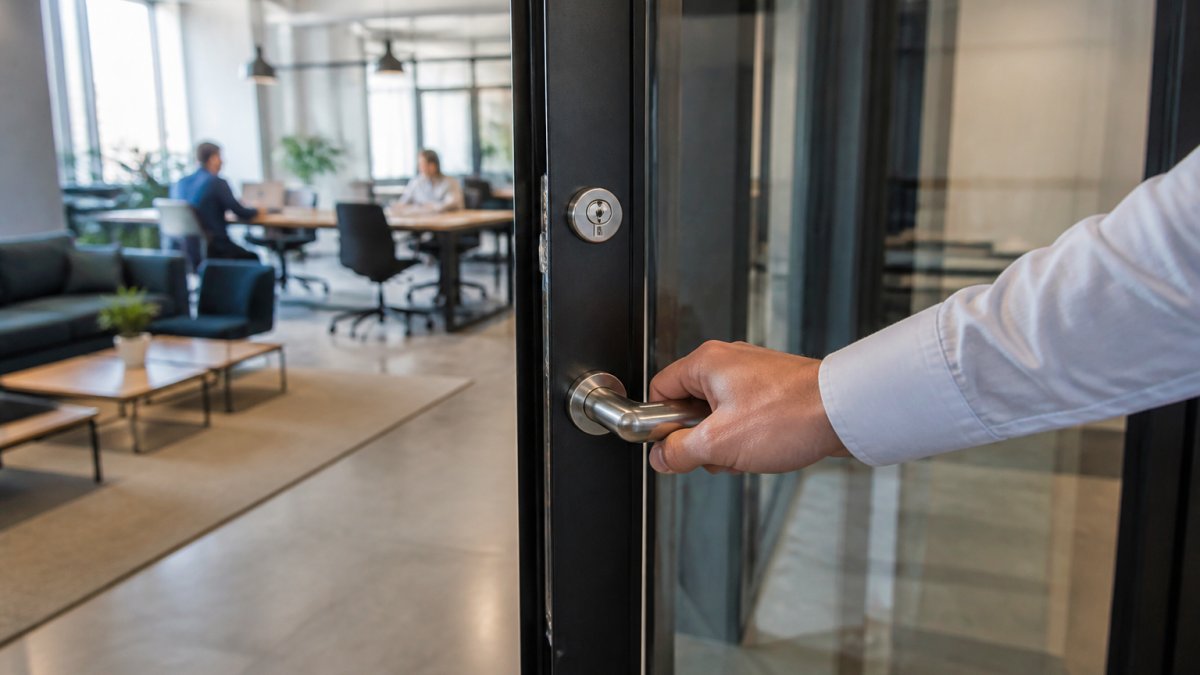
Touchpoints Most Coworking Audits Miss
Shared desks get wiped. The spots between them rarely do. A common mistake is ignoring the shared equipment that changes hands all day: meeting room remotes, whiteboard markers, and the communal stapler. Add every shared item to your map before you build a schedule.
Step 2: Know the Difference Between Cleaning vs Sanitizing vs Disinfecting
Cleaning, sanitizing, and disinfecting are three different jobs, and mixing them up wastes time and product. Cleaning removes dirt and grime. Sanitizing cuts germs to a safe level set by public health standards. Disinfecting kills nearly all germs on a surface.
For daily office work, sanitizing is usually enough. Save disinfecting for bathrooms, sick-room cleanup, and shared desks after a reported illness.
Match the method to the risk. Daily sanitization keeps a coworking space healthy; full disinfection is for higher-risk moments, not every surface every hour.
Step 3: Choose Products From the EPA-Registered Disinfectant List
Any product you use to kill germs should appear on the EPA’s registered disinfectant list. This list confirms a product has passed review for the claims on its label.
Check three things before you buy:
- The EPA registration number on the label
- The contact time the label states
- Whether it is safe for the surfaces you have
Dwell Time: Where Most Routines Fall Short
Dwell time is how long a wet surface must stay wet for the product to work. Most people spray and wipe in seconds, which defeats the purpose. Read the label and let the surface stay wet for the full time listed, which can range from under a minute to several minutes.
Step 4: Build an Office Cleaning Frequency Checklist
An office cleaning frequency checklist turns good intentions into a routine. Match each surface to how often it needs attention, then post the schedule where staff can see it. The table below splits the work into two lanes, what the janitorial crew owns and what members can handle in the moment, because a coworking space has both.
| Surface | Frequency | Owner | Method |
|---|---|---|---|
| Door handles, push plates, elevator call buttons | 2-3x daily | Janitorial | EPA-registered sanitize wipe, full dwell time |
| Shared desks, chair arms | Between users | Member | Wipe with provided canister, dwell time per label |
| Shared keyboards, mice, monitors | Between users | Member | Alcohol-based wipe on hard surfaces; never spray into keyboards |
| Coffee station taps, kettles, fridge handles | 2x daily, plus mid-day | Janitorial | Sanitize wipe |
| Meeting room tables, remotes, whiteboard markers | After each meeting | Member | Wipe down, return to caddy |
| Printer buttons, shared phone handsets | 2x daily | Janitorial | Sanitize wipe |
| Bathrooms | Daily, plus hourly checks | Janitorial | Disinfect |
| Common areas, soft seating, reception counters | Daily | Janitorial | Clean + sanitize |
The Member-Facing Cadence Competitors Skip
Most guides stop at the janitorial schedule. In a shared space, the highest-traffic surfaces, desks, keyboards, meeting tables, change hands faster than any crew can rotate through. Give members a 30-second routine they can run themselves:
- Grab a wipe from the station at the desk or room entrance.
- Wipe the desk edge, chair arms, keyboard, and mouse.
- Let the surface stay wet for the label’s dwell time before sitting down.
- Drop the wipe in the closed bin, not the recycling stream.
Post this as a small card at each hot desk and meeting room. Members who see the routine modeled by the person before them tend to repeat it.
Supply Restock Triggers
A checklist fails the moment the wipe canister runs dry. Tie restocking to a trigger, not a guess:
- Canister level: Refill or swap when the canister is below one-quarter full.
- Time-based backup: Walk every station once mid-morning and once mid-afternoon.
- Meeting rooms: Check the caddy after each booking block, not once a day.
- Trash: Empty wipe bins before they overflow, a full bin signals “no one is maintaining this.”
A frequency checklist only works if the supplies are there when someone reaches for them. Pair every scheduled wipe with a restock trigger, and assign one person to own the station audit.
A daily maintenance pass to sanitize high-touch surfaces handles the top rows. Deep cleaning covers the rest on a set schedule. For a full building, janitorial services can carry the load.
Step 5: How to Implement ISSA Standards in Small Offices
ISSA standards give small offices a proven benchmark for surface hygiene. You do not need a big team to follow them. You need clear steps and consistent checks.
- Assign one person to own the routine
- Train staff on dwell time and product use
- Post the checklist at each station
- Review and update the schedule monthly
The goal is repeatable habits, not a one-time deep clean. Small offices often see the biggest gains from a simple, steady routine.
Step 6: Cut Cross-Contamination With Smarter Tools and Tech
Cross-contamination happens when a dirty cloth or tool moves germs from one touchpoint to the next. The fix is partly discipline and partly equipment. Here is what actually works in a shared office, and where each tool earns its place.
Color-Coded Microfiber: The Baseline
Microfiber lifts soil and germs mechanically rather than just smearing them. Assign one color per zone and never cross the streams:
- Red: bathrooms and plumbing fixtures
- Yellow: shared desks, keyboards, chair arms
- Blue: common areas, reception, soft seating
- Green: coffee station and food-adjacent surfaces
Wash cloths after each use, a washing machine on a hot cycle with detergent is standard practice. A cloth that sits damp in a bucket between uses is a contamination vector, not a tool.
Electrostatic Sprayers: When They Pay Off
Electrostatic sprayers charge the droplets so they wrap around a surface and reach the sides and undersides of objects. They cover large common areas, a full open-plan floor, a row of hot desks, a meeting room block, far faster than hand wiping. Two trade-offs matter:
- They still need dwell time. A sprayer does not shorten the label’s contact time; it just applies product faster.
- They are not a substitute for wiping visible soil. Grime blocks the disinfectant from reaching the surface.
For a small office with a handful of desks, color-coded cloths and a solid checklist do the job. Sprayers suit bigger spaces and high-traffic rooms where the labor savings are real.
Technology-Driven Options Worth Knowing
Beyond sprayers, three technologies show up in shared-space conversations. Each has a real limitation:
- UV-C light devices. UV-C damages the DNA of germs on a surface, but it only works on the area the light directly hits. Shadows, dust, and distance all reduce effectiveness. Treat it as a supplement to wiping, not a replacement.
- Antimicrobial surface coatings. These are applied to high-touch surfaces like door handles and desk edges and are designed to keep reducing microbial load between cleanings. They do not clean the surface, soil still has to be removed, and they wear off over time, so reapplication is part of the cost.
- Automated misting systems. These disperse disinfectant as a fine mist across a room. They reach areas hand wiping misses, but the room must be empty during application and ventilated afterward, which makes them a good fit for overnight cycles rather than mid-day.
No device replaces the basics. A surface with visible soil, a missed dwell time, or a reused cloth will still spread germs, no matter what equipment is in the room.
Sustainable Disinfecting That Members Actually Tolerate
Eco-friendly products matter in a shared space where people sit for hours. Strong chemical smells drive members away and can irritate sensitive lungs.
A practical pattern is to reserve the strongest products for bathrooms and sick-room cleanup, and use green-certified, EPA-registered options for the daily desk and common-area routine. Members notice the difference in the air, and the surfaces still get the kill claims the label promises.
Test any new product on a hidden corner of a shared desk first. Some finishes and screen coatings react badly to certain cleaners.
Step 7: Protect Staff and Members While You Sanitize
Safety comes down to PPE and timing. Cleaning staff should wear gloves and eye protection when handling disinfectants. Members should not be in the room during a full disinfection pass.
- Store chemicals away from food areas
- Label every spray bottle clearly
- Ventilate during and after cleaning
- Schedule deep cleaning outside work hours
Occupational health rules apply here. Train staff on safe handling and keep safety data sheets on hand. A routine that protects workers protects everyone.
Frequently Asked Questions
How often should high-touch surfaces be sanitized in a coworking environment?
Shared coworking spaces need high-touch surfaces sanitized at least twice daily, with door handles, push plates, and shared desk contact points wiped every two to four hours during peak occupancy. Bathrooms and kitchen counters should be disinfected at least three times daily. Use an office cleaning frequency checklist to assign each touchpoint a schedule, then log completion so members and staff can see the routine is actually happening.
What is the difference between cleaning, sanitizing, and disinfecting?
Cleaning removes dirt, dust, and grime with soap or detergent. Sanitizing reduces bacteria on a surface to levels public health codes consider safe. Disinfecting kills most pathogens listed on the product label, including viruses like influenza and SARS-CoV-2. For shared workspaces, clean first, then disinfect high-touch surfaces with an EPA-registered product and let it stay wet for the full dwell time on the label.
Does cleaning alone reduce pathogens on a shared surface to safe levels?
Cleaning alone lowers pathogen counts but does not reliably reach safe levels on frequently shared surfaces. The CDC recommends cleaning visibly dirty surfaces first, then disinfecting high-touch points in shared workspaces. In practice, that means wiping a shared keyboard with a microfiber cloth and detergent, then following with an EPA-registered disinfectant wipe and letting it air dry for the labeled dwell time.
What are five examples of disinfectants that work on high-touch surfaces?
Common disinfectants include ready-to-use quaternary ammonium wipes, 70% isopropyl alcohol, accelerated hydrogen peroxide, diluted sodium hypochlorite (bleach) solutions, and citric acid-based botanical disinfectants. Check the EPA-registered disinfectant list, such as List N, to confirm the product is approved for the pathogen you are targeting. Always match the product to the surface: alcohol for electronics, quats for door handles and push plates.
A shared coworking space lives or dies on how clean it feels. Building a routine takes time, and keeping it consistent takes discipline. Guso Janitorial Services handles that load for you with 24/7 availability, tailored cleaning programs, and clean and green products. Our team is fully licensed, bonded, and insured, and we work around your schedule so members never lose a workday. Call today to get a plan built for your space.