
Table of Contents
- Why Preparation Matters Before a Professional Deep Clean
- Declutter Desks, Floors, and Shared Surfaces
- Remove Personal Belongings, Paperwork, and Valuables
- Notify Employees and Prepare Your Team
- Create an Office Deep Cleaning Checklist
- What’s Included in an Office Deep Clean
- How Long Does Office Deep Cleaning Take
- Arrange Access and Communicate Final Details
- Frequently Asked Questions
Last Updated: October 10, 2026
Why Preparation Matters Before a Professional Deep Clean
Preparing your office for a professional deep clean isn’t just a courtesy, it’s the difference between a thorough cleaning and a missed opportunity when you prepare office deep cleaning properly.
Offices that prepare properly get deeper sanitization, better attention to priority areas, and faster turnaround times.
The real benefit isn’t just cleanliness, it’s confidence. Your employees see a space that’s been genuinely cared for. Your clients walk into an office that impresses.
Declutter Desks, Floors, and Shared Surfaces
Start by removing clutter from every surface your cleaning crew will touch. This means clearing desks, tables, shelves, and floors of unnecessary items.
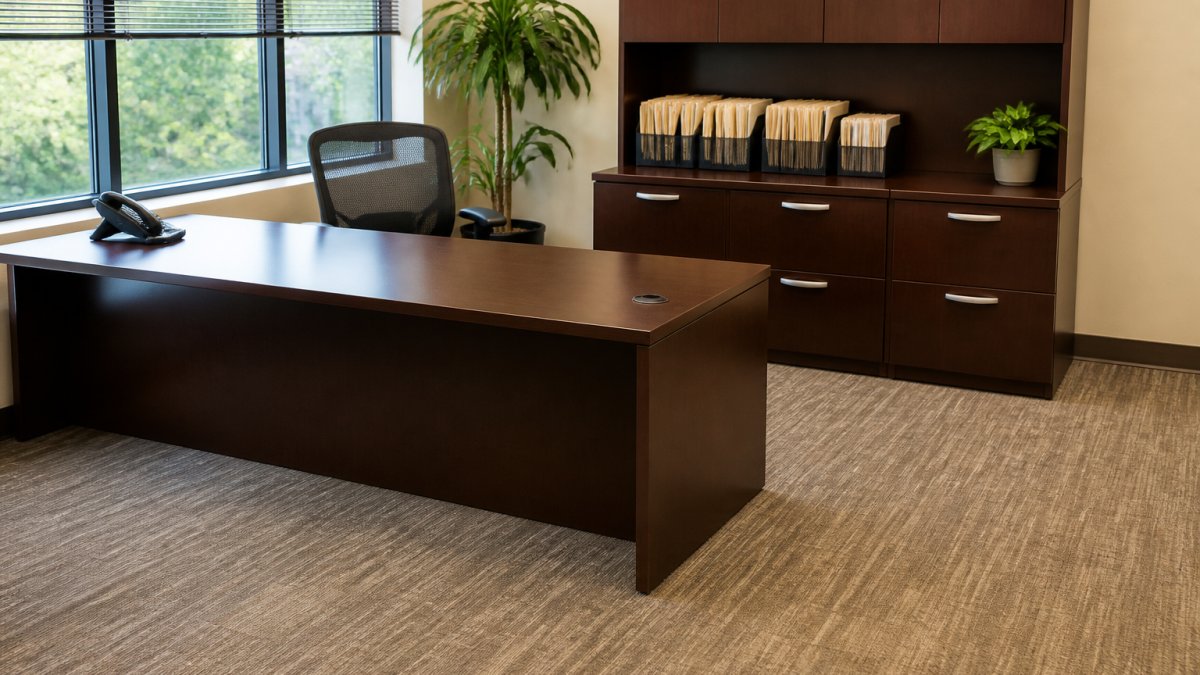
Clutter slows cleaning crews down. They have to move items, remember where they went, and set them back. More importantly, items sitting on surfaces prevent proper sanitization underneath.
Here’s what to clear:
- Personal items from desks and shelves
- Decorative objects and picture frames
- Office supplies and equipment not permanently mounted
- Chairs and furniture that can be moved
- Items from floors, including trash cans if they can be relocated temporarily
Don’t just push clutter to the side. Box it up or move it to a secure storage area.
Remove Personal Belongings, Paperwork, and Valuables
Personal items need special attention before a professional deep clean. Wallets, jewelry, medications, and sensitive materials should be secured in a locked drawer or taken home entirely.
Secure Confidential Documents and Sensitive Information
Confidential documents require a specific approach. Don’t leave client files, financial records, or proprietary materials on desks or in open filing cabinets. The cleaning crew shouldn’t have access to sensitive information, and you shouldn’t leave it exposed.
Lock all confidential documents in secure cabinets or remove them from the office temporarily. If shredding is needed before the clean, arrange that beforehand.
Protect IT Equipment and Devices
IT equipment and devices are vulnerable during deep cleaning. Computers, monitors, keyboards, and peripherals should be powered down and protected from cleaning products and moisture.
Move sensitive electronics to a secure location if possible. If equipment must stay at desks, cover it with plastic sheeting.
Unplug devices from power sources. This protects both the equipment and the cleaning crew. A powered-down, covered workspace eliminates risk and lets crews clean more aggressively around that area.
Notify Employees and Prepare Your Team
Communication is essential, but it must be structured, timely, and address more than just scheduling. Your team needs to know the cleaning timeline, what to expect, how to prepare their workspaces, and any health or safety considerations that may affect them.
Pre-Clean Communication Timeline
A phased notification approach prevents confusion and gives employees adequate time to prepare:
Two Weeks Before the Clean
Send an initial announcement to all staff. Include the scheduled date, approximate duration, and a high-level overview of what will be cleaned. This gives employees time to plan around the disruption and mentally prepare.
One Week Before the Clean
Distribute a detailed preparation memo with specific instructions. Include:
- Exact date, time, and expected duration of the cleaning appointment
- Which areas will be cleaned and in what order (if phased)
- Instructions for securing personal items, documents, and valuables
- What employees should do with their workstations (clear desks, unplug devices, etc.)
- Where employees should expect to see the cleaning crew and which areas will be off-limits
- Parking or access information for the cleaning crew
- Contact person for questions or issues during the clean
- Any health or chemical sensitivity accommodations being made (see section below)
48 Hours Before the Clean
Send a brief reminder email. This keeps the appointment top-of-mind and catches any last-minute questions.
Day of the Clean
Brief your team one final time, ideally in a short all-hands message or department huddle. Remind them to:
- Stay out of areas actively being cleaned
- Avoid moving items the crew has organized or staged
- Report any spills, damage, or issues to the designated contact person immediately
- Expect temporary odors or noise from equipment (if applicable)
Responsibility Matrix: Who Does What
Clarity on responsibilities prevents gaps and miscommunication. Assign specific roles:
Facility Manager or Office Administrator
- Coordinate with the cleaning service on final details (arrival time, access, scope)
- Distribute all employee communications on schedule
- Prepare the office checklist (priority areas, flagged stains, special requests)
- Ensure building access is arranged (keys, codes, or on-site greeter)
- Designate an on-site contact person for the day of the clean
- Conduct a post-clean walkthrough and quality check
Department Managers
- Ensure their team members clear desks and secure personal items
- Communicate any department-specific priorities or concerns to the facility manager
- Remind employees on the day of the clean to stay out of work areas
Individual Employees
- Clear personal items, valuables, and medications from desks
- Remove or secure confidential documents
- Power down and cover IT equipment as instructed
- Unplug devices from power outlets
- Move chairs and personal belongings to a designated secure area
- Avoid the office during the scheduled clean (if possible) or stay in designated safe zones
Cleaning Service Provider
- Confirm arrival time and expected duration 48 hours in advance
- Provide any product disclosures or safety data sheets in advance (especially for employees with sensitivities)
- Report any pre-existing damage or issues discovered during the clean
- Confirm completion of all agreed-upon tasks before departure
Health, Safety, and Chemical Sensitivities
Professional deep-cleaning products are effective but can trigger reactions in employees with allergies, asthma, fragrance sensitivities, or chemical sensitivities. Address this proactively:
Before Scheduling the Clean
Survey your team (via anonymous form if preferred) to identify any health concerns:
- Respiratory conditions (asthma, COPD, chronic bronchitis)
- Fragrance or scent sensitivities
- Chemical sensitivities or multiple chemical sensitivity (MCS)
- Skin allergies or dermatological conditions
- Pregnancy-related sensitivities
Communicate with Your Cleaning Provider
Provide the cleaning service with a list of known sensitivities and ask about their product options. Many professional cleaning companies offer: Hypoallergenic or eco-certified cleaning solutions.
Request a Safety Data Sheet (SDS) for all products that will be used in the office. This document lists ingredients, hazards, and safe handling procedures. Share relevant sections with affected employees.
Ventilation and Timing
Ensure adequate ventilation during and after the clean:
- Open windows and doors where possible
- Run HVAC systems on high during the cleaning appointment
- Keep HVAC running for at least 2-4 hours after the crew departs to clear airborne particles and fumes
- Consider scheduling the clean after hours or on a weekend if multiple employees have sensitivities, allowing the office to fully air out before staff returns
Accommodation Options
For employees with significant sensitivities:
- Allow them to work from home on the day of the clean and the following day
- Provide a designated “safe zone” away from actively cleaned areas where sensitive employees can work if they must be on-site
- Schedule the clean during a time when sensitive employees are not scheduled to work
Post-Clean Communication
After the clean, notify employees that the office is safe to re-enter. Let them know:
- The cleaning is complete and the office has been ventilated
- Any lingering odors are normal and will dissipate within 24 hours
- They should report any health concerns or reactions to management immediately
Create an Office Deep Cleaning Checklist
To prepare office deep cleaning effectively, a detailed checklist ensures nothing gets missed. This checklist becomes your communication tool with the cleaning crew and your quality control document afterward.
Priority Areas and Special Requests
Identify which areas matter most to your business. High-traffic zones like lobbies, conference rooms, and client-facing spaces typically get priority. Manufacturing facilities might prioritize equipment areas and degreasing. Retail spaces need special attention to customer-facing displays and checkout areas.
List these priorities on your checklist:
- Main entrance and lobby
- Conference and meeting rooms
- Executive offices and client areas
- Break rooms and kitchens
- Restrooms
- Hallways and common areas
- Warehouse or storage areas (if applicable)
Flag Stains, Damage, and Surfaces Needing Special Care
Walk through your office before the cleaning appointment and note any problem areas. Carpet stains, scuffed walls, damaged baseboards, and sticky spots should be flagged for the crew.
Create a visual map or written list showing:
- Carpet stains and their location
- Scuffed or marked walls
- Sticky residue on floors or surfaces
- Damaged grout or caulking
- Surfaces requiring special cleaning products
- Areas with delicate finishes or materials
Provide this list to the cleaning crew during your pre-clean briefing. Let them know which stains are old and which are recent, as this affects the approach. Some stains respond better to specific treatments.
What’s Included in an Office Deep Clean
Understanding what a professional deep clean covers helps you set realistic expectations and prepare accordingly. A thorough office deep clean goes beyond daily maintenance.
Professional deep-cleaning tasks typically include:
- Carpet shampooing and stain removal
- Hard floor stripping and waxing
- Baseboards and trim cleaning
- Ceiling and wall spot cleaning
- Light fixture and window cleaning
- Deep sanitization of all surfaces
- Grout and tile cleaning in restrooms and kitchens
- Dusting of vents and high surfaces
- Trash and recycling bin emptying and sanitizing
The exact scope depends on your facility type and needs. A manufacturing facility requires different deep-cleaning tasks than a retail office. We customize each deep clean to match your specific business requirements and surface types.
How Long Does Office Deep Cleaning Take
The duration of an office deep clean depends on your facility size, condition, and the scope of work. Most commercial offices require between four and eight hours for a thorough deep clean.
Factors that affect timing:
- Square footage of the office
- Number of carpeted versus hard-floor areas
- Condition of surfaces and extent of staining
- Special requests and priority areas
- Accessibility of equipment and furniture
- Number of cleaning crew members assigned
Plan for your team to have limited access to cleaned areas during the appointment. Some businesses schedule deep cleans after hours or on weekends to avoid disrupting operations entirely. Others schedule them during slower business periods when fewer employees are present.
Arrange Access and Communicate Final Details
Final coordination ensures the cleaning appointment runs smoothly. Confirm details with your cleaning service at least 48 hours before the scheduled date.
Confirm with your cleaning crew:
- Exact arrival time and expected duration
- Which entrance they should use
- Where to park or stage equipment
- Access to water, electrical outlets, and restrooms
- Contact person on-site during the clean
- Any last-minute changes to priorities or areas
Provide building access codes, keys, or arrange for someone to meet the crew. Let them know about any security systems, locked doors, or restricted areas.
On the day of the clean, assign one person to be available for questions.
Frequently Asked Questions
What should employees do before a professional office deep cleaning?
Employees should clear their desks and workstations of personal items, files, and clutter at least 24 hours before the appointment. Remove any valuables, confidential documents, and sensitive equipment. If your office includes manufacturing equipment or high-traffic retail areas, ensure those zones are also prepped according to your facility manager’s instructions. Communication from leadership about the cleaning schedule helps employees understand expectations and reduces disruption.
What’s included in an office deep clean?
A professional office deep clean typically includes carpet shampooing and stain removal, dusting all surfaces including baseboards and light fixtures, floor mopping and waxing, sanitization and disinfection of workstations and shared areas, bin emptying, and vacuuming hard-to-reach spaces. Many services also address special attention to damaged or heavily soiled areas. Your cleaning crew will focus on areas flagged as priority during preparation.
How long does office deep cleaning take?
Duration depends on office size, layout, and condition. A typical office deep clean takes 4 to 8 hours for a standard commercial space. Larger facilities with multiple departments, manufacturing areas, or retail sections may require 1 to 2 days. After-hours scheduling (evenings or weekends) is common to avoid disrupting daily operations. Confirm the timeline with your cleaning service provider based on your specific square footage and scope.
What should you move or put away before an office deep clean?
Move all personal belongings, decorative items, and office supplies from desks and shelves. Store confidential documents in locked cabinets or secure storage. Unplug and move sensitive electronics, printers, and IT equipment away from cleaning areas, or clearly mark them as off-limits. Remove trash and recycling bins so floors can be cleaned thoroughly. Clear access pathways and ensure the cleaning crew can reach all surfaces, corners, and under furniture without obstacles.
A well-prepared office gets a better deep clean. When you clear clutter, secure valuables, communicate clearly, and identify priority areas, your cleaning crew can focus on what they do best: transforming your workspace. Guso Janitorial Services handles the rest, delivering a professional deep clean that impresses clients, supports employee health, and keeps your office in top condition. Call today to schedule your office deep cleaning and experience the difference preparation makes.