
Last Updated: October 22, 2026
Quick Summary
Commercial carpet cleaning starts with daily vacuuming in high-traffic zones and at least three times weekly in standard areas, combined with prompt spill response within 15 minutes and regular professional deep cleaning every 3-6 months depending on traffic level. Consistent maintenance removes embedded soil, prevents permanent stains, and extends carpet lifespan to 7-10 years.
- Daily vacuuming in high-traffic areas and three times weekly in standard zones prevents soil from embedding into fibers
- Respond to spills within 15 minutes by blotting with white cloth and mild detergent solution to prevent permanent stains
- Place entryway mats at least 6 feet long to capture 80% of outside soil before it reaches carpet
- Professional deep cleaning frequency ranges from every 12-18 months for light traffic to monthly for very heavy traffic areas
- Well-maintained commercial carpet lasts 7-10 years, while neglected carpet may need replacement in 3-5 years
Table of Contents
- Daily and Routine Vacuuming for Commercial Carpet
- Managing High-Traffic Areas and Soil Prevention
- Spot Cleaning and Spill Response Protocols
- Commercial Carpet Stain Removal Techniques
- Creating Your Commercial Carpet Maintenance Checklist
- How Often to Deep Clean Commercial Carpet
- Developing a Commercial Carpet Cleaning Schedule
- Measuring Results and Extending Carpet Lifespan
- Frequently Asked Questions
Daily and Routine Vacuuming for Commercial Carpet
Commercial carpet cleaning starts with the basics: regular vacuuming removes dry soil before it embeds into fibers.
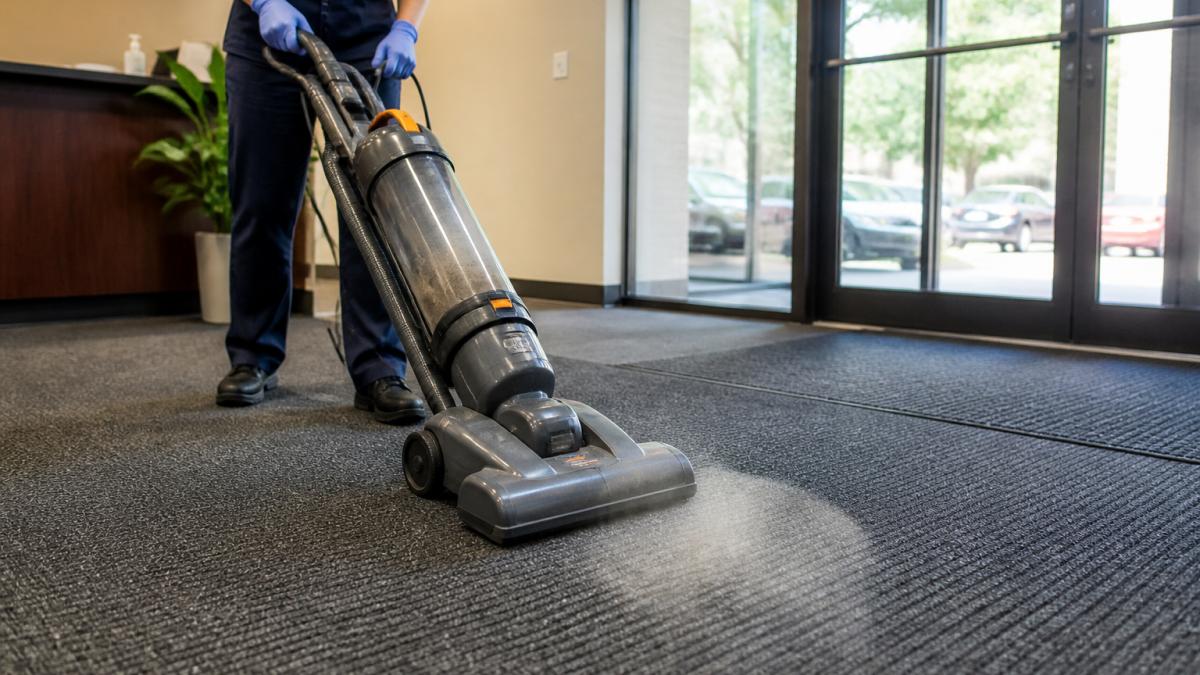
Use a CRI-certified vacuum with strong suction and a beater bar that lifts embedded dirt without damaging fibers.
Vacuum in overlapping passes: one removes surface dust, a second lifts grime trapped deeper in the pile. Skipping this is why carpets look dull after just weeks.
Key vacuuming tips:
- Empty bags or canisters when half-full to maintain suction
- Check and clean brush rolls weekly for wrapped fibers
- Replace filters monthly in high-traffic facilities
- Adjust height settings for different carpet pile types
- Vacuum slowly to allow fibers to stand and release dirt
Skipping daily vacuuming cuts carpet lifespan dramatically. Embedded soil acts like sandpaper, grinding fibers and causing premature wear. Daily vacuuming costs far less than early carpet replacement.
Schedule vacuuming during off-hours or before business starts. This keeps dust from settling on desks and equipment and maintains a professional appearance throughout the day.
Managing High-Traffic Areas and Soil Prevention
High-traffic zones wear fastest. Entryways, hallways near restrooms, and areas around copy machines need extra attention and preventive measures.
Place entryway mats strategically. Mats capture 80% of outside soil before it reaches carpet. Use mats at least 6 feet long.
Reduce tracked-in moisture with absorbent mats in entryways and outside restroom doors, changed daily in wet seasons.
High-traffic carpet maintenance schedule:
- Daily vacuuming in entryways and main corridors
- Spot cleaning of spills within 1 hour
- Weekly deep vacuuming with overlapping passes
- Bi-weekly spot treatment with mild detergent solution
- Monthly professional extraction cleaning in heavy-use zones
Rotate foot traffic patterns every few months where possible, spreading wear across a wider area rather than creating permanent traffic lanes.
Monitor moisture in high-traffic zones: damp carpet attracts soil and promotes mildew. Keep HVAC systems at 40-60% indoor humidity and use dehumidifiers in humid climates or seasons (the EPA).
Avoid dark discoloration in high-traffic areas by addressing spills immediately. Wet soil becomes sticky and bonds to fibers, creating permanent brown spots if left unattended for more than a few hours.
Spot Cleaning and Spill Response Protocols
Speed matters in spill response. The first 15 minutes determine whether a stain sets permanently or comes out cleanly. Train staff on immediate response steps.
Immediate spill response (first 15 minutes):
- Blot liquid spills with white cloth or paper towels, never rub
- Work from the outside edge toward the center to contain the spill
- Use pressing motions to absorb moisture
- For solids, remove excess material with a spoon or dull knife
- Avoid pushing debris into carpet fibers
Blotting absorbs liquid; rubbing spreads the stain and pushes it deeper. Use white cloths so dyes don’t transfer to fibers.
Mild detergent solution for fresh spills:
- Mix 1 teaspoon mild dish soap with 1 cup warm water
- Apply sparingly, oversaturation extends drying time
- Blot repeatedly until the stain lightens
- Rinse with plain water and blot dry
- Allow 4-6 hours drying time before traffic resumes
For protein-based spills (blood, food, bodily fluids), use cool water first. Hot water sets protein stains. Cold water prevents the stain from bonding to fibers.
For dried spills, rehydrate with cool water, let it sit 10 minutes, then blot and treat with mild detergent solution. Patience beats aggressive scrubbing.
The difference between a permanent stain and a clean carpet comes down to response time. Establish a protocol where any staff member can address spills within the first 15 minutes, and you’ll prevent 90% of permanent damage.
Commercial Carpet Stain Removal Techniques
Not all stains respond to the same treatment. Identifying the stain type determines which removal method works.
Common stain categories and removal approaches:
Organic stains (food, beverages, bodily fluids):
- Use cool water and mild detergent
- Avoid hot water, which sets protein
- Blot repeatedly, rinse, and allow drying
- If stain persists after 24 hours, use a commercial enzyme cleaner
Oil and grease stains:
- Sprinkle dry powder (baking soda or talc) to absorb oil
- Let sit 30 minutes, then vacuum thoroughly
- Treat remaining residue with dry-cleaning solvent
- Use minimal liquid to prevent spreading
- Allow complete drying before traffic resumes
Ink and dye stains:
- Blot immediately, do not rub
- Use rubbing alcohol on a white cloth for ballpoint pen
- Test on hidden carpet area first to check for dye transfer
- Work from outside edges inward
- Rinse with water and blot dry
Mud and dirt:
- Allow mud to dry completely
- Vacuum up dried particles
- Treat remaining residue with mild detergent solution
- Avoid wet cleaning fresh mud, which spreads it
For stubborn stains, neutralizing chemicals help: brown spill residue responds to alkaline solutions, acidic stains to mild acid rinses. Commercial carpet cleaning shops stock pH-neutral solutions for specific stain types.
Never use bleach on colored carpet; it causes permanent discoloration. Test any solution on a hidden area first, since carpet dyes vary and some react unpredictably to chemicals.
Creating Your Commercial Carpet Maintenance Checklist
A written checklist ensures consistency across all staff and shifts. Assign responsibilities clearly.
- Vacuum all high-traffic areas
- Spot-clean visible spills within 15 minutes
- Empty vacuum bags/canisters
- Check entryway mats for saturation
- Report stains that resist initial treatment
Weekly maintenance checklist:
- Deep vacuum with overlapping passes in main areas
- Treat stubborn spots with mild detergent solution
- Inspect carpet for new damage or wear patterns
- Clean and replace entryway mats
- Check vacuum brush rolls for wrapped fibers
Monthly maintenance checklist:
- Professional extraction cleaning in high-traffic zones
- Inspect carpet seams and edges for fraying
- Document any permanent stains or damage
- Review traffic patterns and adjust cleaning zones
- Schedule professional deep cleaning if needed
Post the checklist visibly, assign rotating staff to verify completion, and use a simple log to track which tasks were done and when.
| Task | Frequency | Responsibility | Notes |
|---|---|---|---|
| Vacuum main areas | Daily | Cleaning staff | Before business hours |
| Spot clean spills | As needed | Any staff | Within 15 minutes |
| Deep vacuum | Weekly | Lead custodian | High-traffic zones |
| Professional extraction | Monthly-quarterly | External service | Based on traffic level |
| Entryway mat change | Daily-weekly | Cleaning staff | Depends on weather |
Guso Janitorial Services helps facilities create customized checklists based on their traffic patterns and carpet type, so your team focuses on what actually matters for your space.
How Often to Deep Clean Commercial Carpet
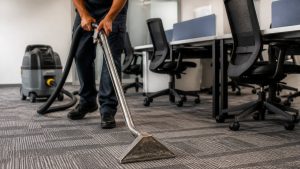
Deep cleaning removes embedded soil that daily vacuuming can’t reach. Frequency depends on traffic level and carpet type.
Professional deep-cleaning frequency guidelines:
| Traffic Level | Recommended Frequency | Best Method |
|---|---|---|
| Light (offices, conference rooms) | Every 12-18 months | Hot-water extraction |
| Moderate (retail, hallways) | Every 6-12 months | Hot-water extraction |
| Heavy (entryways, lobbies) | Every 3-6 months | Combination methods |
| Very heavy (manufacturing floors) | Monthly or more | Low-moisture cleaning |
Moderate-traffic retail or office hallways benefit from semi-annual deep cleaning. This removes accumulated soil before it causes visible discoloration or odor.
High-traffic entryways and lobbies need quarterly deep cleaning. These zones accumulate dirt fastest and create the first impression for clients and customers.
Manufacturing or warehouse floors require monthly deep cleaning or more, since industrial environments introduce oils, dust, and chemicals that embed quickly.
Professional Deep-Cleaning Methods and Trade-Offs
Three main methods exist: hot-water extraction, low-moisture cleaning, and encapsulation. Each has strengths and limitations.
Advantages: Removes deep-embedded dirt, kills bacteria and allergens, works on all carpet types.
Advantages: Quick drying time, minimal water use, gentle on delicate fibers, suitable for occupied buildings.
Drawbacks: Less effective on heavily soiled carpet, requires specialized equipment and training.
Encapsulation:
This method applies a cleaning solution that encapsulates soil particles.
Drawbacks: Less effective on deeply embedded soil, works best on lightly to moderately soiled carpet.
Developing a Commercial Carpet Cleaning Schedule
A structured schedule prevents neglect and ensures consistent maintenance. Tailor your schedule to your facility’s specific needs.
Sample schedule for moderate-traffic commercial office:
Daily tasks:
- Vacuum entryway and main hallways
- Spot-clean visible spills
- Empty vacuum canisters
Weekly tasks:
- Deep vacuum all carpeted areas
- Treat stubborn spots with mild detergent
- Replace entryway mats
Monthly tasks:
- Professional extraction in high-traffic zones
- Inspect carpet condition and document damage
- Review and adjust cleaning zones based on wear patterns
Quarterly tasks:
- Full-facility professional deep cleaning
- Assess carpet lifespan and plan for replacement
- Review maintenance effectiveness
Annually:
- Professional carpet inspection
- Evaluate maintenance ROI
- Update cleaning protocols based on results
Adjust this schedule to your actual traffic patterns: a retail space with 500 daily visitors needs more frequent deep cleaning than an office with 50 employees, and manufacturing facilities need more aggressive schedules than administrative offices.
Document your schedule in writing and share it with all staff. When everyone understands the plan, consistency improves and results show faster.
Schedule professional deep cleaning during off-hours or during slower business periods. This minimizes disruption and allows proper drying time before the facility reopens.
Measuring Results and Extending Carpet Lifespan
Track maintenance effectiveness to justify investment and identify what’s working. Measure carpet condition every three months.
Carpet condition assessment:
- Visual inspection: Look for discoloration, traffic patterns, or worn areas
- Texture check: Run your hand across carpet to feel for matting or stiffness
- Odor assessment: Smell for musty or stale odors indicating trapped moisture
- Spot count: Document the number and location of permanent stains
- Fiber condition: Check for fraying, pilling, or visible damage
Compare results over time. If traffic lanes are less visible after three months of consistent maintenance, your schedule is working.
Factors that extend carpet lifespan:
- Consistent daily vacuuming removes abrasive soil
- Prompt spill response prevents permanent stains
- Proper entryway mats reduce tracked-in dirt
- Regular professional deep cleaning removes embedded grime
- Humidity control prevents mildew and odor
- Traffic management spreads wear across wider areas
Well-maintained commercial carpet lasts 7-10 years. Neglected carpet may need replacement in 3-5 years. The difference is maintenance consistency.
Calculate maintenance ROI by comparing replacement costs against cleaning expenses.
Maintaining commercial carpet requires daily attention and a structured approach.
Frequently Asked Questions
How often should commercial carpet be vacuumed?
High-traffic commercial spaces should be vacuumed daily to remove dry soil and embedded dirt that accumulates quickly. Medium-traffic areas benefit from vacuuming 3-4 times weekly, while low-traffic zones can be vacuumed weekly. Daily vacuuming prevents grime from settling into carpet fibers and extends the carpet’s lifespan significantly. Use a CRI-certified vacuum with strong suction to remove soil effectively and maintain indoor air quality for employees and visitors.
What is the best commercial carpet cleaning method?
The best method depends on your traffic level and carpet type. Hot-water extraction delivers deep cleaning for heavily soiled carpet and removes residue effectively. Low-moisture cleaning minimizes drying time, making it ideal for busy commercial spaces. Encapsulation works well for maintenance between deep cleans by suspending soil particles for easy removal. Bonnet cleaning suits high-traffic areas needing quick turnaround. Professional cleaners assess your specific carpet fibers and soil conditions to recommend the right approach for your facility.
How often do commercial carpets need to be deep cleaned?
Most commercial carpet should be professionally deep cleaned every 12 to 18 months, though frequency depends on traffic intensity. High-traffic retail and office spaces may need deep cleaning every 6-12 months to maintain appearance and hygiene. Low-traffic areas can extend to 18-24 months between professional cleanings. Regular daily vacuuming and spot cleaning reduce the need for frequent deep cleaning. Professional assessment of your carpet’s condition and traffic patterns helps establish the right maintenance schedule for your facility.
How can you remove stains from commercial carpet?
Act quickly on spills by blotting with a clean cloth to absorb moisture before stains set. Use a mild detergent solution or spot cleaner appropriate for your carpet type, working from the outer edge toward the center to prevent spreading. Rinse with clean water and blot dry. For stubborn stains, neutralizing chemicals or brown-out solutions may be needed, but always test in an inconspicuous area first. Protein-based stains (food, blood) require different treatment than oil-based stains. Professional stain removal services handle set-in stains that routine cleaning cannot address.

Leave a Reply