
Table of Contents
- What Happens If Construction Dust Is Not Removed
- What Happens When You Inhale Construction Dust
- How Long Does Construction Dust Last in the Air and on Surfaces?
- Damage to HVAC Systems, Air Ducts, and Electronics
- How to Clean Construction Dust from Walls, Ceilings, and Floors
- Construction Dust Cleanup Checklist
- Ordinary Renovation Dust vs. Hazardous Materials
- When to Call a Professional Cleaning Crew
- Frequently Asked Questions
Last Updated: October 17, 2026
What Happens If Construction Dust Is Not Removed
Construction dust left in place does not settle quietly and disappear. It keeps moving. Fine particles stay airborne for days, settle on every surface, get pulled into your HVAC system, and end up in your lungs. At Guso Janitorial Services, we handle post-construction cleanup for commercial buildings.
Here is the short answer: if construction dust is not removed, expect three problems. Air quality drops, building systems clog, and the dust keeps coming back no matter how many times someone wipes a counter.
The tricky part is that construction dust is not one thing. Drywall dust, sheetrock dust, concrete powder, and wood fibers all behave differently. Some float for hours. Some stick to walls and ceilings. Some are genuinely hazardous.
Below, we break down exactly what happens when construction dust is not removed, how long it lasts, and how to clean it properly.
What Happens When You Inhale Construction Dust
Breathing construction dust sends fine particles deep into your airways, where they can cause irritation, coughing, and worsening allergy symptoms. The smallest particles, the ones you cannot see, travel furthest into the lungs.
Construction dust is a mix of fine particles small enough to bypass your body’s natural filters. Drywall dust is especially aggressive because gypsum powder is light and stays suspended in the air. Concrete and stone dust contain crystalline silica, which is hard and sharp at the microscopic level and does not dissolve in the body.
Here is what happens on inhalation, by particle size:
- Larger particles (visible grit) get trapped in the nose and throat, causing irritation and a scratchy feeling
- Fine particles (PM10 and smaller) reach the upper airways and trigger coughing or tightness
- Ultrafine particles (PM2.5 and smaller) penetrate deep into lung tissue and can enter the bloodstream
- Silica particles lodge in lung tissue and are cleared slowly, which is why repeated exposure carries long-term risk
The EPA’s guidance on indoor air quality notes that fine particles are among the most harmful indoor pollutants because they penetrate deep into lung tissue.
Exposure Routes, Symptoms, and When to See a Doctor
Dust enters the body three ways: breathing, swallowing, and eye contact. Breathing is the big one, but swallowing matters too because dust settles on food, drink, and hands, and eye contact causes irritation and tearing.
Watch for these symptoms after dust exposure:
- Persistent cough or sore throat
- Dry, itchy, or watery eyes
- Sneezing and respiratory irritation
- Headaches or dizziness
- Skin rashes after contact
Most mild symptoms ease once you leave the dusty area. A common pattern is for irritation to peak within the first few hours of exposure and fade over a day or two once the air clears. But see a doctor if you have trouble breathing, chest pain, or symptoms that last more than a few days. Anyone with asthma or a lung condition should avoid the space entirely during cleanup.
Ignoring a persistent cough after working around drywall or concrete dust can let irritation turn into something worse. Get medical advice early if symptoms do not clear.
How Long Does Construction Dust Last in the Air and on Surfaces?
Construction dust can stay airborne for 48 to 72 hours after work stops, and settled dust lingers on surfaces for weeks if nobody removes it. The fine stuff is the problem.
Airborne duration depends on particle size and airflow. Heavy debris drops fast. Fine airborne dust from sanding drywall can float for days, drifting from room to room through doorways and vents.
On surfaces, settled dust does not stay put. It migrates. Foot traffic kicks it back up. HVAC airflow pulls it through the building. A single wipe does not fix it.
How long does construction dust last? Expect repeat cleaning over several days to weeks. Each pass removes a layer, but new dust surfaces until the source is fully sealed and filtered.
Do not judge a room by how it looks the day after cleanup. Check again 24 hours later. If a fresh film appears on surfaces, dust is still cycling through the air and your filters.
Damage to HVAC Systems, Air Ducts, and Electronics
Construction dust is brutal on building systems. It clogs air filters, coats air ducts, and settles inside equipment where nobody can reach it.
Your HVAC system acts like a giant vacuum. Every time it runs, it pulls airborne dust into the return vents. The air filters catch some of it. The rest coats the blower, coils, and air ducts.
The results show up fast:
- Clogged filters cut airflow and strain the system
- Dust buildup on coils lowers efficiency
- Air ducts spread dust to every room
- Electronics overheat when dust blocks cooling fans
- Surface residue builds up on equipment and shortens its life
If construction dust is not removed before the system runs normally, you are essentially circulating it through the whole building. Clean the filters, seal the vents during work, and schedule duct cleaning after.
How to Clean Construction Dust from Walls, Ceilings, and Floors
Cleaning construction dust works top to bottom: ceilings first, then walls, then floors, then everything you missed. Skip that order and you re-dirty surfaces you just cleaned.
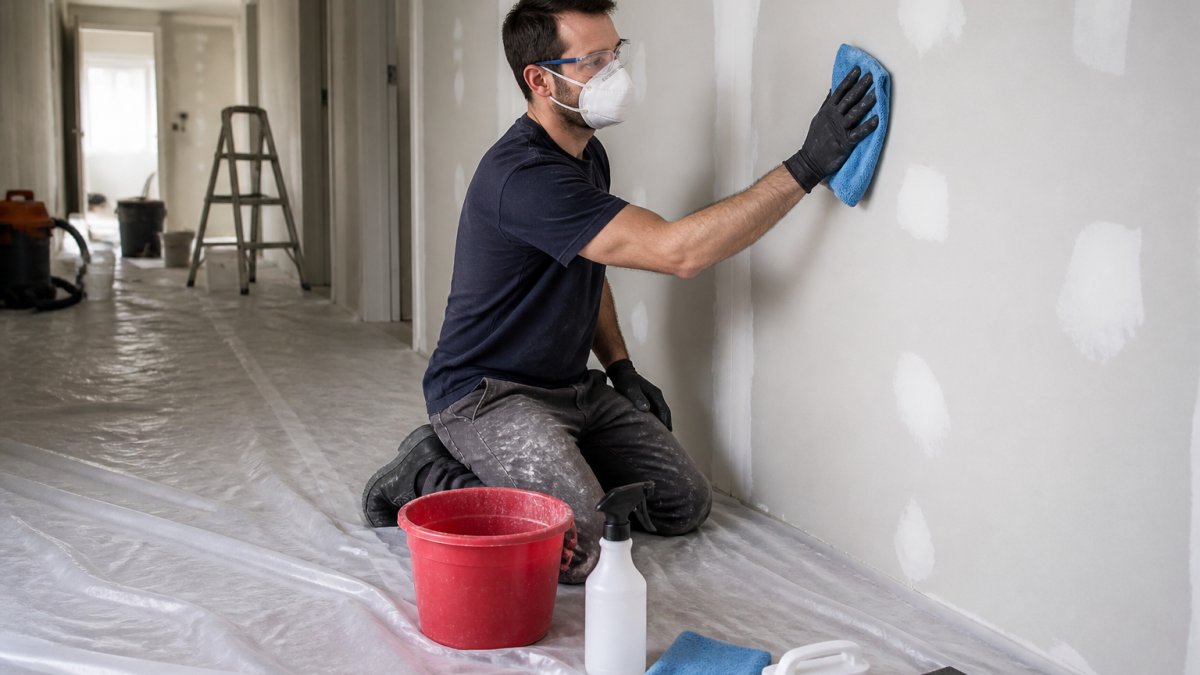
How to clean construction dust from walls and ceilings: use damp wiping, not dry dusting. A dry cloth just launches fine particles back into the air. A microfiber cloth or microfiber mop lightly dampened traps dust instead of spreading it.
Steps for surfaces:
- Vacuum loose dust first with a HEPA filtration vacuum
- Wipe ceilings and high walls with a damp microfiber cloth
- Work down the walls, rinsing the cloth often
- Damp mop hard floors, changing water frequently
- Wipe furniture, fixtures, and surface residue last
Vacuuming with a HEPA vacuum filter matters more than people think. Standard vacuums blow fine dust right back out.
Construction Dust Cleanup Checklist
Use this construction dust cleanup checklist to work through a space in the right order and confirm the job is actually done.
- Seal off the work area with plastic sheeting before cleaning
- Put on a mask, gloves, and eye protection
- Vacuum all surfaces with a HEPA vacuum
- Damp wipe ceilings and walls, top to bottom
- Clean light fixtures, vents, and ceiling fans
- Damp mop floors and repeat with fresh water
- Wipe furniture, electronics, and fixtures
- Replace or clean HVAC air filters
- Schedule air duct cleaning if dust was heavy
- Re-check surfaces after 24 hours for returning dust
How to tell whether cleanup is complete: wipe a clean white cloth across a few surfaces. If it comes back gray, keep going. Repeat cleaning over the next few days is normal.
The order matters more than the effort. Top to bottom, HEPA first, damp wiping second. That sequence removes construction dust instead of moving it around.
Ordinary Renovation Dust vs. Hazardous Materials
Most renovation dust is a nuisance. Some of it is dangerous. Knowing the difference protects you and tells you when to stop and call in professionals.
Ordinary renovation dust comes from drywall, wood, and clean concrete. It irritates airways, clogs filters, and makes a mess, but it is not a serious health hazard in normal amounts.
Hazardous materials are a different story. Older buildings can hide asbestos in insulation, flooring, and joint compound. Lead paint turns into dangerous dust when sanded. Silica from cutting concrete and stone is a known lung hazard.
The OSHA standards on respirable crystalline silica set strict exposure limits for construction workers because silica dust causes serious lung disease.
How to tell the difference:
- Ordinary dust: light gray or white, from new drywall and wood
- Hazardous dust: from demolition in older buildings, painted surfaces, or unknown materials
- When in doubt: test before you clean, not after
If the building predates the 1980s, treat renovation dust as potentially hazardous until testing says otherwise. Asbestos was commonly used in joint compound, floor tile, and pipe insulation, and lead paint was common in homes built before 1978. Silica is present in concrete, brick, and stone, so any cutting or grinding of those materials creates respirable crystalline silica.
When to test or call a professional:
- The building was built before 1980 and you are disturbing joint compound, flooring, or insulation
- Painted surfaces are being sanded or scraped and the paint may be lead-based
- You are cutting, grinding, or demolishing concrete, brick, or stone
- You cannot identify the material or its age
Testing is cheaper than remediation. A certified inspector can sample suspect materials before work begins, and if asbestos or lead is confirmed, a licensed abatement contractor should handle removal. Do not dry sweep or use a standard shop vacuum on hazardous dust, because that spreads it further.
If you are unsure whether dust is hazardous, stop work and test. The cost of testing is small compared with the cost of remediating a contaminated building.
When to Call a Professional Cleaning Crew
Call a professional crew when dust is heavy, widespread, or in a building with HVAC systems, electronics, and multiple rooms. DIY cleanup works for a single small room. It fails in a whole floor of offices.
Post-construction cleanup is a different job than routine janitorial work. It needs HEPA equipment, the right sequence, and the manpower to repeat the process over several days.
Signs it is time to bring in help:
- Dust has spread through air ducts and HVAC
- The space is large or has many rooms
- Sensitive equipment or electronics are exposed
- The building is older and materials are unknown
- You need it done fast before reopening
At Guso Janitorial Services, our construction cleanup teams work around your schedule, seven days a week, using clean and green products. We are fully licensed, bonded, and insured, and we handle everything from a single office to a full industrial facility.
Frequently Asked Questions
Is construction dust harmful if it is left in a home or office?
Yes. Construction dust contains fine particles from drywall, wood, silica, and other materials that stay airborne for hours and settle on every surface. Left in place, it keeps recirculating through the HVAC system, irritates eyes, throat, and lungs, and worsens allergies or asthma. Fine particles can remain suspended for 48 to 72 hours, and settled dust gets stirred back up by foot traffic, vacuums without HEPA filtration, and normal air movement. The longer construction dust sits, the more it spreads into vents, ducts, and upholstery.
How long does construction dust last if it is never cleaned?
Airborne construction dust can linger for 48 to 72 hours before settling, but settled dust does not disappear on its own. It accumulates on floors, walls, ceilings, and furniture and returns to the air every time someone walks through or the HVAC system runs. In practice, construction dust can remain in a building for weeks or months without proper HEPA vacuuming, damp wiping, and repeat cleaning. Rooms with poor ventilation and clogged air filters hold dust even longer.
Can construction dust damage HVAC systems and electronics?
It can. Construction dust clogs air filters quickly, forcing the HVAC system to work harder and reducing airflow. Over time, dust coats blower motors, coils, and ductwork, which lowers efficiency and can lead to costly repairs. Electronics are also vulnerable: dust builds up inside computers, servers, and equipment, trapping heat and causing overheating or premature failure. Changing air filters frequently during and after renovation and scheduling duct cleaning are the most effective safeguards.
How do you clean construction dust without spreading it?
Work top to bottom and dry to wet. Start with HEPA vacuuming on ceilings, walls, and floors to capture fine particles instead of pushing them around. Follow with damp wiping using microfiber cloths on walls, trim, and hard surfaces, then a microfiber mop on floors. Avoid dry sweeping or a standard vacuum, which stirs dust back into the air. Change HVAC filters, wipe vents, and repeat the full cleaning sequence two to three times over several days, because fine construction dust resettles after the first pass.
Leaving construction dust in place costs more than cleaning it. Air quality drops, systems clog, and the dust keeps returning. If your building needs a proper post-construction cleanup, Guso Janitorial Services is ready. Our teams are available 24/7, we tailor each cleaning program to your space, and we use clean and green products that protect your equipment and your people. Call today and get your facility back to a healthy, client-ready state.
Leave a Reply