
Table of Contents
- Why Industrial Cleaning Safety Standards Matter
- OSHA Industrial Cleaning Requirements and Compliance
- PPE for Industrial Janitorial Services
- Industrial Facility Cleaning Checklist for Safety
- Chemical Safety and Hazard Communication
- Spill Management and Containment Procedures
- Building a Safety Culture in Industrial Cleaning Operations
- Frequently Asked Questions
Last Updated: September 19, 2026
Why Industrial Cleaning Safety Standards Matter
Industrial cleaning safety standards exist because the work itself is dangerous. Chemical exposure, slip hazards, respiratory risks, and equipment-related injuries don’t announce themselves. They accumulate quietly until someone gets hurt. The difference between a facility where workers go home healthy and one where incidents stack up comes down to one thing: whether safety standards are treated as a checklist or as a core operating principle.
Workplace injuries in industrial cleaning operations cost facilities time, money, and reputation. More importantly, they’re largely preventable. When facility managers implement strong occupational safety protocols, incident rates drop. When they cut corners, incidents follow. The industrial cleaning safety standards framework exists to bridge that gap, translating regulatory requirements into actionable practices that actually protect people.
This guide walks you through the essential industrial cleaning safety standards your operation needs to follow, why they matter, and how to implement them effectively.
OSHA Industrial Cleaning Requirements and Compliance
The Occupational Safety and Health Administration (OSHA) sets the federal baseline for workplace safety, including industrial cleaning operations. OSHA’s General Industry Standards (29 CFR 1910) contain the specific requirements that govern how cleaning work must be performed in industrial settings. Compliance isn’t optional, it’s a legal requirement, and violations carry significant penalties.
Industrial cleaning falls under OSHA’s purview because it involves hazardous materials, physical labor, and environmental risks. Facility managers must understand which OSHA standards apply to their specific operation. The scope varies depending on what you’re cleaning, what chemicals you’re using, and what hazards exist in your facility.
Hazard Communication Standards
Hazard Communication is OSHA’s requirement that all hazardous chemicals used in a workplace be properly labeled, documented, and communicated to workers. Every cleaning chemical, degreaser, disinfectant, floor stripper, or specialty solvent, must come with a Safety Data Sheet (SDS). These documents contain critical information about chemical composition, health hazards, proper handling, and emergency procedures.
Your facility must maintain an SDS library and make it accessible to all cleaning staff. Workers need to know what they’re handling before they handle it. A chemical that causes respiratory irritation when inhaled requires different precautions than one that causes skin burns. Hazard Communication standards ensure that information flows from the manufacturer to the facility to the worker.
Many facilities keep SDS sheets in a physical binder or digital repository. The format matters less than accessibility. If a worker needs to know about a chemical’s hazards during their shift, they should be able to find that information in under a minute. Digital systems often work better for larger operations because they’re searchable and impossible to lose.
Walking-Working Surface Safety
Slip, trip, and fall incidents are the most common workplace injuries in industrial facilities. OSHA’s walking-working surface standards require that floors be kept clean, dry, and free of hazards. This means more than just sweeping. It means managing spills immediately, maintaining proper drainage, marking hazards, and ensuring adequate lighting.
Industrial facilities often have wet floors, oily residues, and uneven surfaces. Cleaning operations can actually create slip hazards if not done properly. When you’re applying floor stripper or cleaning degreaser, the floor becomes temporarily hazardous. The solution is containment, proper signage, and controlled drying. Wet floor signs aren’t decoration, they’re a legal requirement that prevents injuries.
Stairways, ramps, and elevated work surfaces require additional attention. Handrails must be maintained, steps must be clear, and surfaces must provide adequate traction. These standards apply whether your facility is a manufacturing plant, warehouse, or multi-tenant building.
PPE for Industrial Janitorial Services
Personal Protective Equipment is your last line of defense when engineering controls and work practices aren’t enough. The right PPE prevents direct contact with hazardous chemicals, protects respiratory systems, and shields eyes and skin. The wrong PPE, or no PPE, leaves workers vulnerable.
OSHA requires that employers provide appropriate PPE at no cost to workers. The type of PPE depends on the hazards present. A facility using mild disinfectants may need only gloves and eye protection. A facility handling caustic degreasers or industrial solvents requires respiratory protection, chemical-resistant clothing, and sometimes face shields.
Respiratory Protection During Chemical Exposure
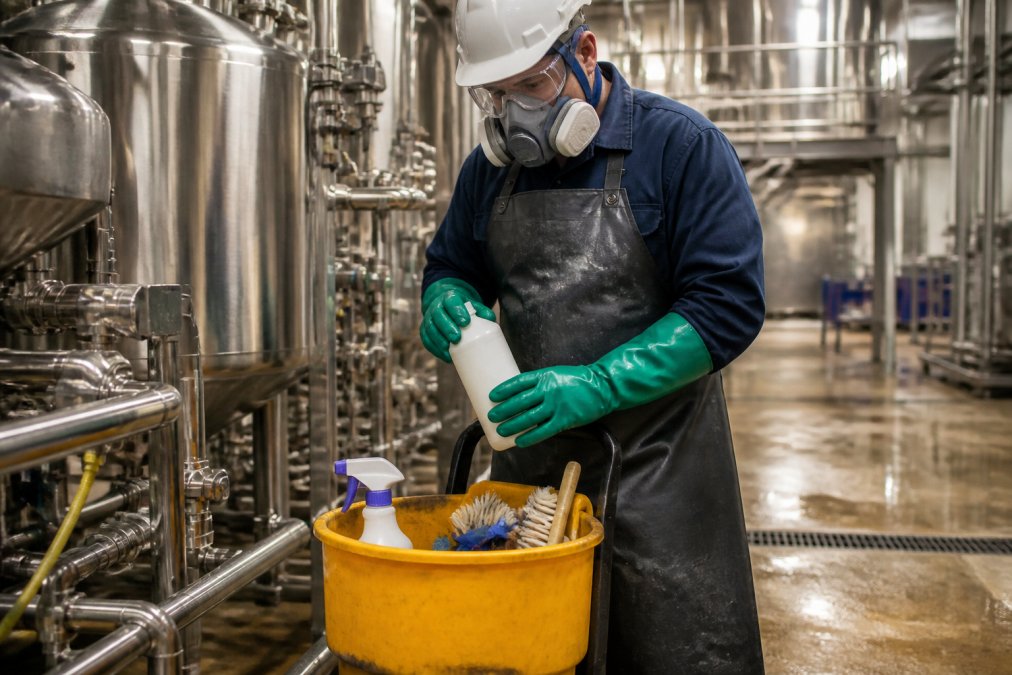
Respiratory hazards in industrial cleaning come from volatile organic compounds (VOCs), ammonia, chlorine, and other airborne chemicals. Some facilities use high-powered pressure washing that aerosolizes chemicals. Others use floor strippers or degreasers in enclosed spaces. Without respiratory protection, workers inhale these substances directly.
OSHA’s respiratory protection standard requires a written program that includes medical evaluations, fit testing, and training. A respirator that doesn’t fit properly provides almost no protection. Workers need to be fit-tested for the specific respirator model they’ll use, and that fit-testing must be repeated annually or when facial changes occur.
The type of respirator depends on the hazard. Particulate masks work for dust. Cartridge respirators work for chemical vapors. Self-contained breathing apparatus works for high-hazard environments. Using the wrong type leaves workers exposed. Using the right type but wearing it incorrectly does the same thing.
Hand, Eye, and Skin Protection
Chemical-resistant gloves are essential for any worker handling cleaning chemicals. Latex or nitrile gloves provide minimal protection against industrial solvents and caustic cleaners. Chemical-resistant gloves made from neoprene, butyl rubber, or laminated materials are required for hazardous chemical handling.
Eye protection prevents chemical splashes and airborne particles from reaching the eyes. Safety glasses work for low-hazard tasks. Chemical splash goggles work for tasks where splashing is likely. Face shields provide additional protection for the face. The level of protection must match the hazard.
Skin protection extends beyond gloves to include long sleeves, aprons, and sometimes full-body protective suits. A worker handling caustic chemicals should wear clothing that covers exposed skin. This isn’t about comfort, it’s about preventing chemical burns and absorption through the skin.
Industrial Facility Cleaning Checklist for Safety
A structured approach to industrial facility cleaning ensures that safety doesn’t get overlooked during routine operations. Checklists create accountability and consistency. They ensure that high-risk areas get the attention they deserve and that nothing gets missed.
Daily Safety Tasks
Daily tasks form the foundation of facility safety. These are the actions that prevent hazards from accumulating and catch problems before they become serious.
- Inspect floors for spills, debris, and hazards before cleaning begins
- Check that all cleaning equipment is in proper working condition
- Verify that chemical containers are properly labeled and sealed
- Ensure that PPE is available and in good condition
- Clear high-traffic areas of obstacles and trip hazards
- Manage spills immediately using proper containment procedures
- Document any incidents or near-misses
- Verify that Safety Data Sheets are accessible to all workers
- Check that emergency eyewash and shower stations are accessible
- Ensure adequate ventilation in areas where chemicals are used
These tasks take time, but they prevent injuries. A facility where these tasks are skipped regularly will accumulate incidents. A facility where they’re done consistently will have far fewer problems.
Weekly and Monthly Deep-Cleaning Protocols
Weekly and monthly tasks address areas that don’t need daily attention but accumulate hazards over time. Deep-cleaning protocols also provide opportunities to inspect equipment, facilities, and safety systems more thoroughly.
Weekly tasks include inspecting storage areas for chemical compatibility, checking that labels remain legible, verifying that spill kits are stocked, and ensuring that high-risk equipment is functioning properly. Monthly tasks include reviewing incident reports, auditing PPE inventory, testing emergency equipment, and assessing whether current protocols are working.
A common mistake is treating deep-cleaning as separate from safety. It’s not. Deep-cleaning reveals problems that daily work doesn’t catch. A monthly inspection of your chemical storage area might reveal that incompatible chemicals are stored too close together, creating a cross-contamination risk. A weekly check of your spill containment equipment might show that absorbent materials are degraded or missing.
Chemical Safety and Hazard Communication
Chemical safety begins with understanding what you’re using. Every cleaning chemical has specific hazards, proper handling procedures, and emergency response steps. This information lives in the Safety Data Sheet, but it only matters if workers actually know it and apply it.
Hazard Communication standards require that every container be labeled with the chemical name, hazard warnings, and manufacturer information.
Spill Management and Containment Procedures
Spills happen. The question is whether your facility can contain them safely or whether they become emergencies. Spill containment procedures specify how to respond to different types of spills, what equipment to use, and how to prevent environmental contamination and worker exposure.
Building a Safety Culture in Industrial Cleaning Operations
Compliance with industrial cleaning safety standards is necessary but not sufficient. A facility with perfect documentation and poor safety culture will still have incidents. A facility where safety is genuinely valued will maintain standards even when no one is watching.
Frequently Asked Questions
What are the OSHA requirements for industrial cleaning?
OSHA requires industrial cleaning operations to comply with hazard communication standards (29 CFR 1910.1200), which mandate safety data sheets for all chemicals, proper labeling, and employee training. Facilities must also maintain safe walking-working surfaces to prevent slips and falls, provide appropriate PPE based on hazard assessment, and ensure respiratory protection when workers face chemical exposure. Compliance audits should occur regularly to verify adherence to these standards and reduce liability.
How do you maintain safety standards in industrial facility maintenance?
Maintain safety standards through documented cleaning protocols, regular hazard assessments, and consistent employee training. Implement a facility cleaning checklist that covers daily slip-prevention measures, weekly disinfection with proper dwell times, and monthly deep-cleaning of high-risk areas. Establish incident reporting procedures, conduct compliance audits quarterly, and ensure all staff have access to safety data sheets. Digital documentation systems help track completion and identify trends in safety performance.
What is the importance of PPE in industrial cleaning?
PPE protects workers from chemical exposure, respiratory hazards, and surface contamination during industrial cleaning tasks. Proper equipment, including respirators, chemical-resistant gloves, eye protection, and aprons, reduces injury rates and illness. OSHA requires employers to provide PPE at no cost and ensure proper fit and training. Workers must understand when to use each type of protection based on the chemicals and hazards present, making PPE education a critical component of occupational safety.
How often should industrial facilities be deep cleaned for safety?
Most industrial facilities require deep cleaning on a monthly basis, though frequency depends on the type of operation and hazard level. High-traffic manufacturing areas, spaces with chemical exposure, or facilities handling hazardous materials may need weekly deep cleaning. Daily cleaning of slip hazards and high-touch surfaces is standard. A professional facility assessment determines the optimal schedule, and a documented industrial facility cleaning checklist ensures consistency and compliance with regulatory standards.