
Table of Contents
- Assess Your Retail Facility’s Cleaning Needs
- Create a Retail Store Cleaning Checklist
- Determine Commercial Cleaning Frequency for Retail
- Develop a Tailored Maintenance Schedule
- How to Evaluate Commercial Cleaning Companies
- Implement Green Cleaning and Sanitation Protocols
- Monitor Performance and Adjust Your Plan
- Frequently Asked Questions
Last Updated: October 1, 2026
Assess Your Retail Facility’s Cleaning Needs
A customized cleaning plan for retail spaces starts with a thorough assessment of your facility. You can’t create an effective schedule without understanding what you’re actually working with. The size of your store, the types of surfaces, customer traffic patterns, and specific equipment all shape how you clean.
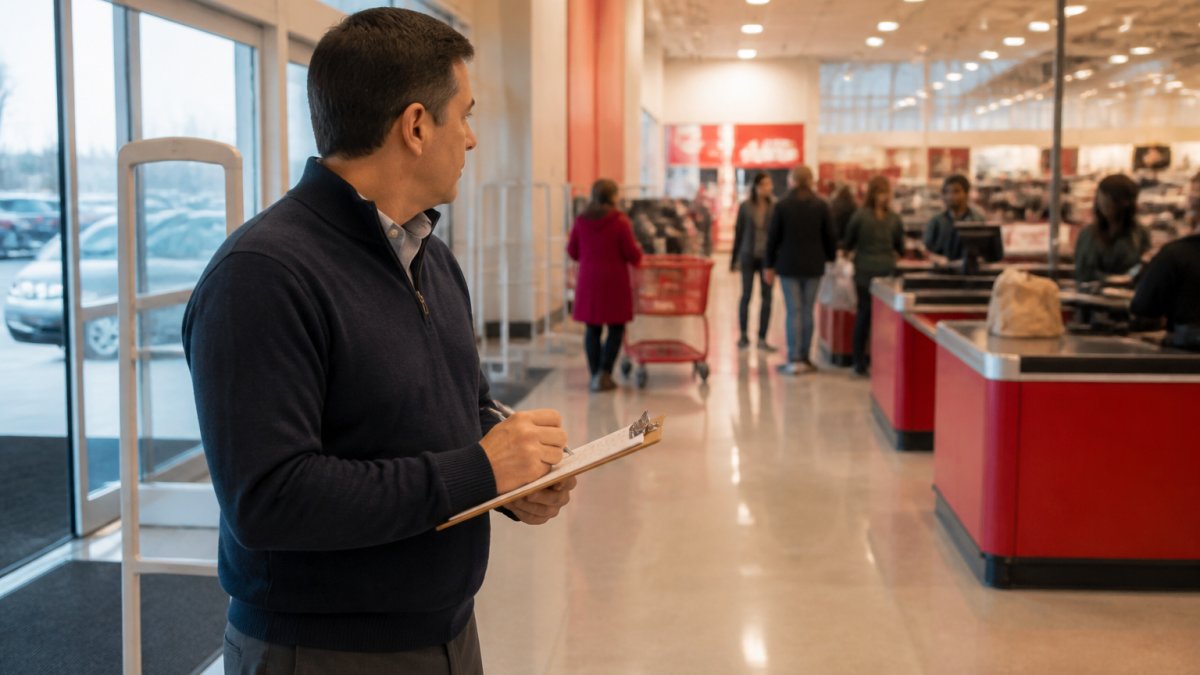
Walk through your retail space and document everything. What areas see the most foot traffic? Which surfaces need special care? Are there restrooms, break rooms, or storage areas that need attention? This isn’t about guessing, it’s about getting specific details that inform your plan.
Map High-Traffic and Priority Areas
High-traffic zones require more frequent attention than quiet corners. Entrances, checkout areas, and aisles near popular products get heavy foot traffic and collect dirt, dust, and debris faster. These areas demand daily cleaning or even multiple cleanings per day.
Identify your priority areas by observing customer movement patterns. Mark the zones where customers spend the most time. Note which surfaces customers touch frequently: door handles, checkout counters, fitting room doors, and handrails. These high-touch surfaces spread germs and need regular disinfection to maintain workplace hygiene.
Create a simple map of your retail store. Divide it into zones: high-traffic, moderate-traffic, and low-traffic areas. This visual reference helps cleaning staff understand which sections need intensive care and which need standard maintenance.
Identify Surfaces and Equipment Requiring Special Care
Not all surfaces are equal. Tile floors, carpet, glass, stainless steel, and wood each need different cleaning approaches. Some retail spaces have specialized equipment like coolers, display cases, or machinery that require specific cleaning protocols.
Make a list of every surface type in your facility. Note which ones are delicate or sensitive to harsh chemicals. Identify equipment that needs careful handling. Document any surfaces that stain easily or require protective coatings. This information prevents damage and ensures your customized cleaning plans for retail spaces actually work.
Create a Retail Store Cleaning Checklist
A retail store cleaning checklist keeps your team organized and ensures nothing gets missed. Your checklist should break down tasks by frequency: daily, weekly, and monthly. This structure makes it easy to assign responsibilities and track completion.
Start with the most important daily tasks. These are the non-negotiables that happen every single day your store is open or closed. Then add weekly deep-cleaning tasks. Finally, schedule monthly maintenance that keeps your facility in top condition.
Daily Tasks
Daily cleaning maintains a professional appearance and supports a healthier, more productive environment for both employees and customers. These tasks should happen at the start of the day, during business hours, or after closing, depending on your retail operation.
Daily tasks include:
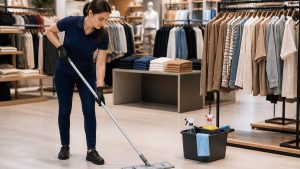
- Sweep and mop high-traffic areas
- Empty trash and replace liners
- Wipe down checkout counters and registers
- Clean and disinfect restrooms
- Spot-clean windows and glass doors
- Tidy fitting rooms and product displays
- Vacuum carpeted areas
- Wipe high-touch surfaces like door handles and railings
Assign specific staff members to each task. Use a checklist to mark completion. This accountability ensures consistency and prevents missed spots.
Weekly and Monthly Deep Cleaning Tasks
Weekly tasks go deeper than daily maintenance. They target areas that need more intensive care but don’t require daily attention. Monthly tasks address seasonal buildup and preventative maintenance.
Weekly cleaning includes:
- Strip and rewax floors in designated areas
- Deep clean restrooms, including tile grout
- Clean inside refrigeration units and display cases
- Dust shelving and product displays thoroughly
- Clean windows inside and out
- Sanitize break room appliances
- Shampoo carpeted areas as needed
Monthly deep cleaning covers:
- Strip and wax all floors completely
- Clean air vents and replace filters
- Wash walls and baseboards
- Deep clean behind and under equipment
- Sanitize storage areas
- Power wash exterior entrance if applicable
- Inspect and repair cleaning equipment
Create a master checklist that your cleaning team can print and use daily. Include checkboxes, time estimates, and the responsible staff member’s name. This transparency makes quality control easier and helps identify training gaps.
Determine Commercial Cleaning Frequency for Retail
Commercial cleaning frequency depends on several factors specific to your retail operation. A busy mall store needs different cleaning than a quiet boutique. Your customized cleaning plans for retail spaces must match your actual traffic and business type.
Most retail stores need daily cleaning of high-traffic areas and restrooms. This is the baseline. Beyond that, frequency depends on your occupancy rates, customer traffic patterns, and the nature of your retail business. A clothing store might need different cleaning schedules than a grocery store or pharmacy.
Document your average daily customer count.
Develop a Tailored Maintenance Schedule
A tailored maintenance schedule aligns cleaning tasks with your business operations. The schedule should work around your store hours, staff availability, and traffic patterns. It should also account for seasonal changes and unexpected deep-cleaning needs.
Adjust for Occupancy Rates and Traffic Patterns
Occupancy rates and traffic patterns vary by season, day of the week, and time of day. A retail space that’s packed on Saturday might be quiet on Tuesday. Holiday seasons bring surges in foot traffic. Understanding these patterns helps you allocate cleaning resources efficiently.
Account for Seasonal and Post-Construction Cleaning
Seasonal changes affect your cleaning needs. Winter brings mud and salt into your facility. Spring might require extra attention to windows and exterior areas. Post-construction or renovation work creates debris and dust that demands specialized cleanup.
Seasonal deep cleaning often requires professional help. Attempting to handle major cleanups with regular staff can overwhelm your team and delay other necessary tasks. Professional cleaners have the equipment and expertise to handle post-construction debris removal efficiently.
How to Evaluate Commercial Cleaning Companies
Choosing the right commercial cleaning company matters. Your facility’s appearance reflects your business. Poor cleaning hurts your brand and customer experience. The right partner ensures consistent, high-quality results.
Verify Licensing, Bonding, and Insurance
A professional cleaning company should be fully licensed, bonded, and insured. This protects you if something goes wrong. Licensing shows they meet regulatory requirements. Bonding protects you financially if they damage your property. Insurance covers accidents and liability.
Assess Quality Control and Compliance Standards
Quality control separates good cleaning companies from great ones. Ask how they monitor their work. Do they conduct inspections? Do they have a complaint resolution process? How do they handle customer feedback?
Implement Green Cleaning and Sanitation Protocols
Green cleaning and sanitation protocols protect your customers, employees, and the environment. They also reduce chemical exposure and improve indoor air quality. Modern retail spaces increasingly expect eco-friendly cleaning solutions that don’t compromise on results.
High-Touch Surface Disinfection
High-touch surfaces spread germs and bacteria throughout your facility (the CDC). Door handles, checkout counters, shopping carts, and fitting room doors need regular disinfection. This is especially critical in retail environments where hundreds of customers touch the same surfaces daily.
Sustainability and Supply Management
Sustainable supply management reduces waste and environmental impact. It also saves money over time. Choose cleaning products with minimal environmental footprint. Buy supplies in bulk to reduce packaging waste. Implement recycling programs for used containers.
Green cleaning doesn’t mean sacrificing cleaning quality. Modern eco-friendly products are as effective as traditional chemicals while being safer for your staff and customers. They also support a healthier, more productive environment for employees.
Monitor Performance and Adjust Your Plan
Your customized cleaning plans for retail spaces aren’t static. They need regular review and adjustment based on actual performance. Monitor your facility’s cleanliness. Track customer feedback. Note any problem areas. Use this information to refine your plan.
| Monitoring Task | Frequency | What to Check | Action if Issues Found |
|---|---|---|---|
| Facility inspection | Weekly | Cleanliness, odors, missed areas | Discuss with cleaning team |
| Customer feedback | Ongoing | Restroom condition, floor cleanliness | Adjust schedule or training |
| Supply inventory | Weekly | Stock levels, product effectiveness | Reorder or switch products |
| Equipment condition | Monthly | Cleaning tools, machines, damage | Repair or replace |
| Staff performance | Monthly | Task completion, consistency, quality | Provide feedback or training |
Frequently Asked Questions
What should be included in a retail store cleaning checklist?
A retail store cleaning checklist should cover daily tasks like floor sweeping, trash removal, and restroom sanitation; weekly tasks such as window cleaning and floor stripping; and monthly deep cleaning of baseboards and high shelves. High-touch surfaces like door handles, payment terminals, and shopping cart handles require special attention for disinfection. Your checklist should also address equipment-specific care, waste management protocols, and compliance with health and safety standards relevant to retail operations.
How often should retail spaces be professionally cleaned?
Commercial cleaning frequency for retail typically includes daily cleaning for high-traffic areas like entrances and checkout zones, with weekly deep cleaning of restrooms, floors, and back-of-house spaces. The exact schedule depends on your store’s occupancy rates, traffic patterns, and industry requirements. Seasonal adjustments and post-construction cleanup may require additional service. A professional cleaning partner can assess your specific needs and recommend a tailored frequency that maintains compliance standards while optimizing operational efficiency.
How do I know if a cleaning company is reliable and trustworthy?
When evaluating commercial cleaning companies, verify they are fully licensed, bonded, and insured, ask for proof of each. Check their references from other retail clients and confirm they have quality control processes in place. Ask about their service level agreement, response time for no-shows, and what’s covered if damage occurs. Reliable companies provide consistent scheduling, maintain detailed cleaning checklists, and use staff scheduling systems to ensure coverage. Request a facility assessment before signing a contract to confirm they understand your unique needs.
Why are customized cleaning plans better than standard janitorial packages?
Customized cleaning plans address your specific retail layout, traffic patterns, equipment, and compliance needs rather than applying a one-size-fits-all approach. They account for high-touch surfaces unique to your space, seasonal variations, and industry-specific sanitation protocols. Tailored maintenance reduces unnecessary costs by focusing resources where they matter most, improves workplace hygiene and employee morale, and ensures your facility always impresses clients. A customized plan also adapts as your business grows or operational requirements change, providing better long-term value than generic packages.