
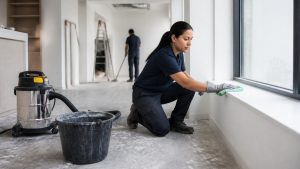
Table of Contents
- Why Non-Toxic Post-Construction Cleaning Matters
- How to Remove Drywall Dust After Renovation
- Eco-Friendly Construction Cleaning Supplies That Work
- Step-by-Step Post-Construction Cleanup Process
- Common Mistakes to Avoid
- Indoor Air Quality Testing After Construction
- When to Call Professional Construction Cleanup Services
- Frequently Asked Questions
Last Updated: October 4, 2026
Why Non-Toxic Post-Construction Cleaning Matters
Construction projects leave behind more than just finished spaces. They leave dust, debris, and chemical residue that can linger for weeks. Many facility managers overlook the health risks of harsh cleaning chemicals during this critical phase.
The wrong cleaning approach compromises both worker safety and building integrity. New drywall, flooring, and fixtures are vulnerable. Acidic or abrasive products can etch surfaces, discolor finishes, and trigger respiratory issues for occupants.
The real difference between a properly cleaned space and a damaged one comes down to chemistry. pH-neutral cleaners protect surface integrity while still removing construction residue effectively. Green cleaning products eliminate VOCs that conventional chemicals leave behind.
Here’s what you need to know about post-construction cleaning without harsh chemicals:
- Protects new surfaces from etching and discoloration
- Reduces indoor air quality issues from chemical fumes
- Supports worker safety during the cleanup phase
- Creates a healthier environment for occupants moving in
- Maintains material durability long-term
How to Remove Drywall Dust After Renovation
Drywall dust is the most persistent challenge after construction. Fine dust particles settle everywhere, on surfaces, in ventilation systems, even in areas you think you’ve already cleaned. This isn’t just a cleanliness issue. Fine dust can trigger allergies, reduce indoor air quality, and damage HVAC equipment if not removed properly.
The key is a two-stage approach: containment first, then systematic removal. Most teams skip containment and end up spreading dust further into clean areas.
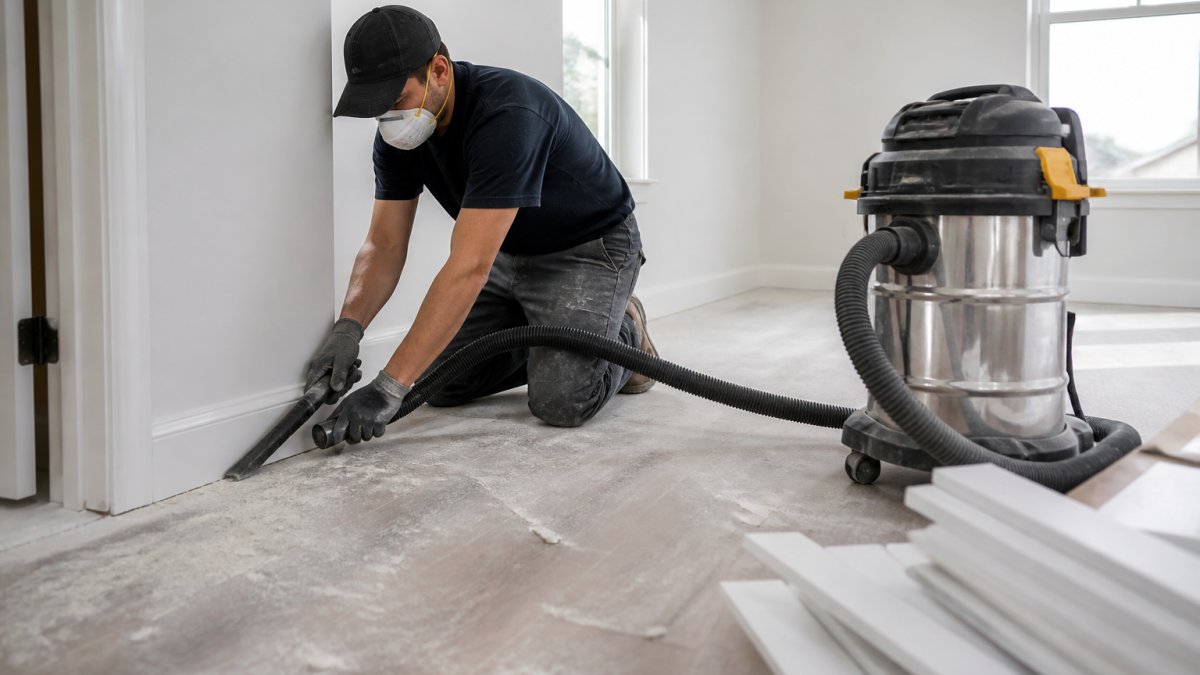
HEPA Vacuuming and Containment
HEPA vacuums are non-negotiable for post-construction cleanup. Standard vacuums recirculate fine dust back into the air. HEPA filters capture 99.97% of particles 0.3 microns and larger, the size range that causes the most problems.
Containment prevents dust migration:
- Seal off the construction area with plastic sheeting
- Use negative air pressure if possible to direct dust outside
- Vacuum in overlapping passes, starting high and working down
- Empty the vacuum outside the building to prevent recontamination
- Change HEPA filters after every major cleanup phase
The dust removal process takes patience. Rushing leads to incomplete cleanup and repeat work later. Plan for multiple passes over several days if the project was large.
Microfiber Cloth Techniques
Microfiber cloths trap dust instead of pushing it around. Regular cotton cloths and feather dusters simply redistribute fine particles. Microfiber’s microscopic fibers grab dust particles electrostatically, they don’t release them back into the air.
Use these techniques for maximum effectiveness:
- Dampen microfiber cloths slightly to increase dust capture
- Wipe surfaces in one direction, not back-and-forth
- Fold cloths frequently to use clean surfaces
- Wash cloths separately from regular laundry to prevent cross-contamination
- Use separate cloths for different areas to avoid spreading dust
Baseboards and ledges collect the most dust. These high-contact areas need multiple passes with fresh cloths. The fine dust settles here because air currents slow down near surfaces.
Eco-Friendly Construction Cleaning Supplies That Work
The assumption that eco-friendly products are weaker is wrong. Modern green cleaners use plant-based surfactants and enzymes that break down construction residue just as effectively as harsh chemicals, without the surface damage or health risks.
The chemistry matters. Acidic cleaners dissolve mineral deposits but etch new tile and stone. Alkaline cleaners cut grease but can strip finishes. pH-neutral products clean effectively while protecting surface integrity. This is why they’re the standard in professional post-construction cleaning.
pH-Neutral Cleaners and Vinegar Solutions
pH-neutral cleaners maintain a balance between 6.5 and 7.5 on the pH scale. This range cleans without damaging materials. Vinegar, while acidic on its own, becomes nearly neutral when diluted properly, and it’s one of the most cost-effective solutions available.
Vinegar-based cleaning works best for:
- Removing grout haze from tile
- Cutting through paint splatter on glass
- Dissolving mineral deposits on fixtures
- Cleaning windows without streaking
The key is dilution. A 1:1 ratio of white vinegar to water works for most surfaces. Test on inconspicuous areas first, some natural stone reacts poorly to any acid.
Commercial pH-neutral cleaners often contain plant-based surfactants that improve cleaning power. These products are designed specifically for post-construction environments where surface protection is critical.
DIY Non-Toxic Cleaning Recipes
You don’t need expensive specialty products for many post-construction cleaning tasks. Simple ingredients create effective solutions that cost a fraction of commercial cleaners.
All-Purpose Surface Cleaner:
- 2 cups water
- 1 tablespoon baking soda
- 10 drops lemon essential oil
- 1 teaspoon castile soap
Mix in a spray bottle. Shake well before each use. Works on walls, trim, and most surfaces.
Grout and Tile Cleaner:
- 1 cup white vinegar
- 1 cup water
- 5 drops tea tree oil
Spray on grout lines. Let sit 5-10 minutes. Scrub with a soft brush. Rinse thoroughly with clean water.
Glass and Fixture Cleaner:
- 2 cups water
- 2 tablespoons white vinegar
- 1 tablespoon rubbing alcohol
Spray on glass. Wipe with microfiber cloths for streak-free results.
Degreaser for Heavy Residue:
- 1 cup water
- 2 tablespoons castile soap
- 5 drops orange essential oil
This tackles paint splatter and stubborn adhesive residue without harsh solvents.
These recipes work because they address the chemistry of construction residue. Baking soda is mildly abrasive and alkaline. Vinegar dissolves mineral deposits. Castile soap breaks down oils and paint.
Step-by-Step Post-Construction Cleanup Process
Professional post-construction cleaning follows a systematic sequence. Skipping steps or doing them out of order creates rework and extends the timeline.
Phase 1: Gross Debris Removal
Start by removing large debris before any fine cleaning begins. This prevents dust from spreading during heavy work.
- Remove protective coverings and drop cloths
- Sweep up large debris piles with a broom
- Dispose of construction waste in designated bins
- Clear any leftover materials or equipment
- Inspect for any remaining large objects before moving to vacuuming
This phase seems simple but it’s critical. Rushing through it means you’ll be cleaning around debris later.
Phase 2: Fine Dust and Residue Removal
Once large debris is gone, focus on the pervasive fine dust that settles on every surface.
- Start with HEPA vacuuming of all floor surfaces
- Vacuum walls and ceiling areas using appropriate attachments
- Use microfiber cloths on all horizontal surfaces (shelves, ledges, baseboards)
- Wipe down door frames and trim work
- Clean light fixtures and ceiling fans
- Vacuum again to catch any dust disturbed during wiping
- Open windows to allow air circulation and VOC dispersal
This phase requires patience and attention to detail. Most teams underestimate how much dust remains after the initial vacuum.
Phase 3: Surface-Specific Cleaning
Different materials require different approaches. This is where surface-appropriate cleaning becomes essential.
For Tile and Grout:
- Use pH-neutral cleaner or diluted vinegar solution
- Scrub grout lines with a soft brush
- Rinse thoroughly with clean water
- Dry with microfiber cloths to prevent water spots
For Wood Floors:
- Avoid excessive moisture
- Use pH-neutral wood cleaner or lightly dampened microfiber cloths
- Never use vinegar on hardwood, the acid can damage finishes
- Dry immediately after cleaning
For Painted Walls:
- Use mild pH-neutral cleaner with minimal water
- Test on inconspicuous areas first
- Wipe gently to avoid damaging new paint
- Use dry microfiber cloths for final buffing
For Glass and Fixtures:
- Use vinegar solution or commercial glass cleaner
- Wipe with microfiber cloths for streak-free results
- Pay special attention to fingerprints and smudges from construction work
For Carpeted Areas:
- Vacuum thoroughly with HEPA equipment
- Use dry cleaning methods if possible
- If wet cleaning is necessary, use pH-neutral carpet cleaner
- Allow adequate drying time before occupancy
Surface-specific cleaning prevents damage that can be costly to repair. A single acidic cleaner on marble or limestone can cause permanent etching. Taking time to match the cleaner to the surface protects your investment.
| Surface Type | Recommended Cleaner | Avoid |
|---|---|---|
| Tile and Grout | pH-neutral or diluted vinegar | Acidic cleaners on natural stone |
| Wood Floors | pH-neutral wood cleaner | Vinegar, excess moisture |
| Painted Walls | Mild pH-neutral solution | Abrasive scrubbing |
| Glass | Vinegar solution or glass cleaner | Harsh chemicals that streak |
| Carpet | HEPA vacuum, dry methods | Excessive moisture |
| Natural Stone | pH-neutral only | Any acidic solution |
Common Mistakes to Avoid
Most post-construction cleaning failures come from predictable mistakes. Knowing what goes wrong helps you avoid expensive rework.
Using the wrong cleaner for the surface. Acidic products on marble, limestone, or grout cause permanent damage.
Rushing the fine dust removal phase. One pass with a vacuum isn’t enough.
Using standard vacuums instead of HEPA equipment. Regular vacuums recirculate fine particles back into the air.
Cleaning before removing all large debris. Sweeping around leftover materials wastes time and spreads dust unnecessarily.
Not planning for adequate drying time. Wet cleaning leaves moisture that can damage materials or create mold conditions.
Indoor Air Quality Testing After Construction
Construction projects compromise indoor air quality even after cleaning. VOCs from adhesives, paints, and sealants continue off-gassing for weeks. Testing reveals whether the space is safe for occupancy.
Indoor air quality testing measures several factors:
- Particulate matter (dust and fine particles)
- VOC concentrations
- Carbon dioxide levels
- Humidity and temperature
- Mold spores
Professional testing provides baseline data and identifies remaining issues. Many facilities conduct testing before occupancy to verify that cleanup was effective. If VOC levels remain elevated, additional ventilation or waiting periods may be necessary.
Ventilation is the most effective way to improve air quality after construction. Open windows, run HVAC systems on high, and allow air circulation for several days after cleanup. This accelerates VOC dispersal and improves occupant comfort immediately.
When to Call Professional Construction Cleanup Services
Some projects exceed the scope of internal cleaning teams. Professional post-construction cleaning services bring specialized equipment, trained crews, and the efficiency that large projects demand.
Consider professional services when:
- The project covers more than 10,000 square feet
- Multiple material types require different cleaning approaches
- Timeline is compressed and you need rapid turnaround
- Your team lacks experience with construction cleanup
- VOC concerns require professional air quality testing
- The space must be ready for immediate occupancy
Guso Janitorial Services handles post-construction cleanup with the same attention to detail we bring to all our work. Our crews use non-toxic, pH-neutral products that protect new surfaces while delivering thorough cleanup. We understand the chemistry of construction residue and the importance of proper containment and sequencing.
Professional teams complete cleanup faster because they work systematically with the right equipment.
Frequently Asked Questions
What are the best non-toxic cleaning products for post-construction cleanup?
pH-neutral cleaners, white vinegar solutions, and baking soda are effective for post-construction cleaning without harsh chemicals. Microfiber cloths paired with these solutions capture fine dust and residue safely. For grout haze and paint splatter, pH-neutral formulas prevent surface etching and discoloration on new materials. HEPA vacuums combined with eco-friendly surface cleaners handle construction debris while protecting indoor air quality and maintaining the integrity of newly installed surfaces.
How do you remove fine drywall dust without toxic cleaners?
Start with a HEPA vacuum to capture airborne particles before they settle. Follow with damp microfiber cloths, the moisture traps remaining dust rather than stirring it into the air. For stubborn residue, a 50/50 white vinegar and water solution works on most surfaces without VOCs or chemical sensitivity concerns. Wipe baseboards, fixtures, and hard-to-reach areas last to prevent re-contaminating cleaned surfaces. Proper ventilation during and after cleanup supports indoor air quality and accelerates dust removal.
Are vinegar and baking soda effective for post-construction cleanup?
Yes, vinegar and baking soda are effective for eco-friendly construction cleaning. White vinegar cuts through paint splatter and grout haze without surface etching, while baking soda absorbs odors and acts as a gentle abrasive for stubborn residue. Mix baking soda with water to form a paste for fixtures and grout lines. For maximum effectiveness, combine these with HEPA vacuuming and microfiber cloths. Test on inconspicuous areas first to ensure compatibility with your specific surfaces, especially on newly sealed or delicate finishes.
What equipment is necessary for eco-friendly construction site cleaning?
Essential equipment includes a HEPA-filter vacuum, microfiber cloths, pH-neutral cleaners or vinegar solution, baking soda, soft-bristle brushes, and safety protocols like gloves and masks. For larger projects, consider dust containment barriers and air purifiers to manage VOCs and fine particles. A damp mop (not wet) helps capture remaining dust without spreading it. Professional-grade equipment ensures thorough residue removal and surface integrity while maintaining safety standards. Proper disposal of construction-related hazardous waste, such as paint cans and chemical containers, is also critical for eco-friendly cleanup.
Construction cleanup shouldn’t compromise the health of your space or the people occupying it. Non-toxic, pH-neutral cleaning protects new surfaces, improves indoor air quality, and delivers results that harsh chemicals can’t match. If your next project needs professional post-construction cleaning that prioritizes both effectiveness and safety, contact Guso Janitorial Services. We’ll ensure your facility is clean, healthy, and ready for occupancy. Call Today!