
Table of Contents
- Assess Your Facility and Flooring Needs
- Understanding Industrial Floor Scrubbers
- When to Use an Industrial Floor Sweeper
- Ride-On Floor Scrubber vs Walk-Behind
- Floor Cleaning Equipment for Concrete Floors
- Calculate Total Cost of Ownership and ROI
- Safety, Compliance, and Environmental Factors
- Create Your Selection Workflow
- Frequently Asked Questions
Last Updated: October 21, 2026
Assess Your Facility and Flooring Needs
Choosing the right industrial floor cleaning equipment starts with understanding what you’re actually cleaning. Every facility is different. The concrete warehouse that needs heavy-duty scrubbing is nothing like the polished retail space with light foot traffic. Before you look at machines, look at your space.
Evaluate floor type and surface material
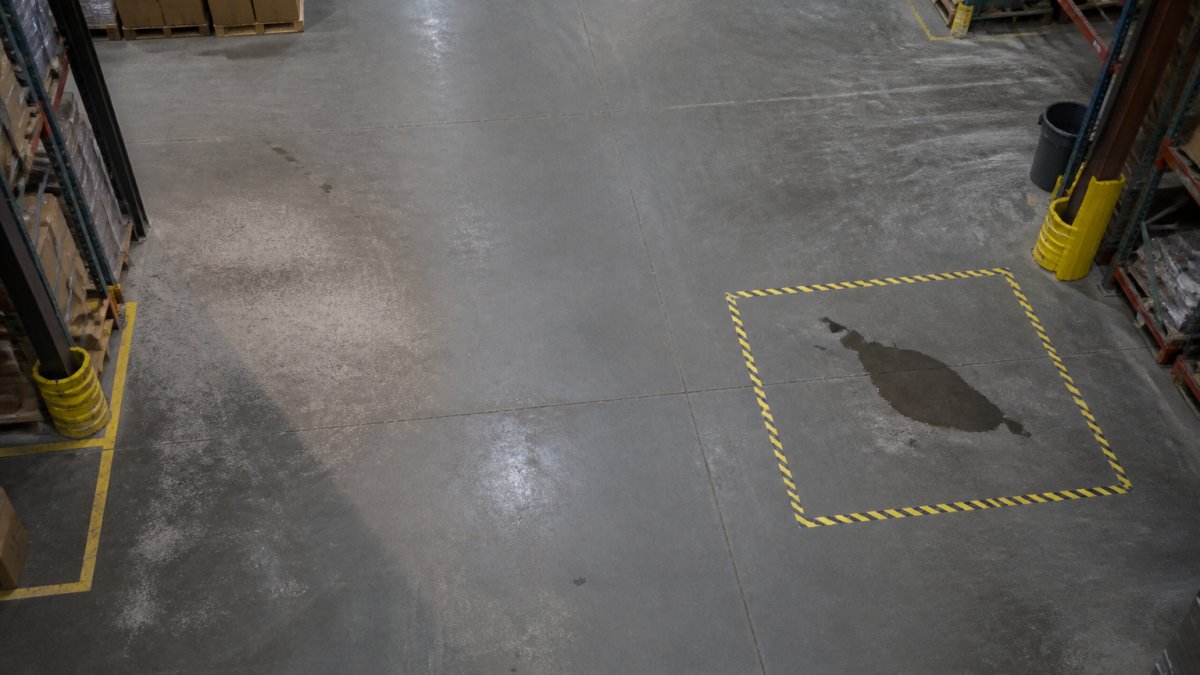
Your flooring material determines which equipment will work and which won’t. Concrete floors demand aggressive scrubbing pads and high-pressure water recovery. Sealed concrete can handle standard scrubbers. Unsealed concrete needs gentler treatment to avoid damage.
Start by walking your facility. Touch the floor. Is it rough or smooth? Does water bead up or soak in? Different surfaces respond to different cleaning methods. A machine that works perfectly on warehouse concrete might damage polished lobby tile.
Measure total floor area and layout
Square footage matters. A 5,000-square-foot office needs different equipment than a 50,000-square-foot manufacturing plant. Measure your actual cleaning area. Include storage zones, production floors, and common areas separately if they have different cleaning needs.
Layout is just as important as size. Narrow aisles between equipment require walk-behind scrubbers. Wide-open warehouse floors can use ride-on machines for faster coverage. Tight spaces with obstacles slow down any equipment. Count doorways, stairs, and confined areas. A ride-on scrubber won’t fit through a standard doorway.
Identify soil, debris, and spill types
What’s actually on your floor? Light dust requires different equipment than heavy grease buildup. Manufacturing facilities with oil spills need industrial-strength scrubbers. Retail spaces with tracked-in dirt need basic sweeping and light scrubbing. Food service areas with sticky residue need hot-water extraction capability.
Consider your cleaning frequency too. Daily light cleaning needs different equipment than weekly deep cleaning. A facility that cleans once a month might need more aggressive machines than one cleaned daily.
Understanding Industrial Floor Scrubbers
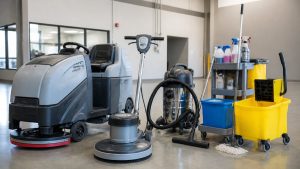
An industrial floor scrubber combines water, cleaning solution, and rotating brushes or pads to remove dirt from hard floors. The machine applies solution, scrubs the surface, and recovers dirty water into a tank. This creates a complete wet cleaning cycle in one pass.
How scrubbers work and cleaning performance
Floor scrubbers work by dispensing cleaning solution onto the floor while rotating brushes or pads underneath. The brushes agitate the floor surface to break up dirt and grime. A squeegee blade then pulls the dirty water into a recovery tank.
Performance depends on brush type and pressure. Stiff brushes clean heavily soiled concrete. Soft pads work on polished floors. Dual-brush systems handle mixed floor types in one facility.
Tank capacity determines how long you can clean before emptying. Larger tanks mean longer run times. Water recovery systems prevent flooding and reduce water waste. Battery runtime matters for large facilities. A machine that needs recharging every two hours won’t work for all-day production.
When to Use an Industrial Floor Sweeper
A floor sweeper removes dry debris before wet cleaning. Sweepers use rotating brushes to push dirt into a collection hopper. They’re faster than manual sweeping and work on large areas quickly.
Sweeper capabilities and best use cases
Sweepers excel at removing dust, debris, and light dirt from concrete floors. They’re ideal for manufacturing facilities where machines drop metal shavings or manufacturing debris. Retail spaces use sweepers to pick up tracked-in dirt before customers arrive. Sweepers work best on relatively flat, open floors without obstacles.
Use a sweeper when your floor has dry debris. Skip it if your floor is mostly wet or sticky. A sweeper won’t remove grease, oil, or caked-on spills. For those, move straight to a scrubber.
Sweepers are lighter and more maneuverable than scrubbers. They cost less to operate and maintain. For high-traffic areas with constant dust and debris, a sweeper keeps floors presentable between deep cleans.
Ride-On Floor Scrubber vs Walk-Behind
The choice between ride-on and walk-behind scrubbers comes down to facility size and layout. Ride-on machines cover large areas faster. Walk-behind machines fit tight spaces and cost less.
Productivity and coverage comparison
Ride-on scrubbers clean 10,000 to 20,000 square feet per hour. Walk-behind models clean 3,000 to 8,000 square feet per hour. For a 50,000-square-foot warehouse, a ride-on machine finishes in 3-5 hours. A walk-behind takes 6-15 hours. The productivity difference is significant for large facilities.
Ride-on machines require an operator to sit and drive. They’re heavier and more expensive. Walk-behind scrubbers require pushing but are lighter and more affordable. A facility with 10,000 square feet or less usually chooses walk-behind. Anything larger benefits from ride-on speed.
Maneuverability and facility layout fit
Walk-behind scrubbers fit through standard doorways and navigate tight spaces. Ride-on machines need wider aisles and open areas. If your facility has narrow corridors, equipment rows, or confined zones, walk-behind is your only option.
Consider the actual layout. A manufacturing plant with wide aisles can use a ride-on for main areas and a walk-behind for edges and tight spaces. A small office building needs walk-behind only. Ride-on machines are faster but only if your layout allows them to work continuously.
Floor Cleaning Equipment for Concrete Floors
Concrete is the most common industrial floor. It’s durable but porous. Unsealed concrete absorbs water and stains easily. Sealed concrete resists moisture but scratches if you use the wrong equipment.
Why concrete requires specific equipment
Concrete is harder than tile but more porous than sealed surfaces. It requires scrubbing pressure that would damage softer floors. Heavy-duty brushes work on concrete without wearing out quickly. Stiff nylon or polypropylene brushes are standard for concrete cleaning.
Sealed concrete needs gentler treatment. Soft pads prevent scratching the protective coating. Unsealed concrete can handle aggressive scrubbing and high-pressure water. Heavily soiled concrete benefits from hot-water extraction, which dissolves grease and oils better than cold water.
Brush types and cleaning pad selection
Stiff brushes work on heavily soiled concrete. Nylon brushes handle general-purpose cleaning. Polypropylene brushes work on sealed concrete. Soft pads protect polished or epoxy-coated concrete from scratching.
Dual-brush systems combine stiff and soft bristles in one head. This allows one machine to handle multiple floor types without changing equipment. For facilities with mixed flooring, dual-brush scrubbers save time and money.
Choose brushes based on soil level and concrete condition. Light dust on sealed concrete needs soft pads. Heavy grease on unsealed concrete needs stiff brushes. Wrong brush selection either damages the floor or leaves dirt behind.
Calculate Total Cost of Ownership and ROI
Equipment cost is just the beginning. Operating costs, maintenance, and labor add up quickly. Understanding total cost helps you choose equipment that actually saves money.
Operating costs, maintenance, and labor
A walk-behind scrubber costs less upfront but requires more labor. An operator must push it for hours. Ride-on machines cost more but reduce labor time. Smaller facilities with low cleaning frequency might save money with walk-behind.
Water and cleaning solution costs vary by facility size. A 10,000-square-foot space uses less water than a 100,000-square-foot warehouse. Battery-powered equipment costs less per hour than gas-powered machines. Maintenance includes brush replacement, seal repairs, and tank cleaning.
Calculate your actual labor hours. If cleaning takes 20 hours per week with a walk-behind, that’s one full-time employee. A ride-on might cut that to 8 hours. The labor savings often justify the higher equipment cost within one year.
Productivity gains and payback period
Faster cleaning means lower labor costs. A ride-on that finishes in 5 hours instead of 15 hours saves 10 hours per week. At any reasonable wage, that’s $150-250 in weekly savings. Over a year, that’s $7,500-13,000 in labor savings.
Equipment cost matters less than labor savings. A ride-on scrubber that costs $30,000 pays for itself in 2-4 years through labor reduction alone. Cleaner floors also reduce slip-and-fall liability and improve employee morale. These benefits are real even if they’re hard to quantify.
Compare equipment based on total cost, not just purchase price. A cheaper machine that requires more labor might cost more over five years.
Safety, Compliance, and Environmental Factors
Industrial equipment must meet safety standards. Operators need training. Wastewater disposal follows regulations. Environmental impact matters to facilities and their customers.
OSHA compliance and operator safety
OSHA requires that equipment operators receive training. Ride-on machines need operator certification in some cases. Walk-behind scrubbers need basic safety training on proper handling and electrical safety.
Equipment must have emergency stops, warning labels, and proper grounding. Water recovery tanks must prevent overflow. Electrical equipment must meet voltage and grounding standards. Maintenance personnel need training on safe service procedures.
Operator fatigue affects safety. Ride-on machines reduce physical strain. Walk-behind machines cause repetitive motion injuries over time. For long shifts, ride-on equipment is safer. For short daily use, walk-behind is acceptable if operators rotate tasks.
Wastewater disposal and eco-friendly options
Dirty water from floor cleaning contains oils, chemicals, and sediment. Many facilities must treat wastewater before disposal (the EPA). Some municipalities require filtration or settling tanks. Guso Janitorial Services uses clean and green products that reduce environmental impact and simplify disposal.
Water recovery systems capture dirty water for proper handling. Closed-loop systems prevent spills. Biodegradable cleaning solutions reduce environmental harm. Equipment that uses less water saves money and reduces disposal costs.
Battery-powered equipment eliminates fuel spills and emissions. It’s quieter than gas-powered machines. For indoor facilities, battery equipment is safer and cleaner. Environmental responsibility also improves your facility’s reputation with customers and employees.
Create Your Selection Workflow
Choosing equipment feels overwhelming with so many options. A simple workflow makes the decision clear.
Step-by-step decision framework
Step 1: Measure your facility. Total square footage, layout, and floor types. This determines equipment size and type.
Step 2: Identify your soil. Light dust needs sweeping. Heavy grease needs scrubbing. Mixed soils need both.
Step 3: Calculate labor cost. How many hours per week do you clean now? Multiply by your wage rate.
Step 4: Compare equipment options. Walk-behind or ride-on? Battery or electric? Brush or pad?
Step 5: Calculate total cost. Equipment cost plus five-year operating costs. Compare walk-behind versus ride-on. The lowest total cost wins.
Step 6: Request demos. Test equipment on your actual floor. See how it handles your specific soil and layout.
Step 7: Check vendor support. Can they service equipment quickly? Do they offer training?
| Decision Factor | Walk-Behind Scrubber | Ride-On Scrubber |
|---|---|---|
| Best for | Under 15,000 sq ft or tight spaces | Over 15,000 sq ft with open layout |
| Labor per hour | Requires operator | Requires operator |
| Coverage per hour | 3,000-8,000 sq ft | 10,000-20,000 sq ft |
| Upfront cost | Lower | Higher |
| Maintenance | Lower | Higher |
| Training required | Basic | Moderate |
| Maneuverability | Excellent | Limited |
Frequently Asked Questions
What is the difference between an industrial floor scrubber and a sweeper?
An industrial floor scrubber uses water, cleaning solution, and rotating brushes or pads to deep-clean and remove soils from hard floors. A sweeper uses brooms or brushes to collect dust and dry debris. Scrubbers are better for wet cleaning and heavy soil; sweepers are faster for dry debris removal. Many facilities use both for different cleaning stages.
How do I choose the right industrial floor cleaning machine for my facility?
Start by assessing your floor type (concrete, tile, vinyl), total square footage, typical debris (dust, oils, spills), and available space for equipment storage. Measure your facility’s aisles and tight spaces to determine if a walk-behind or ride-on machine fits. Calculate your budget including operating costs, maintenance, and labor. Request demos from vendors to test performance on your actual floors before committing.
Should I buy or lease industrial floor cleaning equipment?
Buying works best if you need equipment daily and plan to operate it for 3+ years; calculate total cost of ownership including maintenance and repairs. Leasing suits facilities with variable cleaning needs, seasonal peaks, or limited capital. Leasing also shifts maintenance responsibility to the vendor. Compare monthly lease costs against purchase price, expected lifespan, and your facility’s cleaning frequency.
What should I consider when choosing floor cleaning equipment for concrete floors?
Concrete is porous and often holds oils, dust, and stains. Select equipment with adjustable brush pressure and appropriate pad types, softer pads for sealed concrete, stiffer brushes for unsealed or heavily soiled floors. Check the machine’s water recovery capacity to handle the extra moisture concrete absorbs. Ensure the equipment can handle the specific contaminants on your concrete (grease, salt, construction dust) without damaging the surface.
Leave a Reply