
Table of Contents
- Why Industrial Floor Maintenance and Degreasing Matter
- Assessing Your Floor Type and Soil Condition
- Choosing the Right Industrial Floor Degreaser
- Essential Industrial Floor Cleaning Equipment
- Step-by-Step Industrial Floor Degreasing Procedure
- Grease Removal from Concrete Floors: Specialized Techniques
- Establishing an Industrial Floor Cleaning Schedule
- Safety, PPE, and Chemical Handling
- Frequently Asked Questions
Last Updated: October 6, 2026
Why Industrial Floor Maintenance and Degreasing Matter
Industrial floor maintenance and degreasing is essential for safety, efficiency, and facility longevity.
Many facility managers treat floor cleaning as one-size-fits-all, applying the wrong cleaner to the wrong surface and damaging expensive flooring. At Guso Janitorial Services, we’ve worked with various facilities.
This guide covers assessing your floors, choosing the right degreaser, executing a proper degreasing procedure, and building a maintenance schedule, including concrete’s porous challenges and matching solutions to your facility type.
Assessing Your Floor Type and Soil Condition
Before buying any cleaning product, know what you’re working with. Floor type and soil severity determine degreaser strength, equipment, application method, and safety precautions.
Identifying concrete, tile, vinyl, and stone surfaces
Concrete floors are porous and absorb grease deeply. They’re common in warehouses, manufacturing facilities, and loading docks.
Tile and grout are found in kitchens, bathrooms, and some retail spaces. Grout is even more porous than concrete.
Vinyl and VCT (vinyl composition tile) are popular in retail and office spaces.
Stone floors (granite, marble, limestone) are sensitive: acidic or alkaline cleaners can etch the surface permanently, so stone requires pH-neutral solutions.
Hardwood and laminate are rare in industrial settings but appear in mixed-surface facilities. They’re the most delicate, warping or swelling with excessive moisture.
Determining grease, grime, and debris buildup severity
Walk your floor and assess soil condition, which determines cleaning intensity.
Light soil: Surface dirt and minimal grease. A standard degreaser applied once handles it.
Moderate soil: Visible grease spots, dull finish, corner buildup. Requires mechanical action (scrubbing or power washing) and possibly a stronger cleaner.
Heavy soil: Thick grease layers, black or brown staining, visible debris. Requires industrial-strength degreaser, heated water, and extended dwell time (how long the cleaner sits before scrubbing).
Severe soil: Baked-on grease, years of buildup, potential chemical residue. Often needs professional equipment and multiple passes.
Take photos of problem areas before you start. They help you track progress and decide if your current maintenance schedule is working.
Choosing the Right Industrial Floor Degreaser
Degreaser selection is where most facility managers err, picking on price or brand familiarity rather than actual soil and surface.
Matching degreaser strength to soil type and flooring material
Alkaline degreasers are the most common, breaking down grease chemically on concrete, tile, and most hard surfaces. Strength ranges from mild (pH 9-10) to heavy-duty (pH 13+).
For light to moderate grease on concrete or tile, a mild alkaline cleaner works.
Acid-based cleaners dissolve mineral deposits and rust but don’t handle grease well. Use these for descaling, not degreasing.
Enzymatic degreasers use natural enzymes to break down organic oils.
Solvent-based degreasers are the strongest option for baked-on, stubborn grease. They’re flammable and require strict ventilation and safety protocols. Reserve these for severe situations.
Surface-safe cleaning solutions for different facilities
Concrete warehouses and loading docks: Use an alkaline degreaser (pH 11-13) with mechanical action. Concrete can handle stronger chemicals. Heated water accelerates the process.
Industrial kitchens: Grease is heavy and baked-on from cooking. Use an alkaline degreaser formulated for food-grade surfaces, and rinse thoroughly to meet health codes.
Retail spaces with tile or VCT: Use a milder alkaline cleaner (pH 9-11). Avoid excessive heat, it can damage vinyl.
Stone floors: Always use pH-neutral cleaners. Alkaline and acid cleaners etch stone, so if grease is present, use an enzymatic degreaser or a stone-specific formula.
Never mix cleaning products. Combining alkaline and acid cleaners creates toxic fumes. Read labels carefully and rinse thoroughly between applications if switching products.
Essential Industrial Floor Cleaning Equipment
The right equipment makes degreasing efficient. Cheap tools waste time and product.
Heated-water and power-washing systems
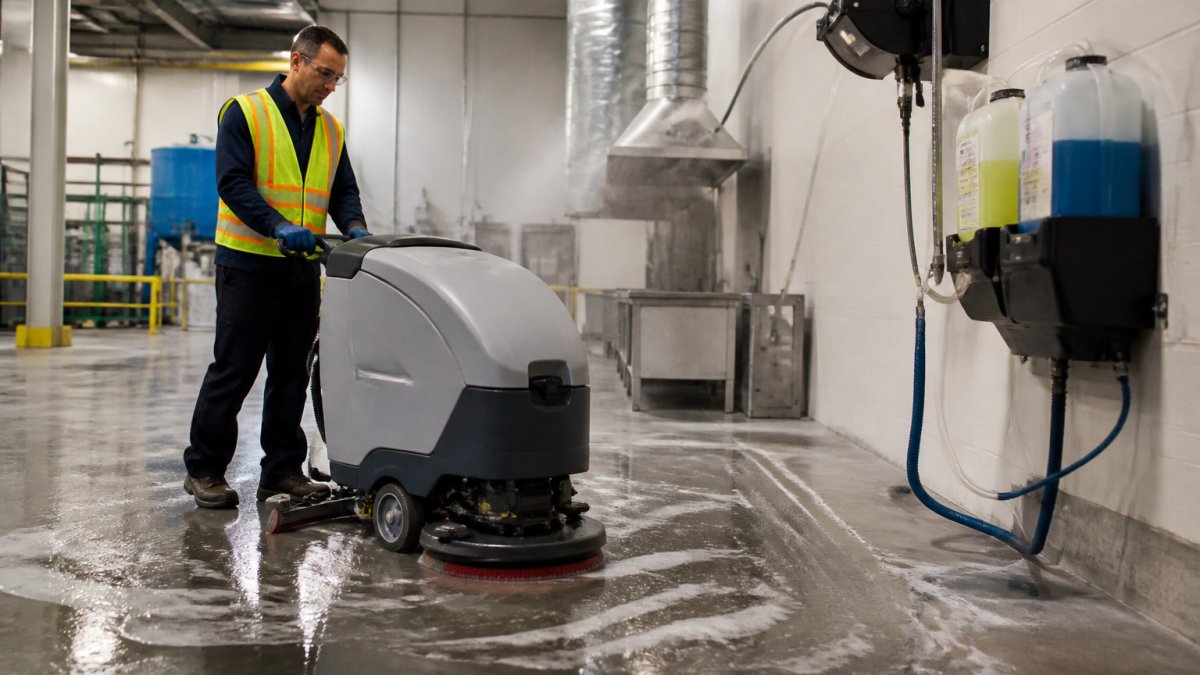
Heated water accelerates degreasing. Grease dissolves faster in warm water, and most industrial degreasers work best at 120-140°F. A hot-water pressure washer or heated floor scrubber cuts cleaning time significantly.
Pressure washers (2,000-3,000 PSI) work well on concrete but can damage tile grout or stone, and their wastewater runoff requires containment and proper disposal.
Hot-water extractors (like carpet cleaning machines, but for floors) inject hot water and cleaner, then extract the dirty water. They’re effective and contain wastewater better than pressure washing.
Mechanical action tools and floor scrubbers
Walk-behind floor scrubbers are the workhorse of industrial cleaning.
Ride-on floor scrubbers are faster for large areas (warehouses, parking structures). They handle heavy soil efficiently.
Brush types matter: Softer brushes for delicate surfaces (tile, stone), stiffer brushes for concrete and heavy soil.
Mops and buckets are the budget option but labor-intensive and weak on heavy grease, fine for light maintenance between deeper cleanings.
Step-by-Step Industrial Floor Degreasing Procedure
Follow this process for consistent results.
Preparation and safety setup
Step 1: Clear the floor. Remove equipment, debris, and obstacles. You need full access to scrub effectively.
Step 2: Inspect for hazards. Look for electrical outlets, floor drains, or areas where water runoff could cause problems. Plan your water management.
Step 3: Set up ventilation. Open doors and windows. If using solvent-based or strong alkaline cleaners, run exhaust fans.
Step 4: Wear proper PPE. Gloves (nitrile or chemical-resistant), safety glasses, and a respirator if the product requires it.
Step 5: Prepare equipment. Fill your scrubber or sprayer with the correct dilution.
Application, dwell time, and mechanical action
Step 6: Apply the degreaser. Spray or distribute the cleaner evenly across the floor. Don’t oversaturate, use enough to cover and penetrate, not puddle.
Step 7: Let it dwell. Dwell time (usually 5-15 minutes, depending on product and soil) lets the chemical break down grease.
Step 8: Scrub. Use your floor machine with appropriate brushes, applying consistent pressure and overlapping passes. Heavy soil needs multiple passes or longer dwell time.
Step 9: Extract or rinse. Remove the dirty water. If you’re using a floor scrubber with extraction, it does this automatically.
Rinsing, wastewater capture, and environmental compliance
Step 10: Final rinse. A second rinse removes residual cleaner and prevents slipping. Damp floors are safer than wet ones, extract as much water as possible.
Step 11: Capture wastewater. Industrial degreasing produces dirty water with grease, soil, and chemical residue.
Step 12: Dispose properly. Check local regulations, grease-laden wastewater often requires a licensed waste hauler, not the sink.
Step 13: Allow drying. Let the floor dry completely before traffic resumes. Use fans to speed the process. A damp floor is a slip hazard.
Grease Removal from Concrete Floors: Specialized Techniques
Concrete is porous. Grease penetrates, making surface cleaning insufficient for stubborn buildup.
Concrete’s porous nature and penetration challenges
Concrete has tiny air pockets.
Pressure washing forces cleaner into concrete and extracts grease. Use 2,500-3,000 PSI, lower won’t penetrate, higher can damage the surface.
Heated water improves penetration. Warm grease is softer and easier to lift than cold grease.
Extended dwell time (15-20 minutes for heavy soil) allows alkaline cleaner to chemically break down grease deep in the pores.
Mechanical scrubbing with a stiff-bristle brush or floor machine works grease to the surface where it can be extracted.
Addressing persistent buildup and recurring contamination
Some grease won’t budge on the first attempt. This is normal.
Multiple passes: Apply cleaner, dwell, scrub, and extract. Repeat if grease remains. Each pass removes another layer.
Stronger degreaser: If standard alkaline cleaner isn’t working, try a solvent-based degreaser or one formulated for heavy industrial grease.
Sealing: After deep cleaning, consider a concrete sealer. It fills surface pores and prevents future grease penetration. Sealed concrete is easier to clean next time.
Prevention: The best solution to recurring contamination is prevention. Catch spills immediately and spot-clean daily or weekly to stop heavy buildup.
Concrete grease removal is a process, not a one-time event. Expect multiple passes for severe soil. Plan your timeline accordingly.
Establishing an Industrial Floor Cleaning Schedule
Reactive cleaning (waiting until the floor is filthy) costs more and produces worse results. Proactive maintenance keeps floors clean and extends their life.
Frequency based on facility type and traffic patterns
High-traffic retail and commercial kitchens: Daily or every other day. Grease and dirt accumulate fast.
Manufacturing facilities with moderate traffic: 2-3 times per week. Adjust based on soil type, hydraulic fluid spills need immediate attention; light dust can wait.
Warehouses with heavy equipment: Weekly deep cleaning plus spot-cleaning as needed. Equipment leaks create chronic grease issues.
Office spaces with light traffic: Weekly or bi-weekly. Less grease, more dust and general dirt.
Outdoor areas (sidewalks, dumpster areas): Weekly or bi-weekly depending on weather and use.
Maintenance verification and performance tracking
Don’t guess whether your schedule is working. Measure it.
Visual inspection: Walk the floor weekly.
Photo documentation: Take photos at the same time each week and compare month-to-month to spot trends, problem spots, and seasonal changes.
Traffic patterns: High-traffic areas need more frequent cleaning. Consider spot-cleaning high-traffic zones between full-floor cleanings.
Soil type tracking: Note what accumulates (grease, dust, debris) to choose the right cleaner and predict when deep cleaning is needed.
A maintenance log (even a simple spreadsheet) shows what works. Over time, you’ll optimize your schedule for your specific facility.
Safety, PPE, and Chemical Handling
Industrial floor maintenance and degreasing involves chemicals and equipment. Safety isn’t optional.
Personal protective equipment and ventilation requirements
Gloves: Chemical-resistant gloves protect against degreaser contact. Nitrile works for most alkaline cleaners; solvent-based products require heavier-duty gloves.
Eye protection: Safety glasses shield eyes from splashes. Goggles offer better protection if you’re using pressure washers or sprayers.
Respirator: Required for solvent-based degreasers or poor ventilation.
Footwear: Slip-resistant shoes are essential. Wet floors are slippery. Non-slip soles prevent falls.
Ventilation: Open doors and windows and run exhaust fans.
First aid: Keep an eyewash station and spill kit nearby. Know where the nearest sink is for rinsing.
Chemical storage, dilution, and disposal compliance
Storage: Keep degreasers in original containers in a cool, well-ventilated area away from sunlight and incompatible chemicals (acids, oxidizers).
Dilution: Most industrial degreasers are concentrated.
Disposal: Don’t pour used degreaser down the drain.
Record-keeping: Keep records of what products you use, how much, and disposal dates. This documents compliance if regulators ask.
Training: Anyone handling industrial chemicals should understand the hazards. Review the SDS before using a new product.
Industrial floor maintenance and degreasing keeps your facility safe, clean, and professional.
At Guso Janitorial Services, we understand that every facility is different. We customize cleaning programs to meet specific business needs.
Frequently Asked Questions
How often should industrial floors be degreased?
Degreasing frequency depends on facility type, traffic volume, and soil accumulation. Kitchens and manufacturing areas with heavy grease exposure typically need degreasing every 2-4 weeks. Warehouses and retail spaces may require monthly or quarterly degreasing. Monitor floors regularly for visible grease and grime buildup, then adjust your industrial floor cleaning schedule accordingly. Professional assessment helps determine the optimal frequency for your specific operation.
Which degreaser is safe for industrial floors?
Select an industrial floor degreaser based on your flooring material and soil type. Concrete floors tolerate stronger alkaline degreasers, while tile, vinyl, and stone require surface-safe formulations that won’t etch or discolor. Always verify the degreaser is compatible with your specific floor type before application. Read manufacturer instructions for dilution ratios and dwell times. Test on an inconspicuous area first. Products labeled for industrial use and compatible with your flooring material provide the safest, most effective results.
How do you remove heavy grease from a concrete floor?
Concrete’s porous nature allows grease to penetrate deep, requiring aggressive treatment. Apply an industrial-strength alkaline degreaser at the manufacturer’s recommended dilution, allowing adequate dwell time (typically 10-30 minutes) for the chemical to break down grease. Use mechanical action via floor scrubbers or pressure washing to agitate and lift the grease. For stubborn buildup, repeat applications may be necessary. Ensure proper wastewater capture and disposal to comply with environmental regulations. Professional equipment and trained personnel yield the best results for persistent grease removal from concrete floors.
What equipment is needed for industrial floor cleaning?
Essential industrial floor cleaning equipment includes floor scrubbers (ride-on or walk-behind), hot-water pressure washers, and vacuum systems for debris removal. Concrete floors benefit from power-washing equipment, while tile and vinyl require gentler mechanical action. Squeegees, mops, and collection systems manage wastewater. Personal protective equipment, gloves, respirators, and eye protection, protects workers from chemical exposure. The right industrial floor cleaning equipment depends on your floor type, facility size, and soil severity. Professional-grade tools deliver faster, more consistent cleaning than standard equipment.