
Table of Contents
- What Janitorial Services Include
- Commercial Cleaning Cost Per Square Foot: Understanding Pricing Models
- Key Service Categories for Atlanta Facilities
- Office Cleaning Checklist for Businesses: What to Expect
- Janitorial Service Contract Template: Essential Terms and Coverage
- Compliance, Safety Standards, and Sustainability in Commercial Cleaning
- How to Choose the Right Janitorial Provider for Your Facility
- Frequently Asked Questions
Last Updated: September 26, 2026
What Janitorial Services Include
Janitorial services in Atlanta encompass far more than sweeping and mopping. Professional commercial cleaning covers facility maintenance that keeps your workspace functional, hygienic, and professional, addressing the specific demands of different facility types.
Core offerings include daily floor care, restroom sanitation, trash removal, and surface disinfection. Scope expands based on facility type: manufacturing plants need industrial degreasing, retail spaces need after-hours cleaning, and office buildings benefit from day porter services.
Generic cleaning doesn’t solve specific problems. High-traffic retail areas need different protocols than offices. Post-construction cleanup and warehouse maintenance require specialized equipment and expertise. Understanding what services include helps you identify what your facility requires.
Most facilities underestimate the value of preventative maintenance. Consistent floor care prevents costly damage and extends equipment life, often saving more than the cleaning cost itself.
Commercial Cleaning Cost Per Square Foot: Understanding Pricing Models
Commercial cleaning pricing varies by facility type, frequency, and region. Understanding typical pricing models helps you budget accurately and identify fair-market rates.
Typical Per-Square-Foot Pricing
Commercial cleaning pricing varies by facility type, frequency, and region. Industrial facilities, retail spaces, and medical offices typically cost more due to specialized requirements.
Frequency impacts per-visit cost. Daily service costs more per visit but less monthly due to efficient routing.
Cost Drivers Beyond Square Footage
Floor type affects pricing substantially. Carpet vacuuming costs less than tile stripping/waxing or concrete degreasing. Ask providers to break down costs by floor type to understand your specific quote.
Restroom complexity significantly affects cost. High-traffic restrooms require more frequent restocking, deeper sanitization, and specialized protocols.
Specialized services add significant costs: post-construction cleanup, industrial degreasing, electrostatic disinfection, and day porter services.
Transparent Pricing Structure
Request a detailed quote breaking down costs by service category: floor care, restroom maintenance, trash removal, surface disinfection, and specialty services. Itemized pricing lets you understand cost drivers and adjust service levels if needed.
Ask your provider to specify: base cost per square foot, frequency multiplier, restroom maintenance as a separate line item, add-on services with individual pricing, whether supplies are included, and how pricing adjusts with service changes.
Volume and Contract Length Discounts
Larger facilities may negotiate better rates due to operational efficiency. Multi-year contracts may also offer different pricing structures compared to month-to-month agreements.
Avoid providers who won’t provide transparent pricing or itemized quotes. If a company quotes you without visiting your facility or understanding your specific needs, their estimate likely won’t reflect reality. Request an on-site assessment and a detailed written quote before committing.
Hidden Costs to Clarify
Confirm whether supplies (paper towels, toilet paper, soap, trash liners) are included or charged separately. Verify whether specialized equipment is included or billed separately. Confirm billing for emergency or after-hours requests.
Key Service Categories for Atlanta Facilities
Floor Care and Maintenance
Professional floor care extends beyond vacuuming and mopping. Floor stripping and waxing preserves appearance and protects flooring. Different floor types require specific protocols and maintenance schedules.
Regular floor care prevents dirt accumulation and damage. Preventative maintenance keeps floors professional while extending lifespan and reducing long-term costs.
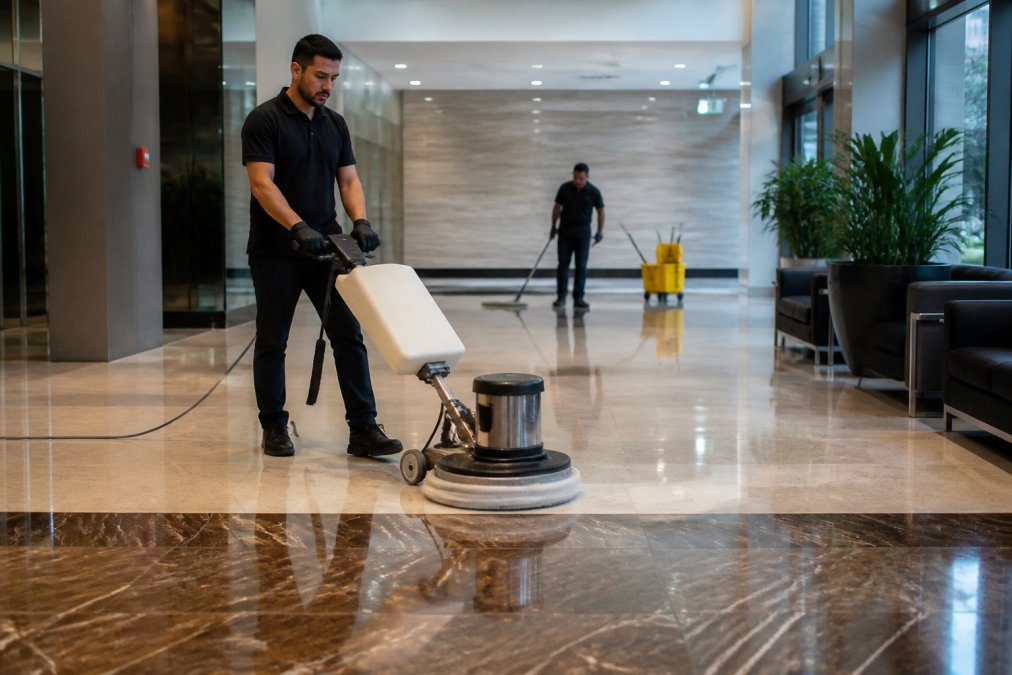
High-traffic areas require more frequent attention. A quality janitorial services Atlanta provider adjusts frequency and intensity based on actual foot traffic patterns rather than applying a one-size-fits-all schedule.
Disinfection and High-Touch Point Sanitization
Surface disinfection is non-negotiable in modern facilities. High-touch points concentrate bacteria and viruses. Electrostatic spraying applies disinfectant as a fine mist that reaches surfaces conventional wiping misses.
Cleaning removes dirt; disinfection kills pathogens. These are distinct processes requiring different products and techniques.
Frequency depends on facility type and occupancy. High-traffic spaces benefit from daily disinfection; offices with moderate traffic might use weekly deep disinfection with daily spot treatment.
Day Porter and After-Hours Services
Day porter services maintain your facility throughout business hours, addressing messes as they occur. They manage trash overflow, clean spills immediately, maintain restroom supplies, and spot-clean high-traffic areas, preventing small issues from becoming major problems.
After-hours services handle deep cleaning when your business is closed, floor care, restroom cleaning, trash removal, and disinfection, ensuring your facility looks pristine when customers and employees arrive.
Day porter and after-hours services together create complete facility maintenance: daytime presence prevents deterioration, after-hours deep cleaning handles tasks requiring uninterrupted access.
Post-Construction Cleanup and Industrial Degreasing
Post-construction cleanup removes debris, dust, and construction materials. This specialized service requires trained crews who understand hazardous material handling and prepares your facility for immediate occupancy.
Industrial degreasing tackles heavy buildup on equipment, walls, and floors. Specialized equipment and solvents remove grease that compromises safety and equipment performance.
These specialized services demand expertise beyond standard janitorial work. Choosing a provider experienced in your facility type ensures critical services are handled correctly.
Office Cleaning Checklist for Businesses: What to Expect
A comprehensive office cleaning checklist ensures nothing gets overlooked. Daily tasks include vacuuming, mopping, emptying trash, restocking restrooms, and disinfecting high-touch surfaces.
Weekly deep cleaning adds window washing, dusting, and detailed restroom sanitation. Monthly or quarterly tasks include floor stripping/waxing, carpet extraction, and deep disinfection.
The specific checklist depends on facility type and industry standards. Your janitorial services Atlanta provider should customize their checklist to your actual needs rather than applying a generic template.
A written cleaning checklist with documented completion creates accountability and gives you objective evidence that services are being delivered consistently.
Janitorial Service Contract Template: Essential Terms and Coverage
Your service contract should define what services are included, frequency, and remedies if services aren’t delivered. Essential elements: scope of work, service frequency, response time for urgent issues, pricing, liability/insurance requirements, and termination conditions.
Coverage should specify what’s included in standard service and what costs extra. Clear definitions prevent disputes and surprise charges.
The contract should address service failures, issue reporting, corrective action processes, and termination notice requirements. These terms protect both parties and establish clear expectations.
Include provisions for facility changes and pricing adjustments. A good contract accommodates business evolution without requiring complete renegotiation.
Compliance, Safety Standards, and Sustainability in Commercial Cleaning
OSHA Compliance and Worker Safety Requirements
OSHA regulations govern workplace safety in commercial cleaning. Providers must comply with the Hazard Communication Standard, requiring proper labeling, safety data sheets, and worker training. Your provider should maintain documentation proving staff training on chemical handling, PPE, and emergency procedures.
Ask for proof of workers’ compensation insurance and current safety certifications. A provider with high injury rates or poor safety practices may cut corners on your facility.
Chemical storage and disposal must meet EPA and OSHA standards.
HIPAA-Compliant Cleaning for Medical Facilities
Insurance and Liability Coverage
Green Cleaning Certifications and Sustainability
Industry-Specific Compliance Standards
Documentation and Verification
A provider who readily provides documentation of compliance, insurance, and training demonstrates professionalism and accountability. If they resist providing proof of these standards, consider it a red flag and continue your search.
How to Choose the Right Janitorial Provider for Your Facility
Facilities with mixed space types (office plus retail, or office plus manufacturing) benefit most from providers experienced in customized cleaning programs that handle multiple service categories.
Assess communication and responsiveness. How quickly do they respond to inquiries? Do they provide regular reporting on service completion? Will they address issues promptly if something goes wrong? A provider who communicates clearly prevents misunderstandings and builds trust.
| Service Category | Frequency | Best For | Key Benefit |
|---|---|---|---|
| Floor Care & Maintenance | Daily to quarterly | All facility types | Extends flooring lifespan, maintains appearance |
| High-Touch Point Disinfection | Daily to weekly | High-traffic spaces | Reduces pathogen spread, protects health |
| Day Porter Services | During business hours | Retail, offices, mixed-use | Maintains cleanliness throughout the day |
| Post-Construction Cleanup | One-time or project-based | New construction, renovations | Enables immediate occupancy, removes hazards |
| Industrial Degreasing | Monthly to quarterly | Manufacturing, warehouses | Ensures equipment safety, prevents damage |
Frequently Asked Questions
What’s the difference between janitorial services and general commercial cleaning?
Janitorial services focus on routine, recurring facility maintenance: floor care, restroom sanitation, trash removal, and supply replenishment. Commercial cleaning typically refers to deeper, one-time projects like post-construction cleanup, carpet extraction, or industrial degreasing. Most facilities need both, janitorial services keep spaces clean daily, while commercial cleaning handles specialized tasks. A comprehensive contract often includes both elements.
How is commercial cleaning cost per square foot calculated?
Cost per square foot depends on facility type, cleaning frequency, service scope, and regional labor rates. Pricing factors include: daily versus weekly frequency, whether high-touch point disinfection is required, carpet extraction needs, and specialized equipment use. Request a detailed quote based on your specific square footage and service needs rather than relying on general estimates.
What should a janitorial service contract template include?
A strong contract specifies: service scope (which areas, what tasks), cleaning frequency and hours, response times for issues, pricing and payment terms, insurance and bonding verification, quality control procedures, and liability coverage. Include service level agreements (SLAs) defining expectations for consistency and performance. Ensure the contract addresses what happens during emergencies, staff background checks, and the process for reporting problems. Always verify the provider is bonded and insured before signing.
How do I verify that a janitorial company is bonded and insured?
Ask the provider for proof of general liability insurance and bonding documentation. Reputable companies will provide Certificate of Insurance (COI) showing coverage limits and policy dates. Verify the insurance is current and covers the specific services they’ll perform. Contact their insurance provider directly if needed to confirm coverage is active. Bonding protects you if damage occurs; insurance covers injuries or accidents. Never hire a janitorial service that cannot provide this documentation, it’s a fundamental risk protection.
What makes a local janitorial provider better than a national franchise?
Local providers often offer faster response times, direct communication with ownership, and flexibility in customizing cleaning plans for your unique facility needs. National franchises provide brand consistency and larger networks but may have slower issue resolution and less personalized service. Local companies typically have lower overhead, allowing competitive pricing and more attention to detail. However, franchise networks offer standardized training and backup coverage if your regular crew is unavailable. Evaluate both based on your facility’s specific requirements and reliability concerns.
EXTERNAL CITATIONS VERIFICATION:
- OSHA workplace safety regulations
- Green Seal environmental certification standards
- Commercial facility management best practices