

Table of Contents
- Why Commercial Cleaning Service Alternatives Matter
- In-House vs. Outsourced Janitorial Services: ROI Analysis
- Types of Commercial Cleaning Service Providers
- Key Criteria for Selecting a Cleaning Provider
- Commercial Cleaning Contract Negotiation Tips
- Janitorial Service Performance Metrics to Track
- Technology and Software for Cleaning Operations
- Certifications, Insurance, and Compliance Standards
- Frequently Asked Questions
Last Updated: September 24, 2026
Why Commercial Cleaning Service Alternatives Matter
Choosing the wrong commercial cleaning partner costs money, damages your facility’s reputation, and creates operational headaches. A no-show before a client visit, chemical damage to equipment, or inconsistent quality erodes customer trust and employee morale.
You have real alternatives. At Guso Janitorial Services, we’ve worked with facility managers across Metro Atlanta who’ve tested in-house crews, franchise networks, independent contractors, and specialized providers. Each model has trade-offs depending on your facility type, budget, service frequency, and operational complexity.
This guide covers the major commercial cleaning service alternatives, evaluation criteria, ROI analysis, red flags, and contract essentials.
In-House vs. Outsourced Janitorial Services: ROI Analysis
In-house cleaning feels like control, but the financial math often tells a different story.
In-house cleaning requires recruiting, training, payroll, workers’ comp, benefits, equipment, and supplies. High turnover means scrambling to fill shifts and inconsistent coverage on critical days.
Outsourced services shift staffing, equipment, compliance, and accountability to a contractor for a fixed fee. You eliminate payroll taxes, workers’ comp, HR overhead, and team management complexity.
For small offices (under 5,000 sq ft), outsourcing wins financially by avoiding full-time hire costs. For large facilities (50,000+ sq ft), hybrid models work best: outsource routine cleaning, handle specialized work in-house. Outsourced providers carry liability insurance and meet compliance standards; in-house crews often don’t.
Types of Commercial Cleaning Service Providers
Not all cleaning services are the same. Understanding the provider models helps you match your needs to the right partner.
Franchise Networks
Franchise networks operate through standardized protocols and training. Advantages: consistency, bonding, insurance, and brand accountability. Disadvantages: inflexibility and higher pricing. They work best for straightforward spaces with standard cleaning needs.
Independent Local Cleaners
Independent contractors offer lower pricing and flexibility to customize schedules and services. Risks: many lack bonding or insurance, staff turnover disrupts service, and recourse is limited if problems occur. They work best for established relationships and smaller facilities.
Specialized Industrial Cleaning
Some facilities need more than routine janitorial work. Manufacturing plants need degreasing and heavy equipment cleaning. Post-construction sites need debris removal and specialized cleanup. High-contamination environments need industrial-grade disinfection.
Specialized industrial cleaners have equipment, certifications, and expertise for these jobs. They understand occupational health and safety requirements and can handle hazardous materials properly. They’re essential for compliance in regulated industries.
The trade-off is cost and availability. Specialized cleaning commands premium pricing because it requires trained staff and specialized equipment. Not every area has providers for every specialized service.
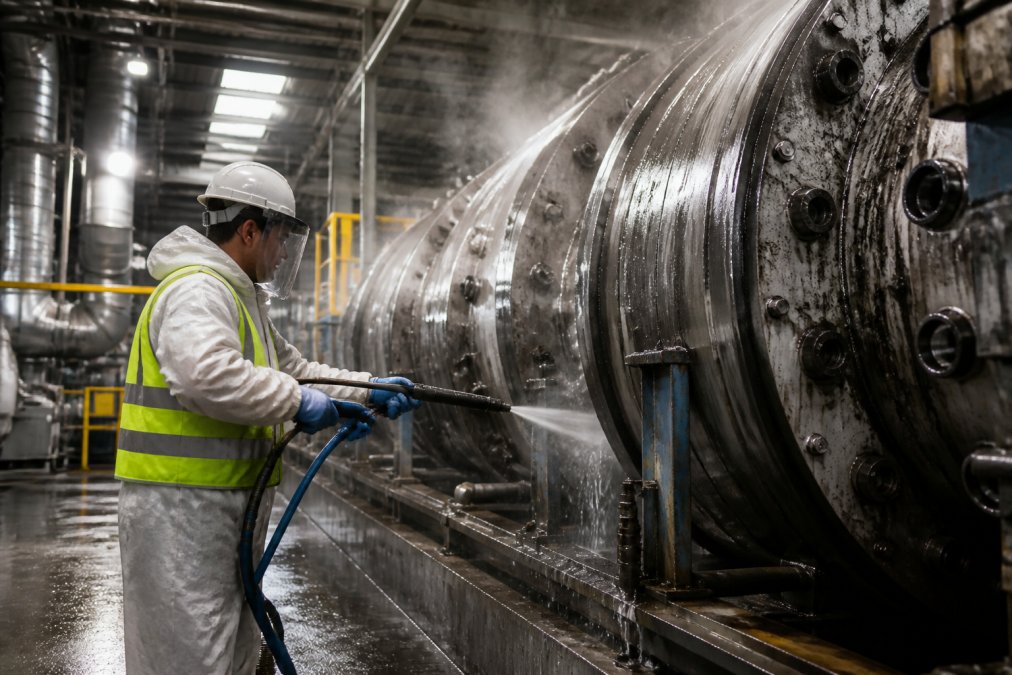
Specialized services work best when your facility has specific cleaning demands that routine janitorial work can’t address. Many businesses combine routine cleaning with specialized services as needed.
Key Criteria for Selecting a Cleaning Provider
Choosing a cleaning partner requires evaluating more than price. These criteria separate reliable providers from ones that will disappoint you.
Service Level Agreements (SLAs) and Scope of Work
A real SLA defines exactly what gets cleaned, how often, and consequences for failure. Vague promises create disputes. Specific SLAs say: “Daily restroom cleaning includes toilet scrubbing, mirror wiping, and trash removal by 6 PM, Monday through Friday.” Ask for a detailed scope listing every area, task, frequency, and what’s excluded (window washing, carpet shampooing, floor stripping).
Bonding and Insurance
Bonding covers employee theft or damage; insurance covers liability for injuries or equipment damage. Ask for proof and verify coverage is current. Many independent cleaners skip both to cut costs, a risky savings if something goes wrong.
Staff Vetting and Turnover
Ask about background checks, training, and staff retention. High turnover means inconsistent quality and security risks. Low turnover indicates better-trained, reliable staff.
Depending on your industry, cleaning work may need to meet specific standards. Healthcare facilities need OSHA compliance. Food service areas need health department standards. Manufacturing plants need industrial safety protocols. Ask what certifications your provider holds and what compliance standards they follow.
Performance Metrics and Inspections
How do you know if the cleaning is actually good? Agree on inspection protocols before work starts. Many providers use photo documentation, quality checklists, or regular walkthroughs. Some use technology, apps that let staff log completed tasks with photos. The point is measurable accountability.
Avoid providers who resist inspections or metrics. If they won’t let you verify their work, they’re hiding something. Poor performance discovered after months of service is expensive to fix.
Responsiveness and Communication
A cleaning provider who’s hard to reach creates frustration. When something goes wrong, can you reach them quickly? Do they respond to issues within 24 hours? What’s their escalation process if you’re unhappy? Clarify communication protocols upfront.
Commercial Cleaning Contract Negotiation Tips
A solid contract protects both sides. Here’s what to negotiate.
Define Termination and Exit Terms
Don’t lock yourself into a long-term contract without an exit clause. Negotiate a 30- or 60-day termination provision if service quality fails. Define what constitutes failure, missed service, repeated quality issues, or safety violations. A provider confident in their work will accept this.
Also clarify transition terms. If you switch providers, what happens to keys, access codes, equipment, and outstanding invoices? A clean exit prevents disputes.
Specify Pricing and Adjustment Terms
Get pricing in writing. Specify the monthly cost, what’s included, and what costs extra. Ask about price adjustment clauses. Many contracts include annual increases tied to inflation or fuel costs, that’s reasonable, but cap it at a percentage you can accept.
Clarify Liability and Damage Responsibility
Who pays if cleaning equipment damages your floor? What if a cleaner’s negligence causes a safety issue? Your contract should specify liability limits and insurance responsibility. Guso Janitorial Services, for example, carries full bonding and insurance to cover these scenarios.
Build in Quality Guarantees
Some providers offer satisfaction guarantees, if you’re unhappy with service, they’ll re-clean at no charge or refund your money. This shifts accountability to the provider. It’s a strong indicator of confidence in their work.
Negotiate Service Frequency and Scheduling
Specify exactly when cleaning happens. “Daily” could mean 6 AM or 10 PM. Specify time windows. Also clarify flexibility, can you adjust schedules for special events, holidays, or seasonal needs? Providers offering customized scheduling are more responsive to your actual needs.
Janitorial Service Performance Metrics to Track
You can’t manage what you don’t measure. Track these metrics to verify your cleaning provider is delivering.
Inspection Scores
Conduct monthly walkthroughs using a standardized checklist. Score different areas, restrooms, common areas, offices, floors, on cleanliness, organization, and safety. Track scores over time. Consistent 90%+ scores indicate reliable service. Declining scores signal a problem.
Response Time to Issues
When you report a problem, how quickly does the provider respond? Track response times. A provider who handles urgent issues within 24 hours and routine requests within 48 hours is responsive. Longer times indicate poor prioritization.
No-Show Rate
Count missed cleaning sessions. Zero is the target. One no-show per year is acceptable. More than that indicates staffing problems or operational issues.
Staff Consistency
Track whether the same crew cleans your facility or if staff changes weekly.
Cost Per Square Foot
| Metric | Target | Warning Sign |
|---|---|---|
| Monthly inspection score | 90%+ | Below 85% |
| Response time to issues | 24-48 hours | Beyond 72 hours |
| No-show rate | 0-1 per year | 2+ per year |
| Staff turnover | Same crew weekly | Different staff each visit |
| Cost increase | Inflation-tied | Unexplained increases |
Technology and Software for Cleaning Operations
Modern cleaning operations use software to improve accountability and efficiency. If you’re managing in-house cleaning or evaluating providers, understanding these tools matters.
Operational Management Platforms
Field Service Management
Employee Management
Why This Matters
:::pro tip
Ask potential providers to show you their operational software during your initial consultation. If they can’t demonstrate how they track work and communicate with clients, that’s a red flag about their operational maturity.
Certifications, Insurance, and Compliance Standards
Professional cleaning requires more than a mop and bucket. Certifications and compliance matter for your protection and the provider’s credibility.
Industry Certifications
Insurance and Bonding
Occupational Health and Safety Compliance
Regulatory Compliance by Industry
Frequently Asked Questions
What are the primary alternatives to hiring a full-service janitorial company?
Your main alternatives include hiring in-house cleaning staff, contracting with independent local cleaners, using franchise networks, or adopting a hybrid model combining outsourced specialists with limited in-house coverage. Each approach has different cost structures, control levels, and scalability. Franchise networks offer standardized processes and national reach, while independent providers typically offer more customization. In-house teams give you direct control but require recruiting, training, and managing staff. The best choice depends on your facility size, budget, and need for flexibility.
How do you decide between in-house cleaning staff and outsourced commercial services?
Compare total cost of ownership: in-house includes salaries, benefits, payroll taxes, training, equipment, and supervision overhead. Outsourced services shift these costs to the vendor but may offer less customization. Consider facility complexity, whether you need 24/7 coverage, staff turnover tolerance, and whether cleaning is core to your business. For most mid-to-large facilities, outsourced janitorial services reduce administrative burden and provide professional expertise. Smaller operations or those with highly specialized needs may benefit from in-house control. Request quotes from both models and calculate 12-month total cost including indirect expenses.
What should you look for when switching commercial cleaning providers?
Verify licensing, bonding, and insurance coverage before signing any agreement. Review their service level agreement (SLA) for response times, frequency guarantees, and remediation procedures. Check references from similar facilities and confirm their experience with your facility type (office, industrial, retail, etc.). Assess their technology capabilities for scheduling, quality reporting, and communication. Clarify pricing structure, contract length, and exit terms. Request a trial period or pilot program for a section of your facility. Confirm staff vetting procedures and whether they use green cleaning products if that’s important to your operation.
What are the key performance metrics to track with a janitorial service provider?
Monitor response time to service requests, inspection pass rates (typically tracked via quality audits), staff consistency and turnover, adherence to agreed cleaning frequency, and customer satisfaction scores. Request monthly performance reports detailing areas cleaned, any incidents, and corrective actions taken. Track compliance with your service level agreement benchmarks. Use software tools or scheduled inspections to verify work quality. Document any no-shows or late arrivals. Compare actual performance against contract terms monthly to identify trends and address issues early before they affect your facility.