

Last Updated: November 4, 2026
Quick Summary
Post-construction cleaning pricing depends on three things: the area to be cleaned, how dirty the space is, and how much labor and disposal the job requires. Most providers quote a flat project price after a walkthrough, though some bill by the hour or by the square foot.
- Rough cleans cost less than final cleans because they remove debris and dust rather than detailing every surface.
- A low per-square-foot rate often excludes debris hauling, dumpster fees and final detail work.
- Disposal is the most overlooked line item, so ask providers to itemize it separately.
- Ask each bidder to quote the same square footage and the same phase so rates are comparable.
- Compare quotes by line item, not just total price, to see what each provider includes.
Table of Contents
- How Post-Construction Cleaning Is Priced
- Post-Construction Cleaning Rates Per Square Foot
- Rough Clean Versus Final Clean: Why Phase Changes the Price
- Residential Versus Commercial Cleaning Rates
- Labor, Equipment, Disposal and Compliance Costs in Kennesaw
- How to Remove Drywall Dust After Renovation Without Overpaying
- Post-Construction Cleaning Checklist for Contractors and How to Get an Accurate Quote
- Frequently Asked Questions
How Post-Construction Cleaning Is Priced
Post-construction cleaning pricing comes down to three things: how much area needs cleaning, how dirty the space is, and how much labor and disposal the job requires. Most providers quote a flat project price after a walkthrough, though some bill by the hour or by the square foot. Knowing which inputs drive the number lets you compare quotes on equal footing instead of guessing.
Quote-based pricing means the number reflects your project, not a generic average. Pricing depends on the scope of work, phase, debris load and site access.
Watch out: a quote that lists only a price and “cleaning” hides what is included. Ask whether dust removal from vents, windows and tracks, floor buffing and debris hauling are part of the scope before comparing numbers.
Post-Construction Cleaning Rates Per Square Foot
Square footage is the most common starting point for post-construction cleaning pricing, but a per-square-foot rate is only meaningful once you know what it covers. A provider estimates the total cleanable area, applies a rate tied to the level of work, and adjusts for conditions like heavy debris, multiple floors or tight access. Because rates vary by market, labor cost and job complexity, published figures should be treated as rough reference points rather than quotes.
The rate itself is usually built from four inputs: labor hours per square foot, supply and equipment cost per square foot, disposal cost per square foot, and a margin for overhead and insurance. A rough clean typically carries a lower rate than a final clean because it moves bulk debris and dust rather than detailing every surface. When a quote gives you one blended rate, ask which phase it assumes, a rate quoted for a rough clean applied to a final-clean scope is the most common source of estimate shock.
Per-square-foot pricing works well for large, relatively uniform spaces such as new office build-outs or retail shells. It becomes less reliable when the site has heavy debris, many small rooms, high ceilings or tight schedules, because those factors add labor that a square-foot number may not capture. A useful check is to ask the provider what assumptions sit behind the rate: ceiling height, number of restrooms and kitchens, whether windows and tracks are included, and whether debris hauling is in or out of scope.
Watch out: a low per-square-foot rate often excludes debris hauling, dumpster fees and final detail work, so the cheapest rate per square foot can produce the highest total project price once those line items are added back.
For a Kennesaw-area project, ask each bidder to quote the same square footage and the same phase so the rates are comparable.
Rough Clean Versus Final Clean: Why Phase Changes the Price
A rough clean removes the heavy debris, sawdust and packaging left during construction, so trades can keep working. For a deeper side-by-side look at rough-versus-final comparison, the article covers how the phases differ in scope and cost. A final clean is the detailed pass that makes a space move-in ready, covering dust on every surface, fixtures, glass and floors. The two phases require different labor, time and supplies, which is why they are priced differently.
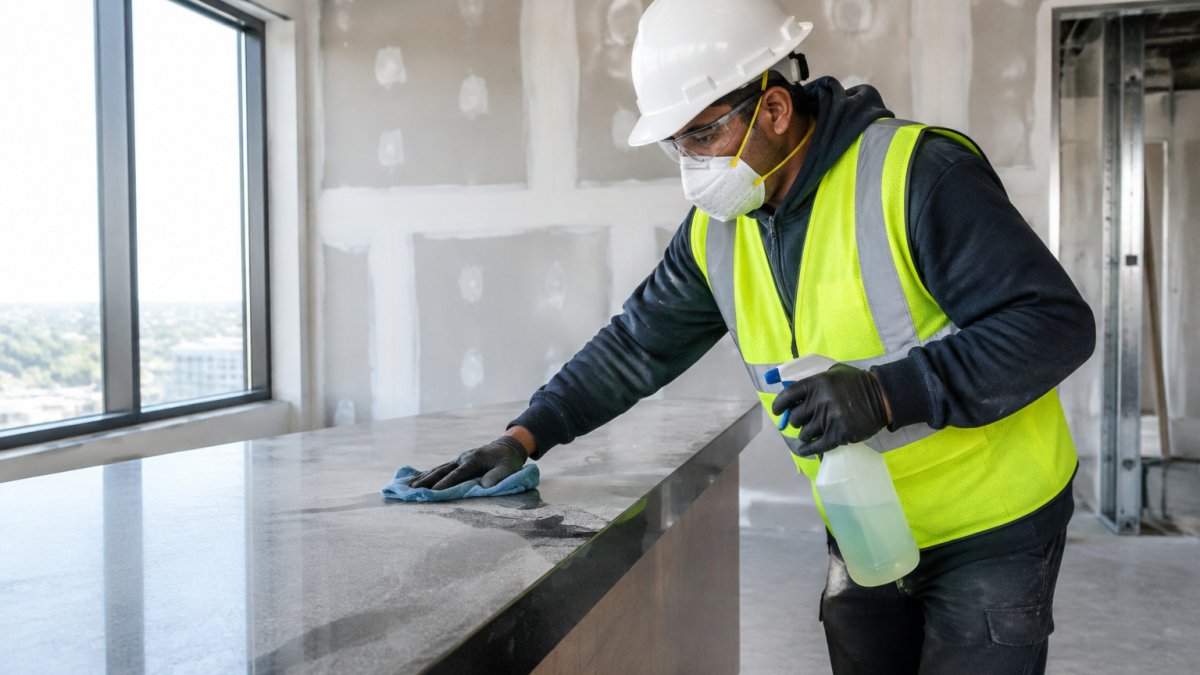
Phase matters more than most owners expect. A final clean done too early gets dirtied again by remaining trades, and a rough clean skipped at the end leaves fine dust that a final crew must work through.
The two phases differ in what they remove and how much labor they take, so the price follows the phase:
| Phase | What it covers | Pricing effect |
|---|---|---|
| Rough clean | Heavy debris, sawdust, packaging | Lower rate; labor-heavy in hauling and sweeping |
| Final clean | Dust on every surface, fixtures, glass, floors | Higher rate; labor-heavy in detail work |
| Done too early | Gets dirtied again by remaining trades | Wasted cost; may need a repeat clean |
| Rough clean skipped | Fine dust left for the final crew | Final crew works harder, raising the price |
Residential Versus Commercial Cleaning Rates
Residential post-construction jobs are typically smaller and cleaned room by room, so providers often price them by the project or by the hour. Commercial sites tend to involve larger floor plates, higher ceilings, restroom and kitchen fixtures, and stricter timelines, which push costs up and often shift pricing to per-square-foot or fixed-scope quotes.
The biggest difference is usually access and scheduling. Commercial crews may need to work after hours or on weekends around an occupied building, and that premium shows up in the quote. If your project is a commercial build-out, confirm the working hours included in the estimate.
Labor, Equipment, Disposal and Compliance Costs in Kennesaw
Labor is the largest line item in most post-construction quotes, and it is driven by crew size, hours on site and the skill needed for detail work. A rough clean is labor-heavy in hauling and sweeping; a final clean is labor-heavy in detail, wiping fixtures, cleaning window tracks, buffing floors and re-dusting surfaces after trades finish. Crews working around active construction also need site-specific safety orientation, which adds paid time before any cleaning starts.
Equipment adds cost in ways owners rarely see on a quote. HEPA vacuums, floor machines, lifts for high ceilings and negative-air units for dust control all carry rental or ownership cost, and they are chosen based on the phase and the finishes in the building. Supplies must be safe for newly installed floors, countertops and fixtures, which can rule out the cheapest generic chemicals.
Disposal is the most overlooked line item. Hauling construction debris and dumpster fees vary by volume and by where the material goes, and in the Kennesaw and Cobb County area, disposal is governed by Georgia Environmental Protection Division rules and local solid-waste ordinances, so debris must be separated and routed correctly rather than dumped in the nearest container. Some projects require documentation of how waste was handled, and that paperwork is part of the cost. A quote that excludes disposal is not a complete quote.
Safety and insurance compliance add to the price as well. Crews working around active construction need appropriate training, liability coverage and site protocols, and general liability and workers’ compensation coverage are real overhead costs that a legitimate provider carries. A low headline rate often reflects a provider without that coverage, which shifts risk to the property owner.
Guso Janitorial Services is fully licensed, bonded and insured. For a Kennesaw project, ask any provider to itemize labor, equipment, disposal and compliance separately so you can compare like with like and see which costs are real and which are missing.
How to Remove Drywall Dust After Renovation Without Overpaying
Drywall dust is the hardest residue to remove because it is fine, settles into every crevice and returns when disturbed.
You can reduce cost by clearing the bulk debris yourself before the crew arrives, which trims the labor hours billed for hauling. Be careful with the final wipe-down, though. Dust left on surfaces after a rushed pass often means a return visit, which costs more than doing the job once properly. A detailed guide to the steps is available on our site: How to Remove Drywall Dust After Renovation.
Post-Construction Cleaning Checklist for Contractors and How to Get an Accurate Quote
A clear checklist makes quotes easier to compare. Include the areas to be cleaned (floors, walls, ceilings, vents, windows, tracks, fixtures, restrooms and kitchens), the phase (rough or final), the debris removal scope, the expected timeline and the insurance and compliance documents you need. Sharing this list with each bidder keeps the estimates consistent.
To get an accurate quote, provide square footage, floor plans if available, the construction stage, access constraints and your schedule. If the scope is unclear, ask for a site walkthrough. Compare quotes by line item, not just total price, so you can see what each provider includes. For a deeper look at what can go wrong when dust is left behind, see what happens if construction dust is not removed.
For a quote tailored to your project, contact Guso Janitorial Services and we will walk through the scope with you. Call Today!
Frequently Asked Questions
How much should I expect to pay for post-construction cleaning per square foot?
Rates vary with project size, debris level and how many phases are needed, so there is no single number that fits every job. Pricing depends on the scope of work, the condition of the site and the timeline. The most accurate figure comes from a site walk-through and a written quote. Current pricing and quotes are available through the Guso Janitorial Services website.
Does post-construction cleaning include removing drywall dust?
Yes, a standard final clean typically covers dust removal from walls, ceilings, vents, window tracks and floors, and drywall dust is one of the most labor-intensive parts of the job. Fine dust settles on every surface and often needs multiple passes with HEPA-filtered equipment. Confirm in writing whether the quote includes ceiling and vent dust, since those areas can add significant time.
What makes a post-construction cleaning quote higher?
The largest drivers are total square footage, the amount of construction debris, how many phases are required and the complexity of the building, including high ceilings, specialty finishes and tight access. Disposal fees and insurance requirements can also raise the total. Providing photos, floor plans and a clear project timeline helps a cleaner give a more accurate estimate.
Can a contractor use a checklist to avoid cleanup delays?
A written checklist that covers rough clean tasks, final clean tasks and handoff items such as window cleaning and fixture polishing helps keep subcontractors and cleaners on the same page. Scheduling the final clean after punch-list work and before turnover reduces rework.

Leave a Reply